

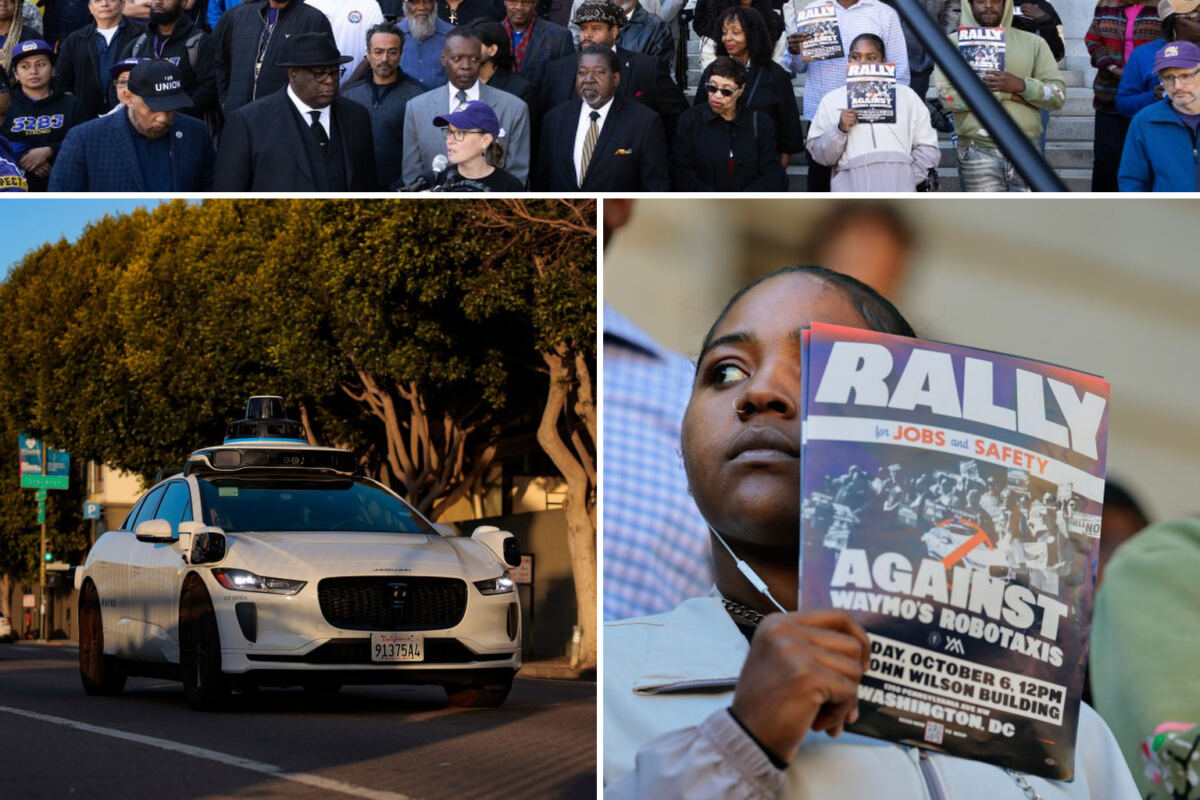
Union workers, rideshare drivers and faith leaders descended on the John Wilson Building to demand D.C. Council kill a bill that would open the District to commercial robotaxi service by 2028.
The demonstration unfolded last week as lawmakers inside discussed the Autonomous Vehicle Deployment Authorization Amendment Act of 2026, introduced by Councilmember Charles Allen in May. The legislation would task the District Department of Transportation with running a program for driverless commercial vehicles, initially capping operators at 200 cars per company.
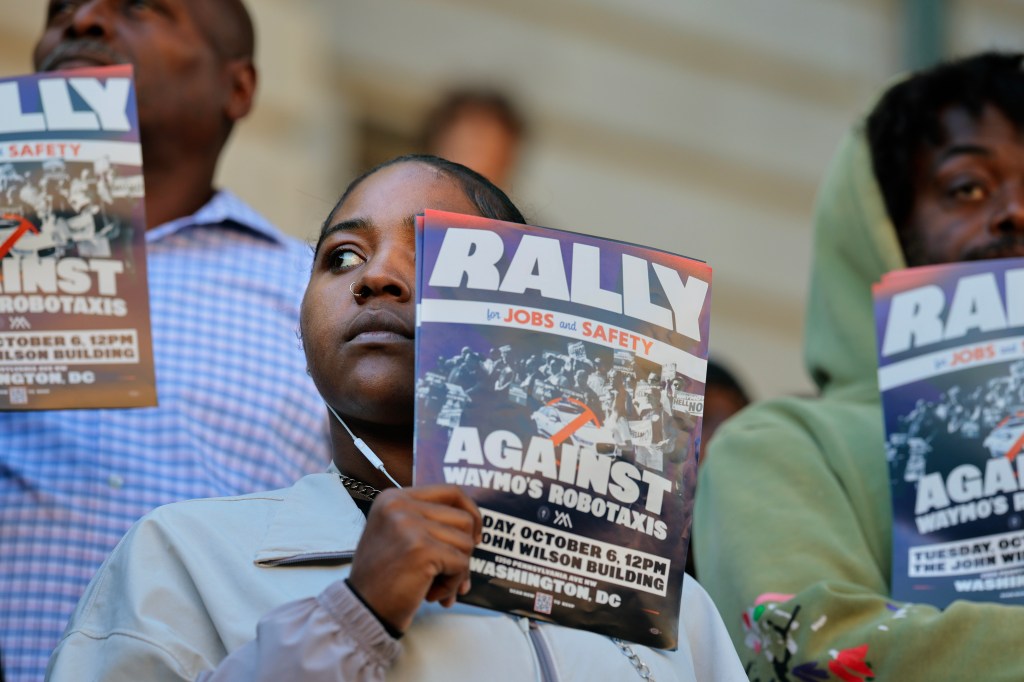
Sabrina, a Washington, D.C. Resident who joined the protest, minced no words about the threat she sees to working drivers. “It’s bulls—,” she said. “Let’s not bring robots taking my neighbor’s jobs. My folks that drive for a living, let’s just not take their jobs.”
She also dismissed promises of cheaper fares as a bait-and-switch. “That’s just something just to…get our antennas up and have us saying, ‘Yeah, ooo, we’re gonna get cheaper rides,'” Sabrina said. “It might be cheap for the trial periods, and then all of a sudden we’ll be paying $50. So no, I don’t believe that. That’s just some crap just to get people engaged with the Waymo.”
Helen from Maryland offered a more measured take on pricing, noting that in cities where Waymo already operates, the difference is negligible. “They seem the same price to me,” she said. “They’re in other cities and it seems like not much of a difference in the pricing.”
The bill’s framework would require companies to log at least 180 days and 250,000 miles of autonomous testing in D.C. Before securing commercial permits. Applicants must also submit plans to reduce service gaps and wait times across the city’s eight wards. A public hearing took place in July, though no council vote has been set.
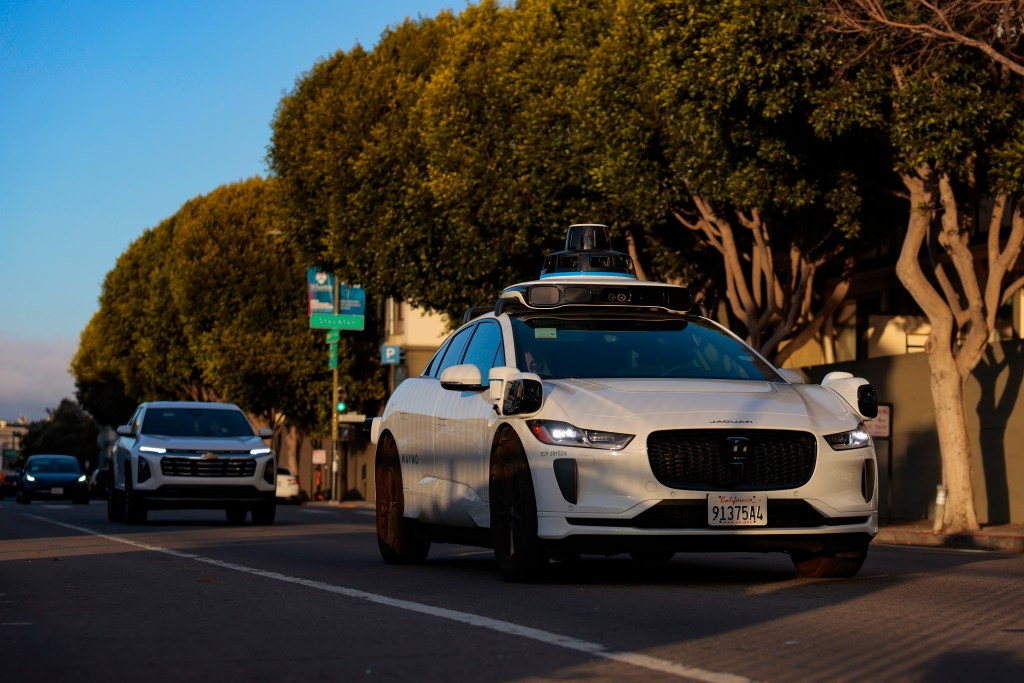
Waymo, the Alphabet-owned operator most frequently named in the debate, points to safety statistics covering more than 270 million autonomous miles. The company says its vehicles were involved in 82% fewer injury-causing crashes and 95% fewer crashes with serious injuries or worse compared with human-driver benchmarks in the same areas.
Frederick, who traveled from Virginia for the protest, framed the issue in personal terms. “I’m against robotaxis because it takes away from the community, it takes away from their jobs, it takes away food from their table,” he said. “People need jobs to be able to support their family.”
Another demonstrator, Michael from Washington, D.C., acknowledged that some driving jobs would likely disappear but argued the city should pivot rather than resist. “We should take the offensive on job issues,” he said. “We should shorten the workweek, without a loss in pay. So we’ll create more jobs in public transportation, in hospitals, in service industries. So we actually maybe will lose some jobs to taxi drivers, but we’ll create better paying jobs.”
Samuel Epps, president of the Metropolitan Washington Council, AFL-CIO, pressed for labor inclusion in any policy outcome. “A worker should be at the table,” Epps said at the protest. “We shouldn’t rush this.”
Parent Eddie raised a separate concern about who—or what—would be transporting passengers. “I don’t think it’s good for the city,” he said. “If my children gonna get in a car, I would prefer for a human to be driving.”
The council must approve the bill before any self-driving vehicles enter commercial service on D.C. Streets.