

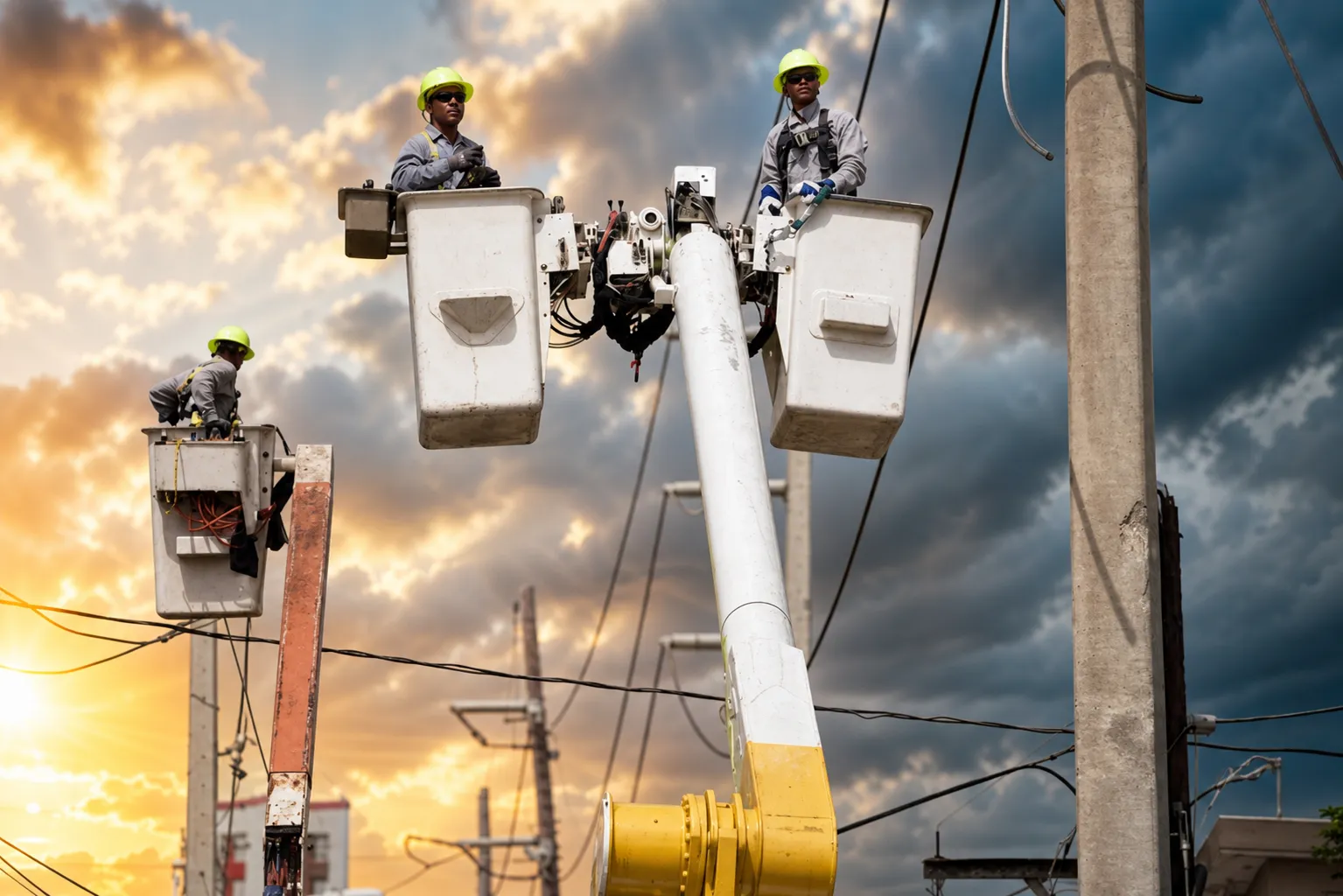
Nearly a decade after a devastating hurricane destroyed Puerto Rico’s electrical system, a federal audit released Wednesday reveals that the island remains stranded in its recovery effort, with approximately $14 billion in obligated federal funds for power grid reconstruction sitting largely unspent. According to the U.S. Government Accountability Office, only about 25 percent of those federal dollars have actually been disbursed since Hurricane Maria struck in September 2017.
The sprawling 86-page report, conducted from August 2024 to June 2026, paints a stark picture of a recovery effort stalled by bureaucratic bottlenecks, coordination failures, staff turnover, and policy decisions that have systematically delayed the distribution of critical reconstruction money. Of the $11 billion obligated by the Federal Emergency Management Agency alone, just $2.7 billion has been disbursed, mostly for equipment, materials, and architectural design costs. The Department of Energy obligated $1 billion for grid recovery work, but only about $255 million has reached the island.
“The people of Puerto Rico have waited nine years for their government to keep its word,” said Rep. Jared Hoffman, a California Democrat. “They watched billions get appropriated and almost none of it arrive.”
When Hurricane Maria roared through in September 2017 as a Category 4 storm, it razed Puerto Rico’s electrical infrastructure with unprecedented fury. Some neighborhoods lost power for nearly a year—the longest sustained blackout in U.S. History. An estimated 2,975 people died in the hurricane’s sweltering aftermath. Two weeks before Maria struck, Hurricane Irma had also battered the island as a Category 5 storm, knocking out power across significant portions of the territory. The electrical grid, already fragile before these hurricanes arrived, faced additional destabilization from a series of powerful earthquakes that struck southern Puerto Rico in late 2019 and early 2020.
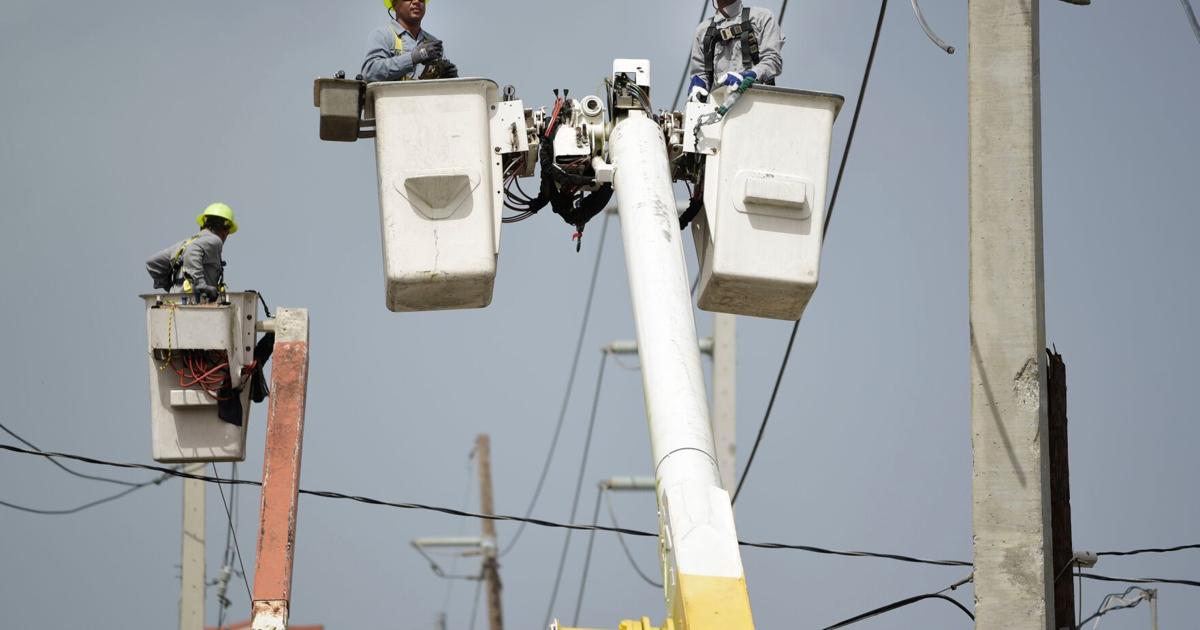
Nine years later, Puerto Rico continues to grapple with chronic blackouts. The situation grew dire enough that the island’s governor declared a state of emergency in April 2025, yet frequent outages persist. According to the audit, about half of recent blackout incidents stem from vegetation overtaking transmission and distribution lines. As of February 2026, only 400 miles of lines had been cleared using federal funds out of 16,000 miles planned—less than 3 percent of the intended work.
The Department of Housing and Urban Development allocated $2.9 billion for grid modernization and repairs, but only about $589 million had been disbursed as of February. Some $365 million originally slated for solar energy projects was redirected to emergency power grid repairs, while the Department of Energy canceled up to $350 million in grants under a solar access program.
The audit identified multiple obstacles hindering progress. Staff turnover at key agencies tasked with oversight and implementation has disrupted continuity. Project review processes are described as “onerous,” creating administrative delays. Puerto Rico’s Electric Power Authority continues struggling to restructure more than $10 billion in debt, hampering its ability to manage large recovery projects effectively. Luma Energy, the private company overseeing power transmission and distribution, now faces a lawsuit from the island’s government seeking to terminate its contract; the company has countersued.
A policy implemented by former Homeland Security Secretary Kristi Noem in June 2025 requiring personal approval of all Department of Homeland Security expenditures exceeding $100,000 further delayed fund releases. Though the rule was rescinded in April 2026 under new Secretary Markwayne Mullin, the months of delay had already slowed projects significantly.
The audit noted that repair work frequently necessitates planned outages, and procurement issues can delay projects for extended periods. Finding replacement parts for aging equipment can take up to two years. As of December 2025, FEMA had completed only nine large power generation projects, with 133 more at various stages. The agency obligated about $1.3 billion for 24 critical generation projects, of which seven have been completed.
The Government Accountability Office called on FEMA to update its guidance to provide greater flexibility and urged the Department of Energy to clarify roles and responsibilities while establishing better coordination across agencies. The agency found that “extensive coordination across Puerto Rico and federal entities is vital” given the complexity of funding streams, the numerous players involved, and various competing plans for grid recovery.
Both the Department of Energy and the Department of Homeland Security concurred with the audit recommendations, though the latter noted that “the government of Puerto Rico is ultimately responsible for developing a comprehensive solution and rebuilding the electrical grid.”
The sluggish progress has left millions of Puerto Ricans frustrated. The audit’s findings underscore a troubling pattern: while the federal government authorized and obligated massive resources for disaster recovery, the actual delivery of those resources has been hampered by bureaucratic complexity, inadequate coordination, and institutional constraints that persist even nine years after the devastating storms that brought the island’s power system to near total collapse.