

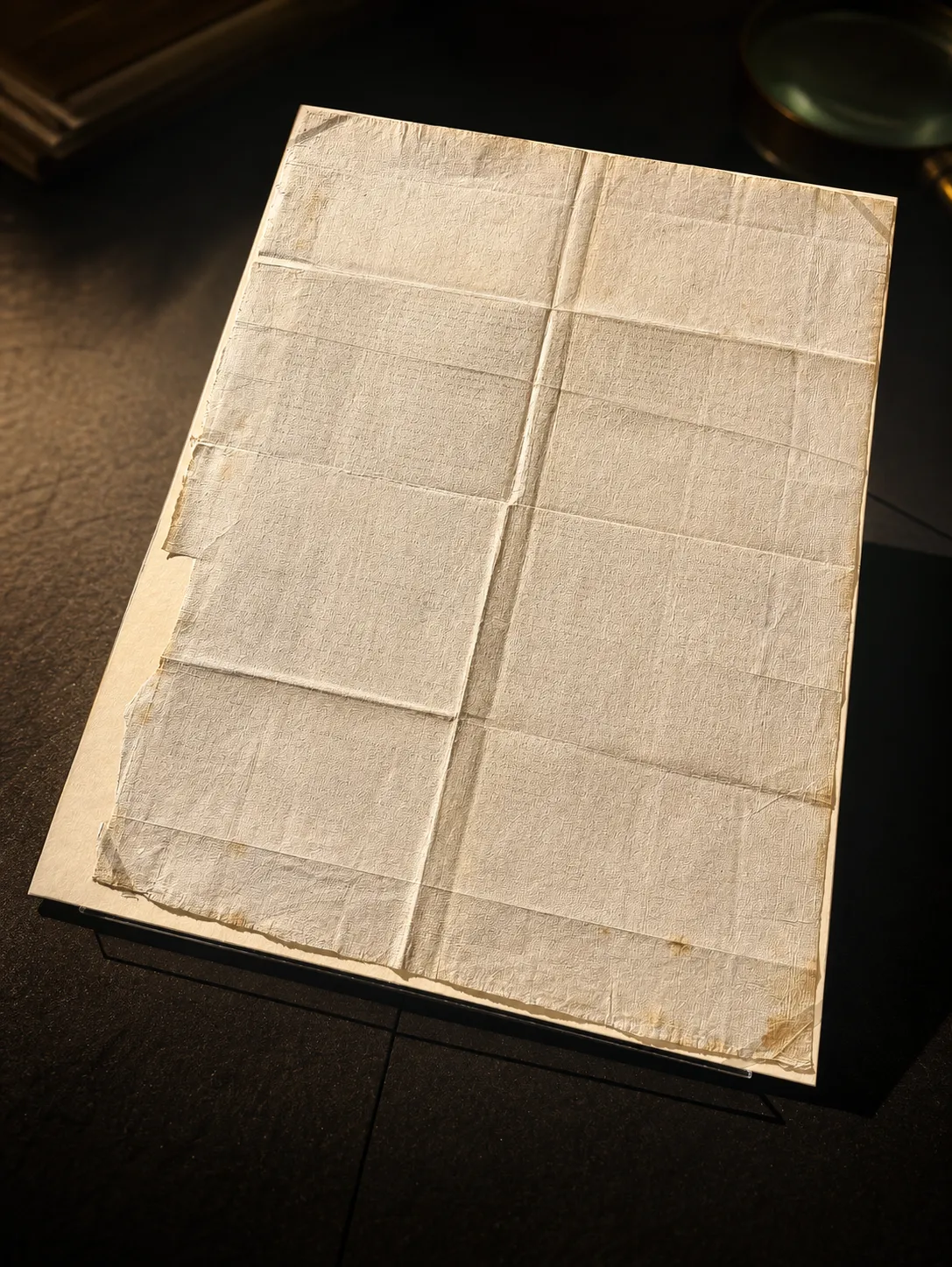
A retired insurance executive volunteering at Britain’s National Archives has made what experts are calling an extraordinary discovery: a rare copy of the Declaration of Independence that has been lost to history for 250 years, hidden among papers seized from a captured American ship during the Revolutionary War.
Michael Scurr made the remarkable find in May while cataloging the correspondence of 18th-century Royal Navy captains at the National Archives in London. Tucked inside a report on the capture of the American privateer Dalton on Christmas Eve 1776 was a document identified only as “another paper.”
“I thought, oh, right, OK, this is definitely a Declaration of Independence,” Scurr told researchers upon carefully unfolding the fragile sheet.
The discovery was announced Thursday, just ahead of this weekend’s 250th anniversary of American independence. The copy is one of just 11 known surviving examples of what historians call the “Exeter printing” of the Declaration, and it is the only one ever identified outside the United States.
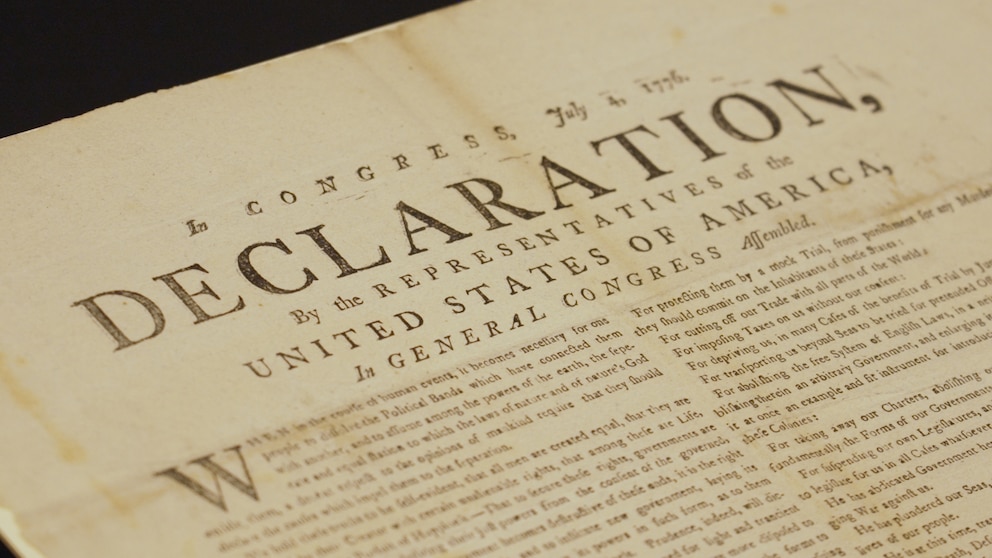
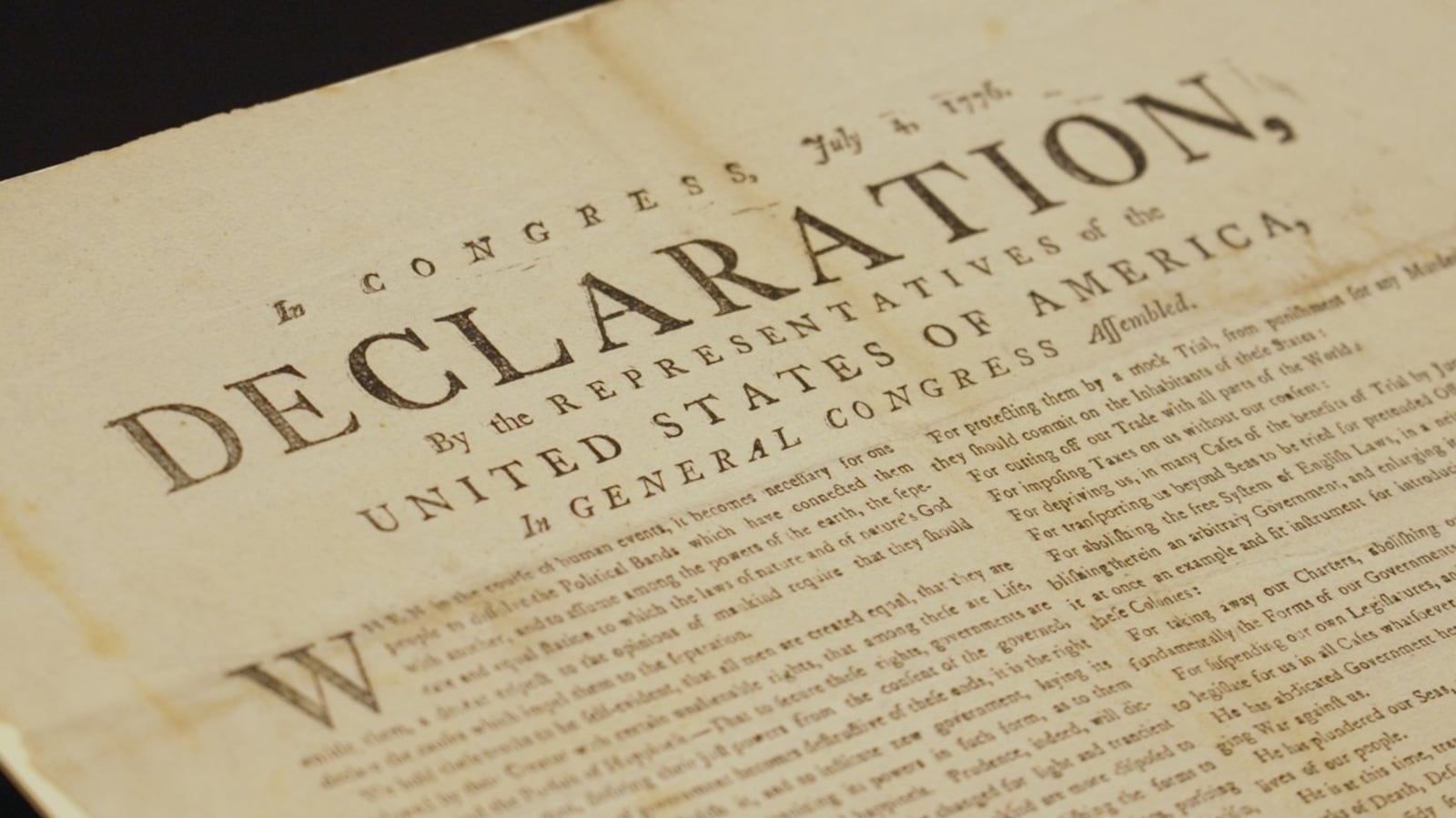
The document was printed in Exeter, New Hampshire, between July 16 and 19, 1776, just days after the original Declaration was signed in Philadelphia on July 4. A printer named Robert Luist Fowle produced these broadsides—large single sheets intended for quick distribution—to spread news of independence across the thirteen colonies. Unlike the famous Dunlap broadsides produced by the official congressional printer John Dunlap, of which approximately 200 copies were originally printed and only 26 are known to survive, the Exeter versions are considered exceptionally rare.
The story of how this copy ended up in a British archive is as dramatic as the document itself. The Dalton was an 18-gun American privateer, a privately owned ship commissioned by the Continental Congress to attack British merchant vessels and military supply lines. Commanded by Captain Eleazar Johnson, the vessel carried orders signed by Continental Congress president John Hancock, authorizing it to disrupt British commerce. The Declaration of Independence was among the ship’s papers, likely carried to be read aloud to the crew to rally them to the American cause.
On Christmas Eve 1776, however, the Dalton was chased for seven hours by the British Royal Navy’s 64-gun warship HMS Raisonable, commanded by Captain Thomas Fitzherbert, off the coast of Portugal. The American ship was captured and its crew of 120 men taken as prisoners to Plymouth, England, where they faced harsh conditions. One captured crew member, Charles Hebert, who was only 19 at the time, later wrote journals describing hunger, illness, and repeated punishment during his more than two years of captivity before being released in a prisoner exchange.
The ship’s papers, including the Declaration, were brought to British authorities as prize documents. But for unknown reasons, the Declaration was simply cataloged as “another paper” and forgotten in the naval archives for more than two and a half centuries. Historians suggest that at the time of seizure, the document did not carry the historical significance it would later assume. To British officials in 1776, it was merely another piece of paper seized from an enemy vessel.
When Scurr identified the find, the National Archives began careful conservation work to repair a slight tear and stabilize the fragile paper. The document will now go on public display as part of an exhibition titled “Revolution 250: America’s Independence Story, 1763-1783” at the National Archives.
Saul Nassé, chief executive of the National Archives, called the discovery “an extraordinary find.” He added that the copy is “a vanishingly rare surviving copy of the Declaration of Independence, found not in America, but here in the U.K,” and represents a powerful reminder that the American Revolution is fundamentally a transatlantic story.
Historians in the United States have expressed excitement about the discovery, noting that it provides a tangible connection to the nation’s founding. Matthew Skic, director of collections and exhibitions at the Museum of the American Revolution in Philadelphia, described the document as more than just a historical artifact. “It’s not just a document, it’s an artifact. It’s a tangible connection to the past, because holding that piece of paper in the archivist’s hand today is a way to transport us back to 1776.”
The find also highlights an often-overlooked aspect of the American Revolution—the role of privateers and naval warfare. While Americans have long heard stories of the Continental Army’s hardships at places like Valley Forge, Pennsylvania, little attention has been given to the Americans who went to sea to disrupt British trade and battle the Royal Navy. Amanda Bevan, head of the National Archives’ project cataloging Royal Navy correspondence from the Revolutionary period, noted that the presence of the Declaration aboard the Dalton offers clues about how it may have been used. She speculates that Captain Johnson likely read not just his commission and orders to his crew, but the Declaration itself, to remind them what they were fighting for.
The discovery proves that there is still much for historians to uncover about the American Revolution, even 250 years later. Researchers continue to find documents and artifacts that illuminate this crucial period of history, each adding another layer to our understanding of how American independence came to be.