

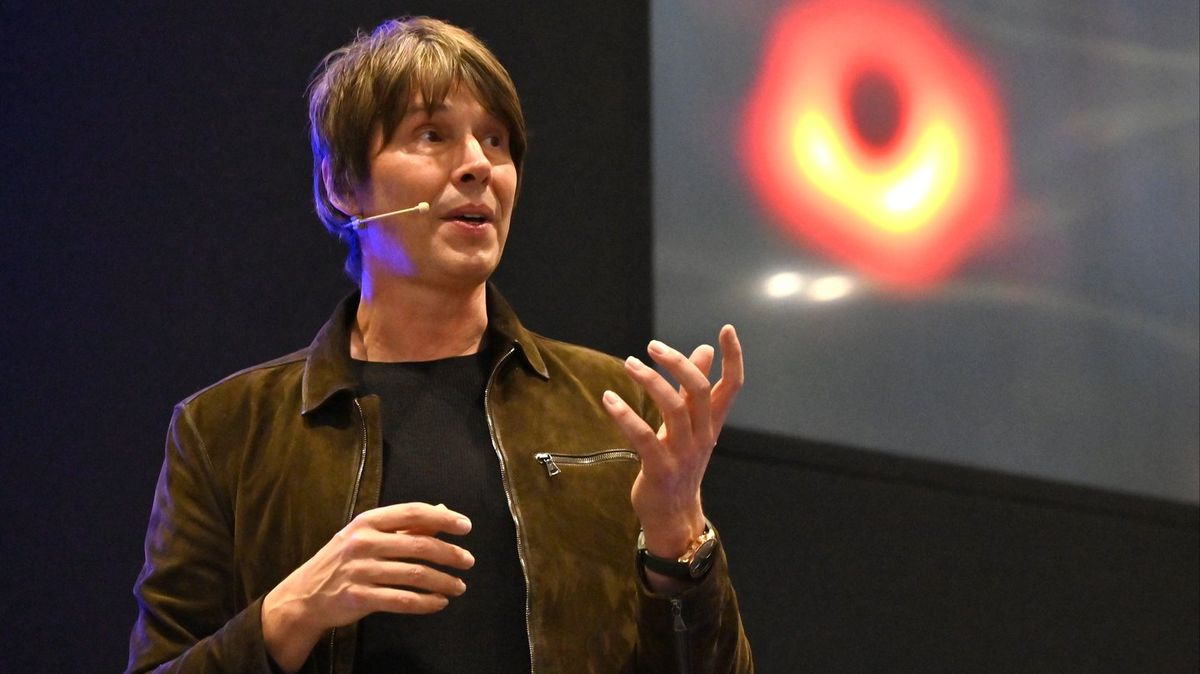
Professor Brian Cox has spoken about his view of what happens when we die, and plenty of people may not agree with his conclusion.
The physicist has previously taken part in a series of wide-ranging chats, including one where the topic turned to conspiracy theories. One subject, in particular, clearly gets under his skin: the flat Earth idea.
“I think the flat Earth [theory] is just bizarre,” he said. “The moon landing stuff is bizarre enough but the flat Earth thing requires almost everybody who’s sensible in the world to be part of a conspiracy [and] just a small number of people, who in my view appear to be a bit odd, to be the only people who know the truth,” he said.
In another interview, Cox was asked a question that has fueled debate for centuries: what really happens after death. While many people believe in heaven, hell, or some form of afterlife, Cox’s perspective is rooted firmly in physics — and he argues that consciousness doesn’t continue once the body stops functioning.

He began by pointing to an extremely difficult starting point: defining life itself. While he acknowledged that the complete answer isn’t known, he said certain fundamentals are clear — including the role of energy and the way living systems handle information.
“We burn food in oxygen and if we stop burning food in oxygen, then we die. So there’s energy in the way a steam engine does things. Then there’s information that it processes as well. So there’s an information component and an energy component,” he added.
He then compared the human body to a piece of technology: if the energy source is removed, the system can no longer process information in any meaningful way.
“There’s got to be a source of energy, you’ve got to be able to do things and your structure remains and things like that, which implies that it’s the same as your iPhone, which stops processing information when you take the battery out,” Cox continued.
For him, that leads to a stark conclusion about what happens to conscious experience once the “machine” can no longer operate.
“There’s no conceivable way that your conscious experience can persist when the machine stops working.”
Even so, he conceded that his answer could come across as blunt — but he framed it as a reminder of how extraordinary it is that consciousness exists at all, given the simplicity of underlying physical laws.
“It’s pretty remarkable that there’s this kind of thing that’s just obeying the laws of physics, and the laws of physics are pretty simple.”
While Cox is confident in some areas, he’s also open about the limits of what science can currently answer. He has said there are still huge mysteries he’d love to see resolved in his lifetime.
“I’d love to know if there’s life beyond Earth, in the solar system or elsewhere,” he said, before suggesting we may learn more thanks to missions heading toward Jupiter.
“There’s a slim chance that we might detect a signature of life,” he told the publication. “I’d like to know how far you have to go to see something else alive.”