

Residents of a triangular Somerset village are heading to a six-day government planning inquiry to stop 200 homes from reshaping their community.
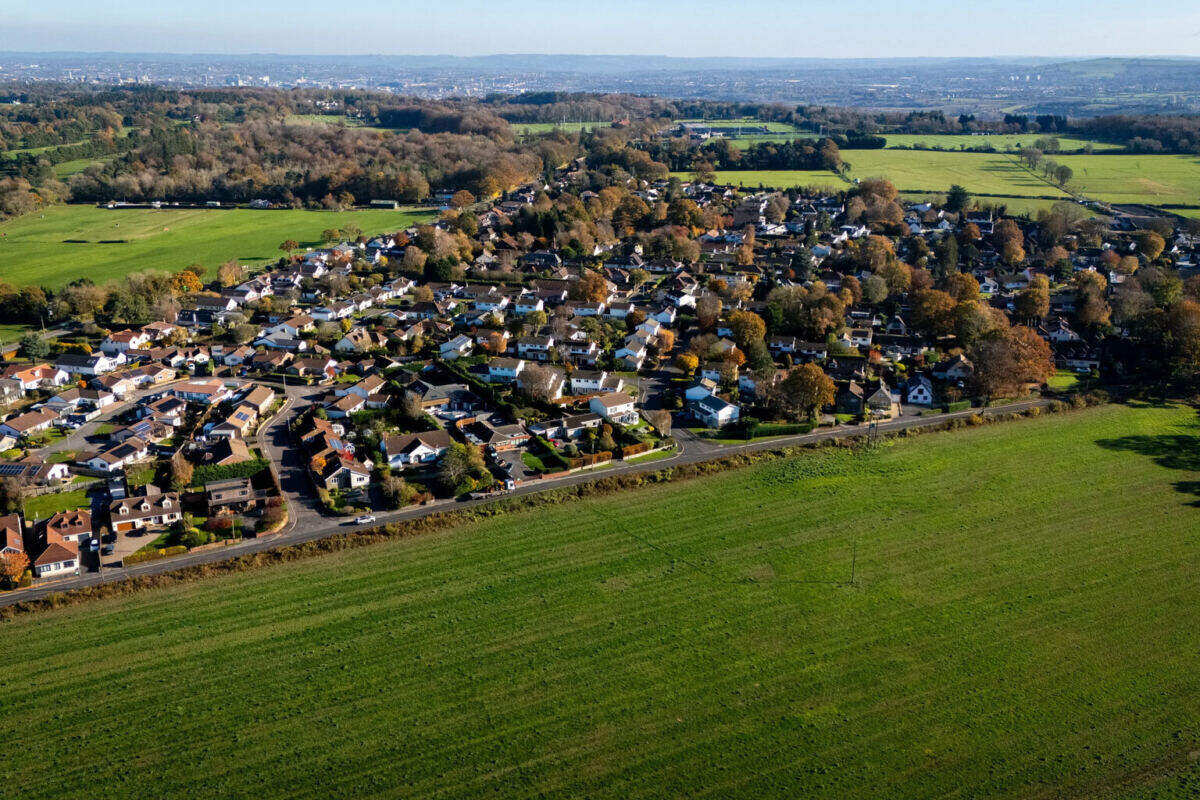
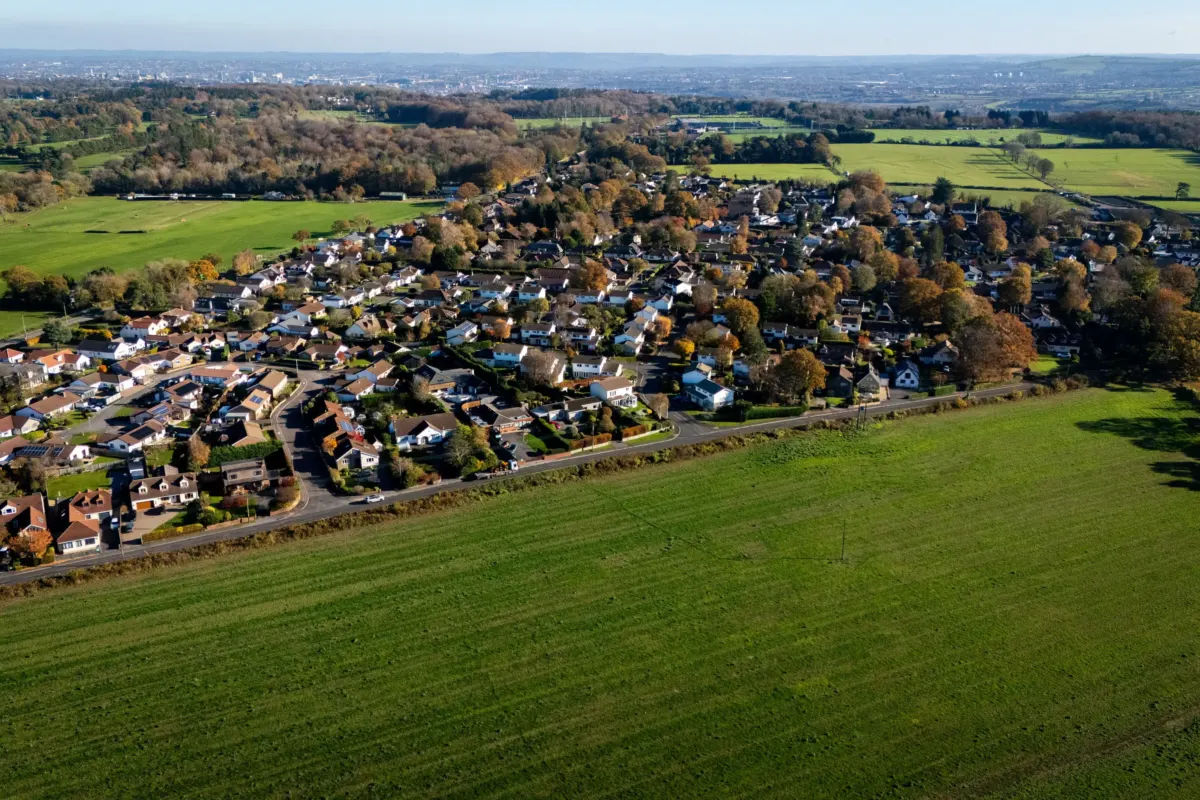
The fight centers on Failand, a village near Bristol whose 350 homes sit inside a distinctive three-sided road layout bounded by Clevedon Road, Weston Road, and Flax Bourton Road. Developer Hill Residential submitted plans last December to build inside that boundary, and locals have since escalated their opposition to the Planning Inspectorate after accusing North Somerset Council of stalling.
Maria Payne, councilor for Wraxall and Failand Parish Council, framed the stakes around the village’s very identity. “The triangle is what defines the settlement of the village of Failand,” she said. “You are completely breaking the boundary off the triangle. The local plan is very clear that the boundary shouldn’t be broken.”
Sandra, 61, who grew up in Failand, tied the shape to personal memory and daily life. “When I was in the village school we used to go on runs and it used to be how many times we used to go around the triangle and that’s how it’s always been,” she said. “You get a lot of wildlife and see deer there.”
Charlie Barker, 23, warned that modern construction would fracture the village’s atmosphere. “The whole vibe of the place would be destroyed if you build a modern housing estate in the middle,” he said.
Another resident, who described the village as “unique and special,” said the development would “destroy that uniqueness rarely seen anywhere else and it must be protected.” Others have told local representatives the project would cause Failand to “lose its identity” and would “destroy the whole village.”
One unnamed resident predicted a decade of disruption. “It’s going to be so noisy with all the bulldozers. What we appreciate here is the peacefulness. It’s a greenbelt field. They’re trying to say it is not but that’s because they want to make money.” The same resident added that the development would “ruin all our lives.”
The dispute has also spawned a procedural fight between the council and Hill Residential. The developer claimed in a statement that “the appellant has been required to repeatedly chase the council for responses – without which the application would have progressed at a far slower pace.” North Somerset Council pushed back, saying it had verbally agreed to extend the deadline until end of July and that “despite several requests, the appellant refused to confirm the agreed extension of time in writing.”
At the upcoming inquiry, Hill Residential will argue the target land qualifies as “gray belt” and that the project would deliver “much needed housing” plus “substantial benefits.” The council accepts the gray belt designation but will contest the location itself, with lawyers prepared to argue that “the proposal, due to its position in open countryside and poorly connected to essential services, facilities and infrastructure, would be in an unsustainable location and constitute inappropriate development in the green belt.”
The “Failand Triangle” has drawn its name from that precise road geometry, and locals have built their case around preserving what they see as an irreplaceable community form. With the inquiry scheduled across six days in April, both sides are now locked in a battle over whether the village’s defining shape can survive intact.