

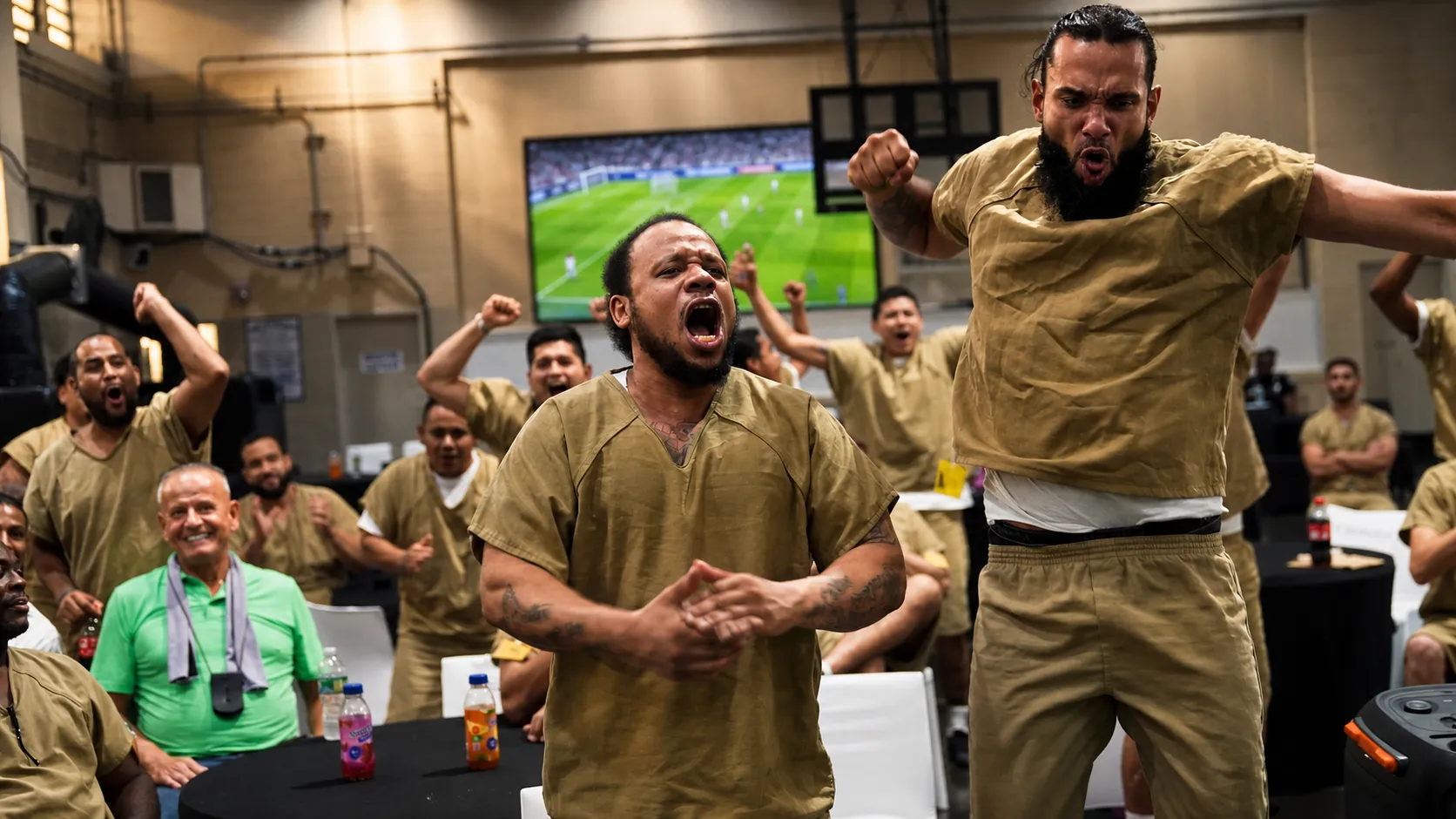
More than 100 inmates at New York’s sprawling Rikers Island correctional facility gathered Wednesday in a gymnasium at the complex’s main intake center for an unusual event: a World Cup semifinal watch party. Dressed in tan uniforms and seated at tables facing a projection screen, the prisoners watched England face Argentina in the tournament’s semifinal match, with colorful balloon towers topped by soccer ball balloons framing the screen.
The scene presented a stark contrast to Rikers Island’s troubled reputation as a facility better known for overcrowding and violence than for hosting social events. Yet the watch party was just one moment in what has become an ongoing effort by the jail to provide recreational programming and incentivize good behavior among its population.
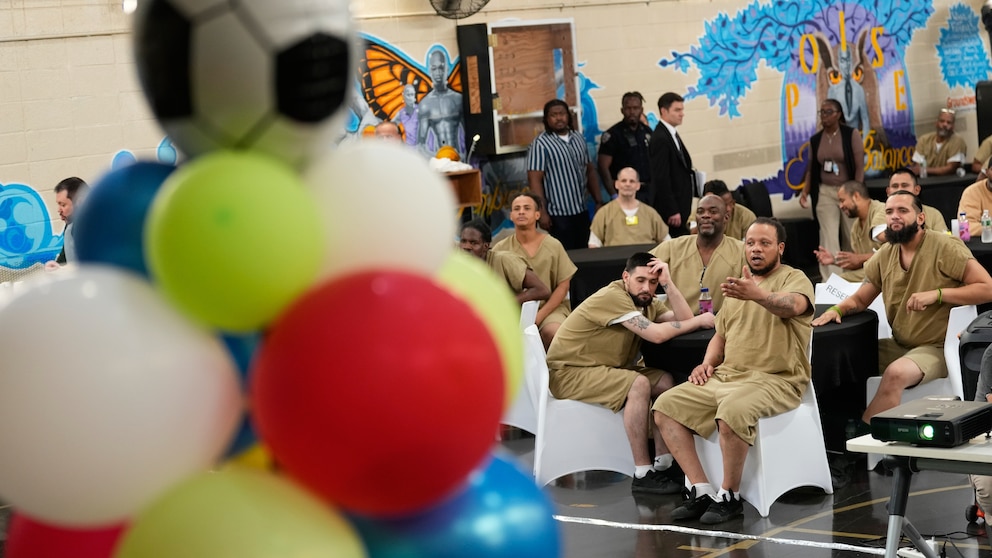
Since the World Cup tournament kicked off last month, the jail has been hosting watch parties for inmates who have demonstrated good behavior, including remaining incident-free for at least 30 days. The scope of the initiative is substantial: there have been 90 such events with about 4,500 of the roughly 6,600 inmates participating. The variety of programming available to well-behaved prisoners extends beyond sports, tapping into the jail’s strategy to reduce violence through entertainment and recreation.
One inmate, Victor Caldas, an Argentina fan, expressed appreciation for the dedicated viewing opportunity. Caldas noted that he valued being able to watch the game uninterrupted among fellow soccer fans because competition for television access in his housing unit is typically fierce. “I give it all my best to get this little time and enjoy the moment,” he said.
The timing of Wednesday’s watch party was notably controversial. The event came just one day after a federal official called a remediation manager submitted a reform plan that included stark descriptions of dysfunction at the facility. The report detailed incidents such as inspectors finding a housing unit filled with smoke from fires set by prisoners, with blaring alarms and people pounding on their cell doors. In another case, prisoners streamed through an unsecured door and brawled after a guard abandoned his post. These accounts highlighted the severe challenges that plague the jail complex.
The watch party nonetheless proceeded, and it drew an unexpected visitor. New York City Mayor Zohran Mamdani arrived shortly before kickoff, his trademark dark suit jacket off and his white dress shirt sleeves rolled up. He took a seat at a table and immediately began chatting with inmates about the tournament. One prisoner told others at his table that he expected Argentina to prevail over England and go on to face Spain, which had defeated France the day earlier. “You never know,” Mamdani replied, identifying himself as a professed Morocco fan.
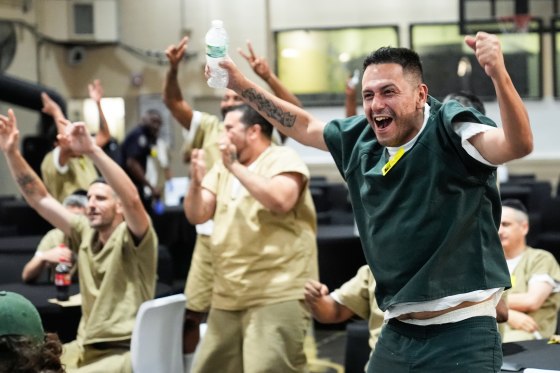
At another table, an inmate mentioned he was going home later that day. “That’s amazing,” the mayor said, shaking the man’s hand and patting his back before heading out at about the 20-minute mark of the game. As he departed, the jailhouse crowd erupted in a mix of groans and cheers as England struck first with a goal early in the second half.
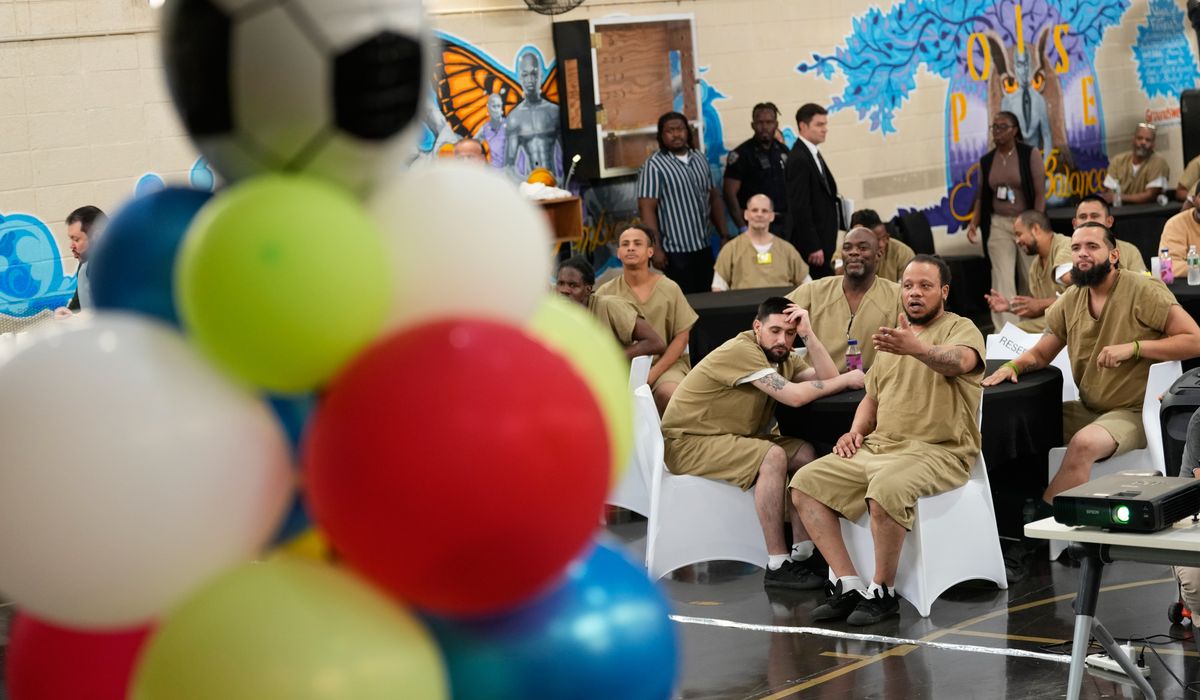
The watch party itself represented a rare moment of normalcy and recreation for inmates at a facility that has faced years of intense scrutiny and oversight. The conditions at Rikers Island have been so dire in recent years that a federal judge appointed a federal official to oversee improvements. The jail has housed nearly 7,000 people serving short sentences or awaiting trial, with detainees often confined in crowded conditions that have contributed to rising violence.
For many inmates, access to entertainment and recreational programming depends entirely on maintaining good behavior. The World Cup watch parties represent one such opportunity, providing a brief respite from the tension and hostility that inmates report as endemic to the facility. The initiative underscores an ongoing effort within the New York City Department of Correction to use programming as a tool for reducing violence and creating incentives for positive conduct, even as the facility continues to grapple with systemic challenges that have drawn international attention and calls for reform.