

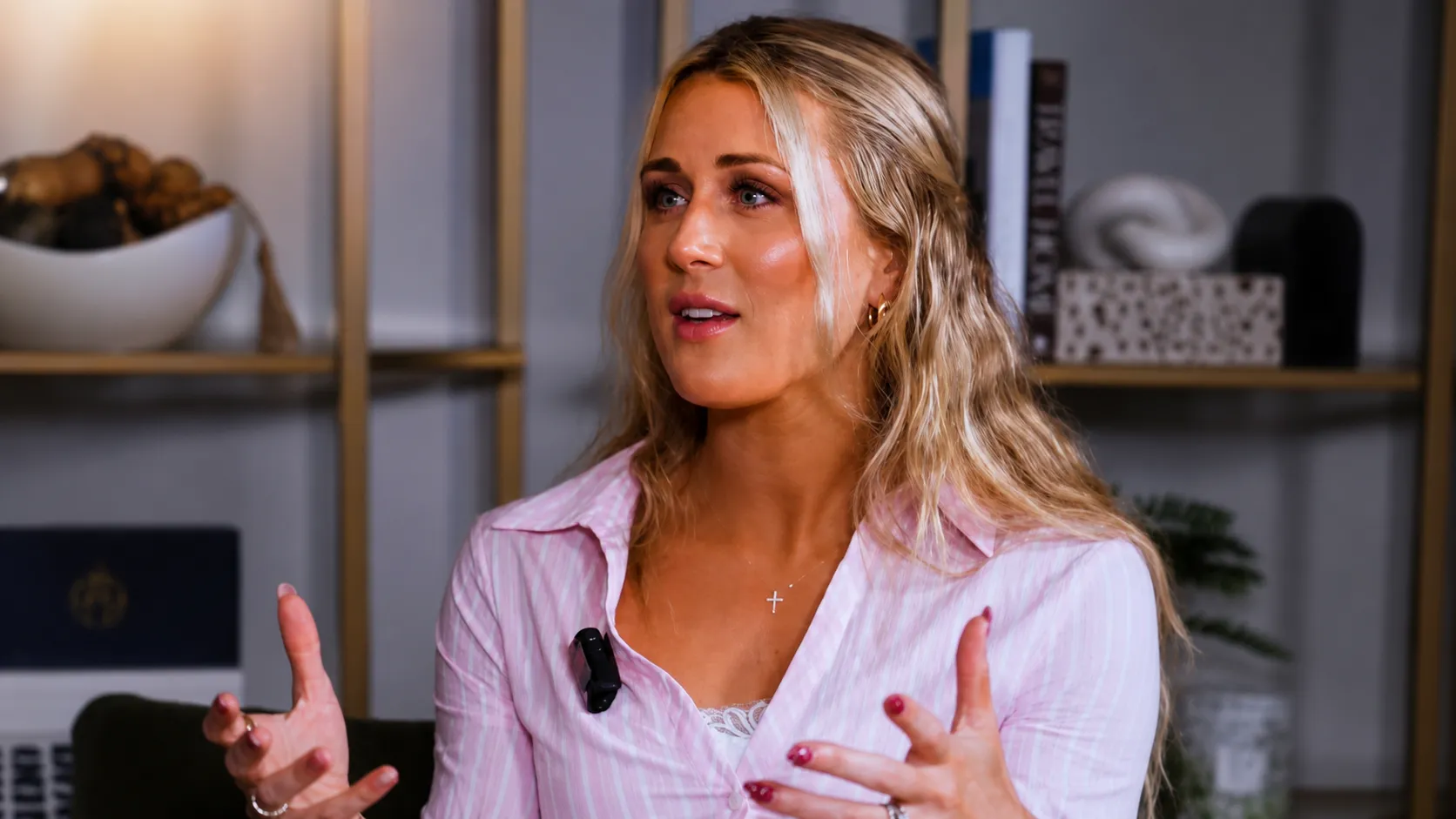
Riley Gaines says she learned an unexpected lesson about hormonal birth control after a doctor flagged low bone density during a medical screening and suggested the medication she had used to skip periods may have played a role.
The former college swimmer said she did not fully understand much about birth control when she first started using it. At the time, she was training intensely as an athlete and spending as much as six hours each day in the water.
Discussions about birth control can be complicated, as many women balance the advantages of using it with the possibility of side effects. In general, hormonal contraception is often used not only to prevent pregnancy but also to reduce or suppress monthly bleeding, although doctors say a regular period is not required for health.
During an appearance on the Katie Miller Podcast, Gaines explained that she later discovered a specific medical concern after using the medication for several years.
“I got on it specifically to stop my period entirely. Looking back now, if I could go back and tell 18 or 19-year-old me anything, I would absolutely tell her not to do that,” she admitted.
The 26-year-old campaigner went on to explain why she made that choice while competing.
“You can imagine it’s not exactly comfortable to bleed in a sport like that. The bathing suits are pretty revealing.

She said the concern only came to light after she underwent an extensive medical check-up that included blood tests and cancer screenings.
“But I just had a pretty comprehensive health screening – blood work, cancer screenings, the works. One of the only things the doctors flagged was that I had super low bone density.”
Gaines said she was surprised by the finding and challenged it, noting that she regularly does weight training, which is typically associated with stronger bones.
She then described how her doctor responded after asking about her medical history.
“She asked if I had been on birth control that let me skip my periods. When I said yes, she told me that was likely the cause.
“She said it’s good that we caught it now – I’m young and healthy, so I can work to build it back up – but if I had stayed on it longer, it could have really hurt me in the long term.”
According to the National Library of Medicine, adults over the age of 30 naturally begin to lose bone mass as part of the aging process.
The wider concern is whether some forms of birth control might affect bone health earlier in life, especially before peak bone mass is fully established in the first two to three decades of life. Experts say bone density is influenced by many factors, including age, genetics, body weight, nutrition, vitamin D, smoking, alcohol use, physical activity and sex hormones.
Research suggests the strongest bone-density concerns are tied to the birth control shot, depot medroxyprogesterone acetate, which can cause temporary bone loss that usually improves after stopping. For combined hormonal methods such as the pill, patch and ring, the evidence is more mixed, with some studies suggesting a possible effect on bone mineral density in adolescents and young adults, particularly with very low-dose estrogen formulations.
A bone density scan, often called a DXA or DEXA scan, is the standard test used to measure bone mineral density. It can show low bone density, but it does not by itself explain the cause.
Mayo Clinic lists other possible side effects of the pill, including nausea, headaches, breast tenderness, bloating and breakthrough bleeding.
Women can also react very differently to the same form of contraception, which is one reason research into the pill and its side effects remains challenging.
For athletes and other young women thinking about menstrual suppression, doctors generally recommend discussing the method, dose and individual risk factors before starting hormonal birth control, especially if there are concerns about bone health, nutrition or a history of stress fractures.