

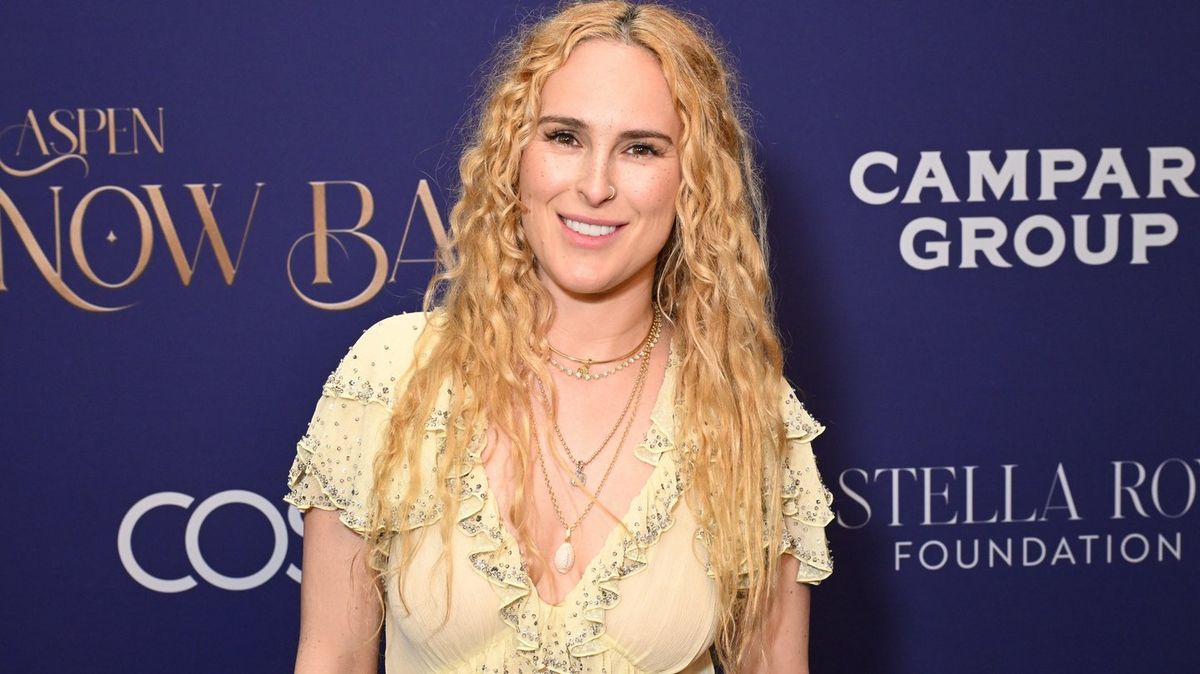
Bruce Willis and Demi Moore’s daughter has hit back at people who have something negative to say about her continuing to breastfeed her daughter into toddlerhood.
Rumer Willis, 37, has made it clear she’s not interested in outside opinions when it comes to how she feeds and raises her child.
In the US, exclusive breastfeeding is commonly advised for the first six months. After that, the Dietary Guidelines for Americans notes that breastfeeding can continue as solid foods are introduced, up to 12 months and beyond.
Both the American Academy of Pediatrics and the World Health Organization also support continued breastfeeding alongside complementary foods for as long as two years or longer.
Even with guidance like that from major health bodies, extended breastfeeding can still attract criticism — and Willis has been pushing back publicly.
On Instagram, the songwriter previously shared a post responding to those who object to her breastfeeding her nearly three-year-old daughter, Louetta (“Lou”).

The October 2025 Story showed herself nursing Lou on the couch, as she wrote over the image: “For the haters who come at me about breastfeeding my 2 yr old I hope you have a blessed day.”
Now, roughly six months later, she’s revisited the topic with another post in the same spirit.
Sharing a video of herself feeding Lou — who turns 3 on April 18 — Willis added text over the clip that read: “When someone starts judging my parenting.”
The video then switches to a woman drawing a line between what’s “your business” and what’s “my business,” with the message implying Willis’ breastfeeding choices fall firmly into the latter category.
“Sorry not sorry,” Willis captioned the video.
Willis welcomed Lou in April 2023 with her then-boyfriend, musician Derek Richard Thomas, and her response prompted a wide range of reactions online.
Some commenters applauded her for being open and confident about her parenting, while others argued that sharing it on social media was inappropriate.
One person wrote: “Ew this is disturbing…”
Another said: “You go girl. Your the loving Mama, your decision, Hunny. You do the best you can do and let these self righteous judges go to hell.”
Regardless of the debate, the health guidance behind extended breastfeeding is well established.
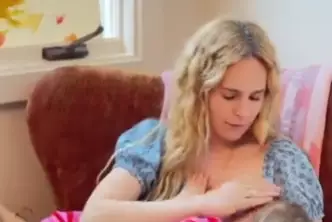
Breastfeeding is a normal part of motherhood, and for parents who are able and choose to continue, there can be benefits for both mother and child.
The World Health Organization points to links between breastfeeding and reduced risks for mothers, including lower chances of type 2 diabetes, as well as decreased risk of ovarian and breast cancer.
For children, breastfeeding has been associated with developmental benefits and may help reduce “the risk of illness and death from common infectious diseases”.
Culturally, extended breastfeeding is also more common in many places outside Western countries.
According to Mothers Choice Products, mothers in Turkey may breastfeed for up to two years, while some tribes in Namibia continue for even longer.
By contrast, breastfeeding rates in the UK are among the lowest, and the US and Canada also lag behind some other regions.
Of course, for families who can’t or don’t want to breastfeed, formula feeding is a safe and widely used alternative.
As the saying goes: “Fed is best.”