

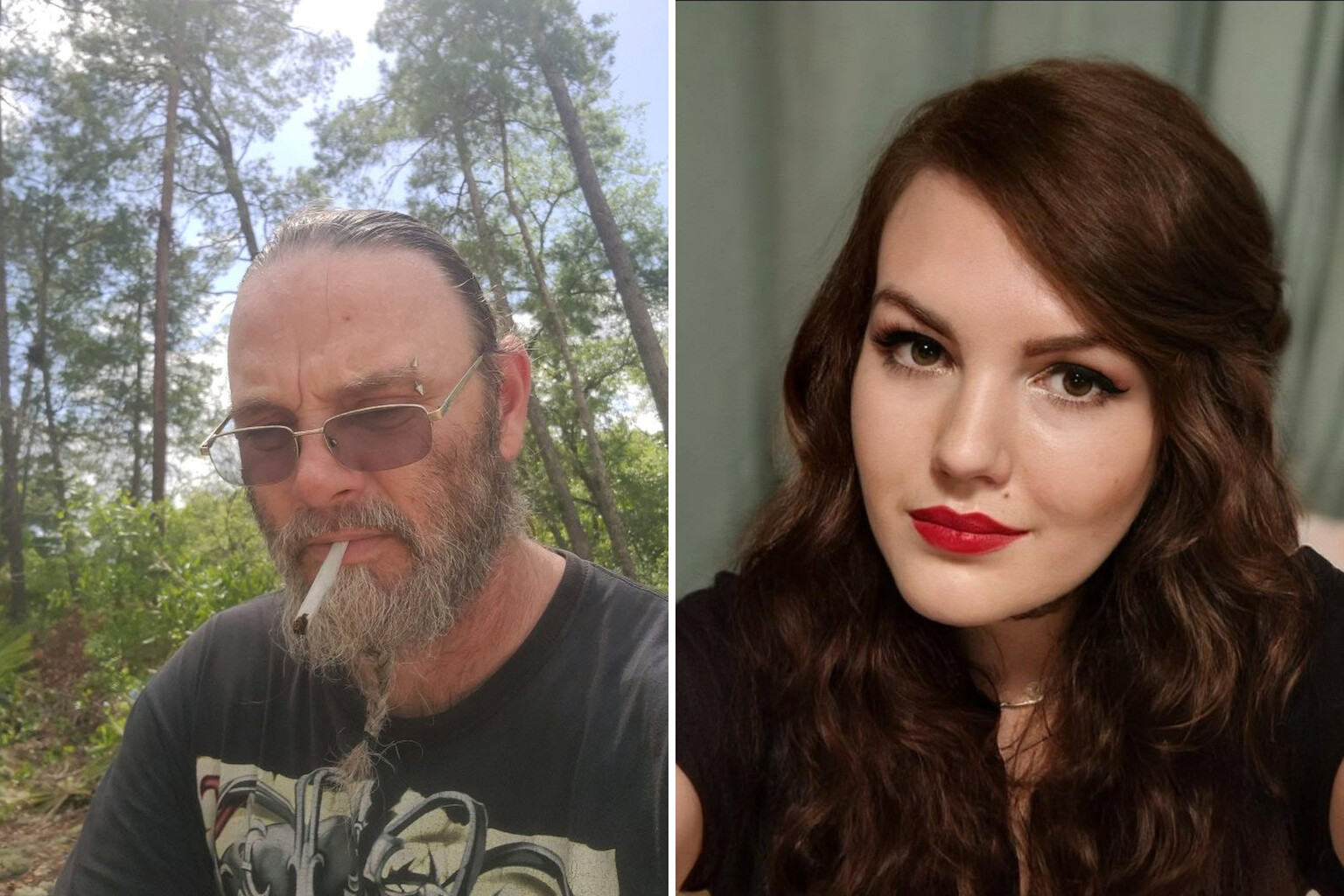
Prosecutor Amy Beth Berndt told jurors Tuesday that a forensic examiner recovered gruesome images from Dwain Hall’s phone after he allegedly tried to wipe every trace of Sonia Exelby from the device.
Hall, 54, a former pizza delivery driver, sat stone-faced and took notes as Berndt opened the state’s case against him at the Marion County Judicial Center in Ocala, Florida. He denies charges of first-degree murder and kidnapping in the October death of Exelby, 32, a British music tutor who traveled from the UK with what authorities say was the intention of being killed.
Berndt said Hall attempted to delete numerous nude photos of Exelby and a video as police closed in on him as a suspect. The forensic examiner managed to recover that material, the prosecutor told the jury.
“On his phone they also found something else,” Berndt said.
“They found numerous images of women being raped, tortured and murdered, horrific photographs of women with knives being shoved in their vaginas, images of women with nails piercing their breasts, and other wild, horrific things –– evidence that the reason the defendant beat, stabbed and murdered Sonia was for his own sadistic pleasure.”

The pair had connected on a fetish website before Exelby made the transatlantic journey, according to the prosecution’s account. The tutor’s suicidal state and Hall’s alleged appetite for extreme violence converged in what authorities describe as a deadly arrangement brokered online.
Hall had adopted the online persona “Alfa Sadist,” a handle that signaled his purported dominance in the fetish community and, prosecutors suggest, his appetite for cruelty that transcended role-play. The images on his phone, Berndt argued, were not merely disturbing curiosities but the blueprint for what he ultimately inflicted on Exelby.

The case has drawn international attention for its intersection of mental health crisis, internet subcultures, and alleged predation across national borders. British authorities were notified of Exelby’s death after her body was discovered in Marion County, prompting a joint investigation that led to Hall’s arrest.
Defense attorneys have not yet presented their opening arguments. Hall’s demeanor in court Tuesday—methodically writing notes while the prosecutor detailed the phone’s contents—offered little indication of how he will counter the state’s narrative of calculated sadism.

The trial’s opening day focused heavily on the digital trail Hall allegedly left and tried to destroy. Cell phone forensics have become central to modern criminal prosecution, and the recovery of deleted material in this case allowed Berndt to construct what she portrayed as a window into Hall’s motivations.
The images described in court went beyond typical adult content into territory that Berndt characterized as documentary evidence of intent. The prosecutor’s graphic enumeration—knives, nails, the specific nature of the wounds depicted—was designed to establish that Hall’s alleged actions were not spontaneous but the fulfillment of long-held desires.

Exelby’s decision to travel to Florida, and her reported wish to die, complicates the prosecution’s task of proving murder rather than assisted suicide or accident. The kidnapping charge suggests authorities believe she was held against her will at some point, though details of her final hours were not fully laid out in Tuesday’s proceedings.
Hall faces life in prison if convicted; Florida law does not permit the death penalty in this case. The trial is expected to continue with witness testimony and potentially Hall’s own account of the events that brought a British music tutor to a fatal encounter in central Florida.