

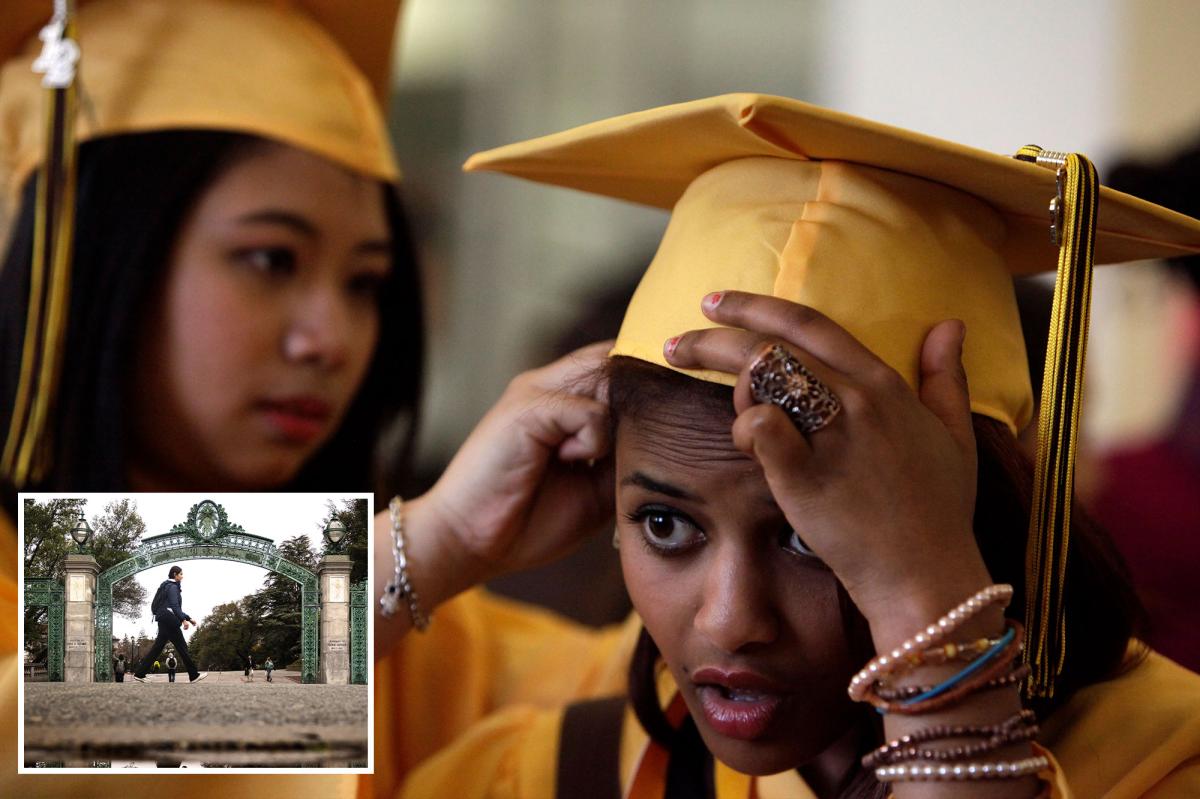
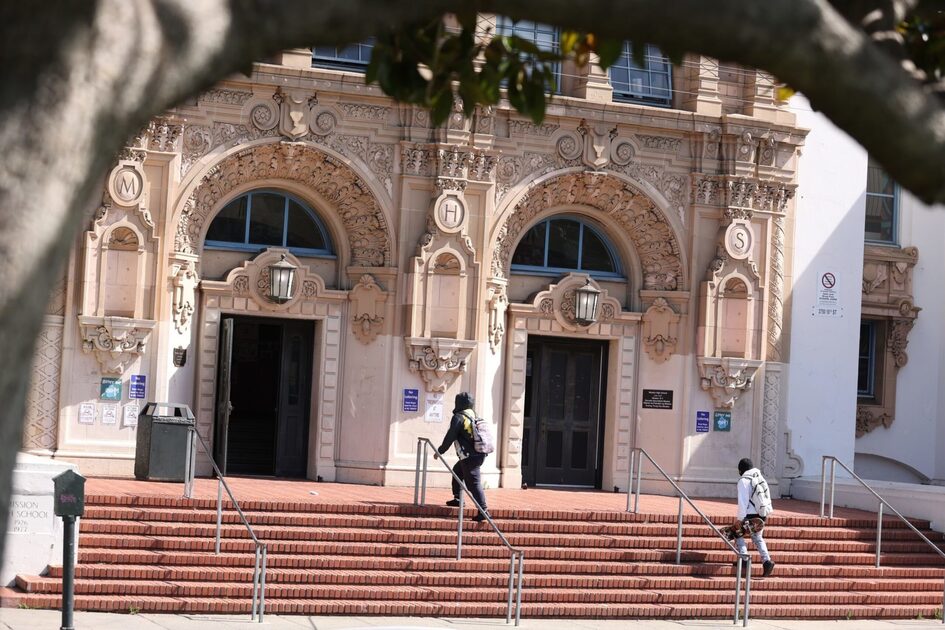
Levi Lum, a UC Berkeley student and Mission High School graduate, has spoken out about how easy grades were to earn at his alma mater as the school posts California’s highest acceptance rate to the elite university despite rock-bottom test scores.
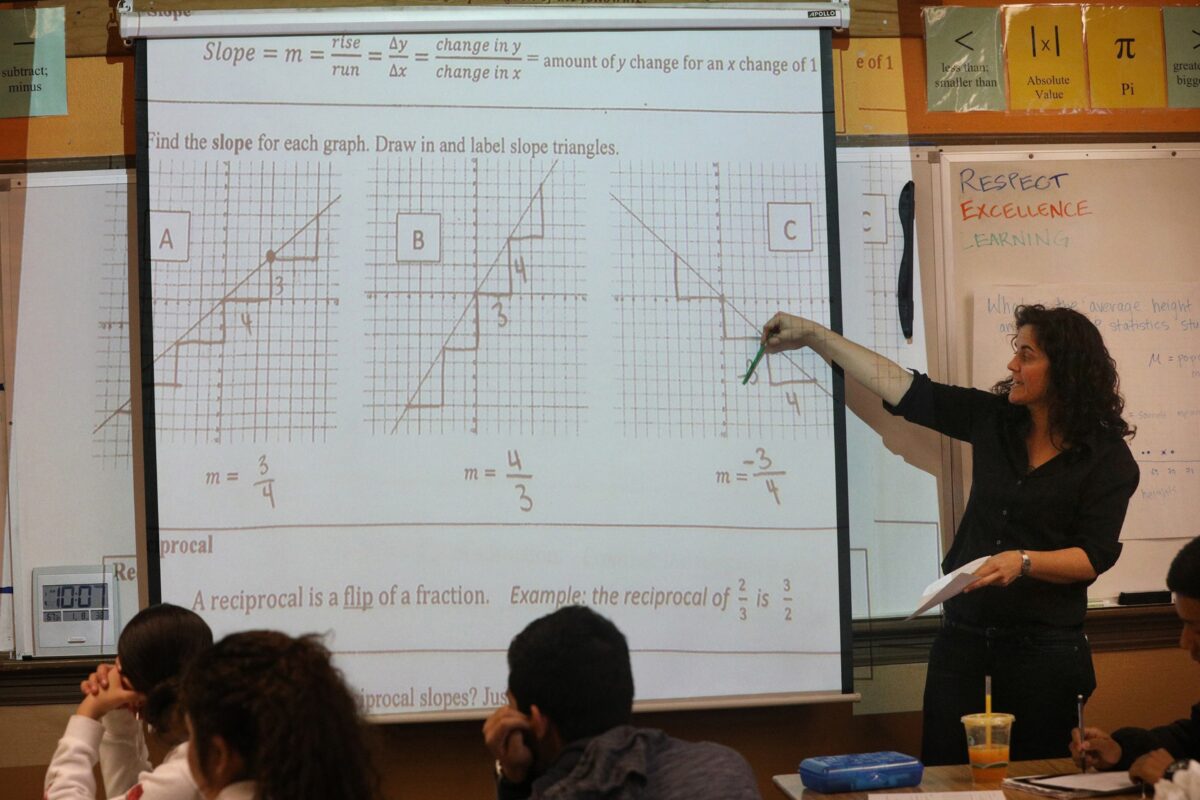
Lum, now a rising junior economics major at Berkeley, told the San Francisco Standard that the disconnect between Mission High’s glowing transcripts and its students’ actual preparation has left many struggling once they arrive on campus. “Grades were sometimes too easy to earn,” he said. “In many required classes, attendance and basic completion could be enough to receive a grade that would ordinarily signal strong proficiency.”
The numbers paint a stark picture. Mission High, located in San Francisco’s Mission District, had a 44.7% acceptance rate to UC Berkeley for fall 2025, with 34 out of 76 applicants gaining admission. That rate is nearly double the next-highest San Francisco public school and roughly four times the rate of Burton High School, according to data from the University of California Office of the President. The state average for Berkeley acceptance sits at about 15%.
Yet on California’s 2025 state assessment exam, just 17% of Mission High’s 11th graders scored proficient or above in English, and a shocking 6% hit that mark in math. Both figures rank as the lowest of any school in the San Francisco Unified School District, which averaged 59% and 43% respectively. Mission’s math proficiency rate means 94% of its juniors failed to meet state math standards.
Misael Villalta, another Mission High graduate who made it to Berkeley, echoed Lum’s concerns about academic readiness. “The challenge begins once students arrive on campus,” he said. “Many of us are academically behind our peers.” Villalta pointed to limited Advanced Placement offerings at Mission compared to Lowell High School, the district’s academic magnet. Mission caps juniors and seniors at three AP or honors classes yearly and offers just eight AP subjects total, while Lowell offers 33 with open enrollment.
Lum added that Mission’s most demanding courses were often electives, and he noted disparities between classroom grades and AP exam scores that suggested strong grades didn’t always reflect deep comprehension. “Most teachers seemed to care a lot, but the quality and collegiate relevance of instruction were often uneven,” he said. Once at Berkeley, Lum found himself scrambling to catch up. “I did not arrive at Berkeley unable to read, write, or understand difficult ideas,” he said. But he noted that he found gaps in mathematical fluency and struggled to keep pace with cumulative lessons. Classes moved faster than he was used to, making “it harder to keep up with new material.”

The fallout from this preparation gap shows up in retention and graduation data. Mission High ranks as the second worst in California for the proportion of students who stay at Berkeley past their freshman year. Its first-year retention rate dropped from 100% in 2018 to 83% in 2024. Just 47% of Mission graduates who enroll at any UC campus finish within four years, the lowest rate among San Francisco public high schools and 23 points below the district average. The six-year graduation rate stands at 61%, also the lowest in the city.
San Francisco resident Liz Le has drawn attention to the contrast between Mission and Lowell High, where around 71% of students met math standards. “UCs punish Lowell students for working hard because of their race, while setting up Mission kids up for failure & depression,” Le said, claiming “race-based admissions fails all kids.” UC Berkeley does not consider race in admissions decisions, though its 2020 move to drop SAT and ACT requirements was presented as promoting equity for disadvantaged applicants.
The test-blind policy has become a flashpoint. Between 2017 and 2019, Mission’s average annual Berkeley acceptance rate was 24.5%. Between 2023 and 2025, it jumped to 41.8%. Thousands of UC faculty members have signed open letters this year demanding the restoration of standardized testing. Mina Aganagic, a UC Berkeley professor of mathematics and physics who helped write one letter, described students arriving without “any mathematical infrastructure at all.” She warned that without verification of preparation, UC risks becoming “some kind of degree-stamping mill.”
The consequences play out in classrooms. “Some students are five to eight years behind in mathematics,” wrote UC Berkeley math professor Zvezdelina Stankova in an op-ed. “Office hours that should be spent discussing integrals instead become lessons on fractions and basic algebra you would expect students to learn in middle school.” A UC San Diego report found a 30-fold increase in freshmen lacking basic math skills, from 30 students in 2020 to 900 in 2025. At Berkeley, the share of first-semester calculus students who failed to pass rose from 18.5% to 30.7% between 2021 and 2023.
The San Francisco Chronicle published data showing Mission High’s dominance in Berkeley admissions alongside its abysmal state test scores, prompting outrage from critics who see grade inflation and eliminated testing requirements as a toxic combination. The story spread rapidly across conservative media and education reform circles, with commentators seizing on the 94% math failure rate as evidence that holistic admissions have gone too far.
Mission High’s principal declined to comment to the Standard. UC Berkeley spokesperson Janet Gilmore confirmed that Mission’s elevated acceptance rate has held “for the last few years” but said it isn’t part of “a particular strategy to target an individual school.” UC Davis mathematician Joel Hass offered a bleaker assessment, saying placing students in programs beyond their preparation is “a cruel recipe for ruining their lives.” Admissions strategist David Montesano framed Berkeley’s approach as akin to venture capital: “I think what they’re doing is they’re just giving these kids a chance. You don’t know which ones are gonna hit.”
The UC Board of Regents addressed testing at its July 14 meeting, with Chair Maria Anguiano setting a June 2027 deadline for the Academic Senate to deliver a formal recommendation. Any reinstatement is unlikely before fall 2028.