


The portrayal of humanity’s initial interaction with alien life has been a central theme in numerous science fiction films and literature. However, a recent study suggests that our first encounter with alien intelligence may be much more conspicuous than we have previously envisioned.
Classic stories such as H.G. Wells’ “War of the Worlds” and films like “Independence Day” have led many to anticipate that our first meeting with extraterrestrial beings might be aggressive and unfriendly.
In contrast, works like “Arrival” (2016) and “The Day the Earth Stood Still” (1951) depict a more peaceful form of contact, portraying advanced alien civilizations as benevolent and willing to share their knowledge. Yet, a leading astronomer now proposes that the real history of extraterrestrial discoveries might tell a different tale.
David Kipping, a prominent researcher in the study of extraterrestrial intelligences, has introduced his ‘Eschatian hypothesis’ in a new paper. This hypothesis suggests that our initial contact with alien life will likely be unfortunate for the extraterrestrials.
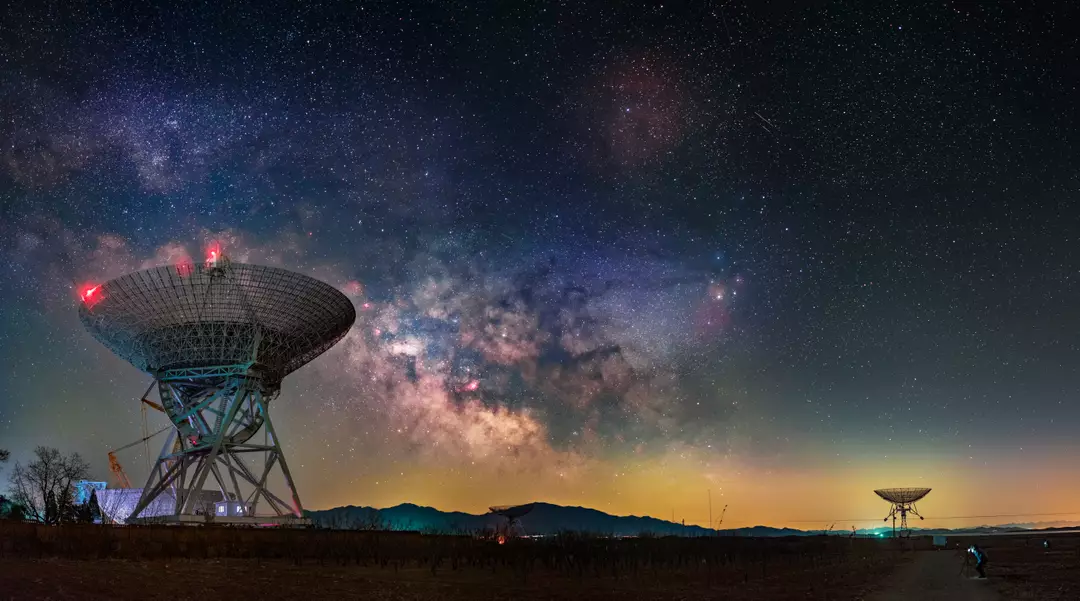
Before the paper’s release, Kipping discussed his ideas on his YouTube channel: “Hollywood has preconditioned us to expect one of two types of alien contact, either a hostile invasion force or a benevolent species bestowing wisdom to humanity.
“But the Eschatian hypothesis is neither.”
Scientific discovery often reveals that the first observable instance of an astronomical phenomenon does not accurately represent the wider context. This ‘detection bias’ frequently results in the initial discovery being the most prominent example.
A clear illustration of this phenomenon is the human eye’s ability to see up to 2,500 stars on a clear night. Approximately one-third of these visible stars are evolved giants, significantly outshining smaller stars and red giants, even though giant stars are only about one percent of the known universe.
Kipping, who directs the Cool Worlds Lab at Columbia University, theorizes that our first detection of extraterrestrial intelligence signals will likely stem from a catastrophic event impacting an alien society.
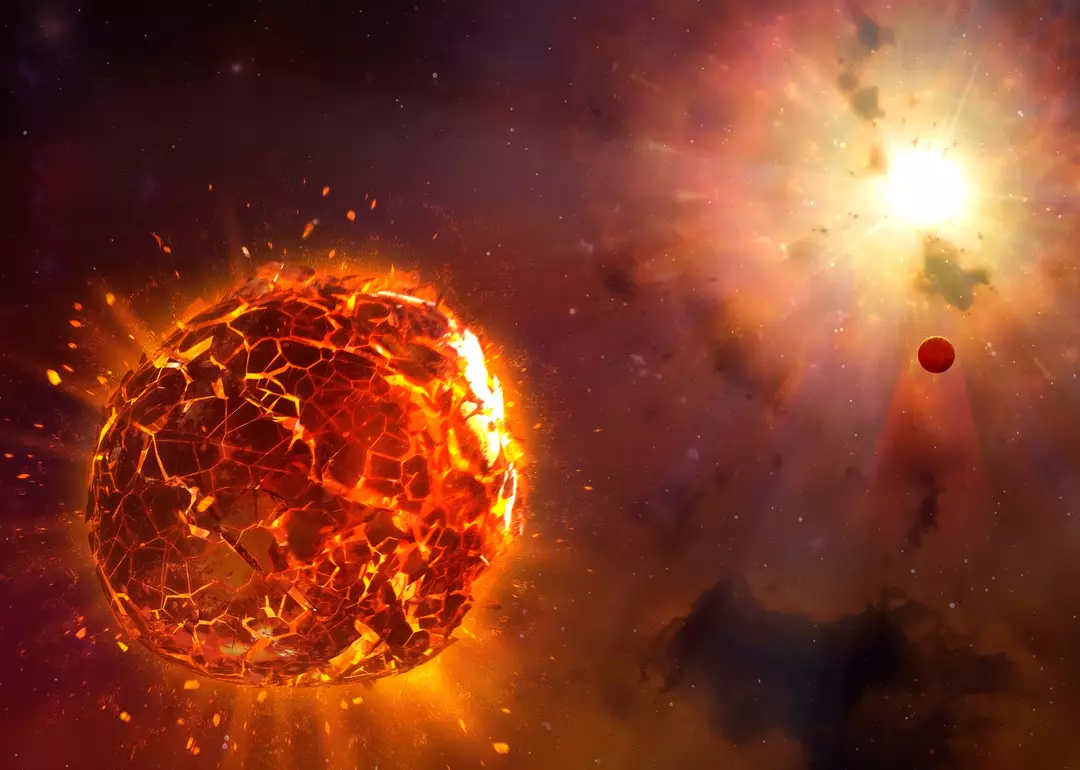
In the research article, Kipping writes: “If history is any guide, then perhaps the first signatures of extraterrestrial intelligence will too be highly atypical, ‘loud’ examples of their broader class.
“Motivated by this, we propose the Eschatian Hypothesis: that the first confirmed detection of an extraterrestrial technological civilization is most likely to be an atypical example, one that is unusually “loud” (i.e. producing an anomalously strong technosignature), and plausibly in a transitory, unstable, or even terminal phase.”
Such ‘loud’ technosignatures could be identified by Earth’s space observatories from millions of light-years away. They might include phenomena like a sudden energy surge or signs of rapid climate change on a distant planet.
Kipping suggests that “first contact is with a civilisation in its death throes, one that is violently flailing before the end.”
According to this hypothesis, astronomers should broaden their approach, focusing on detecting these ‘loud’ signals of a civilization in decline rather than targeting specific planets or solar systems.