

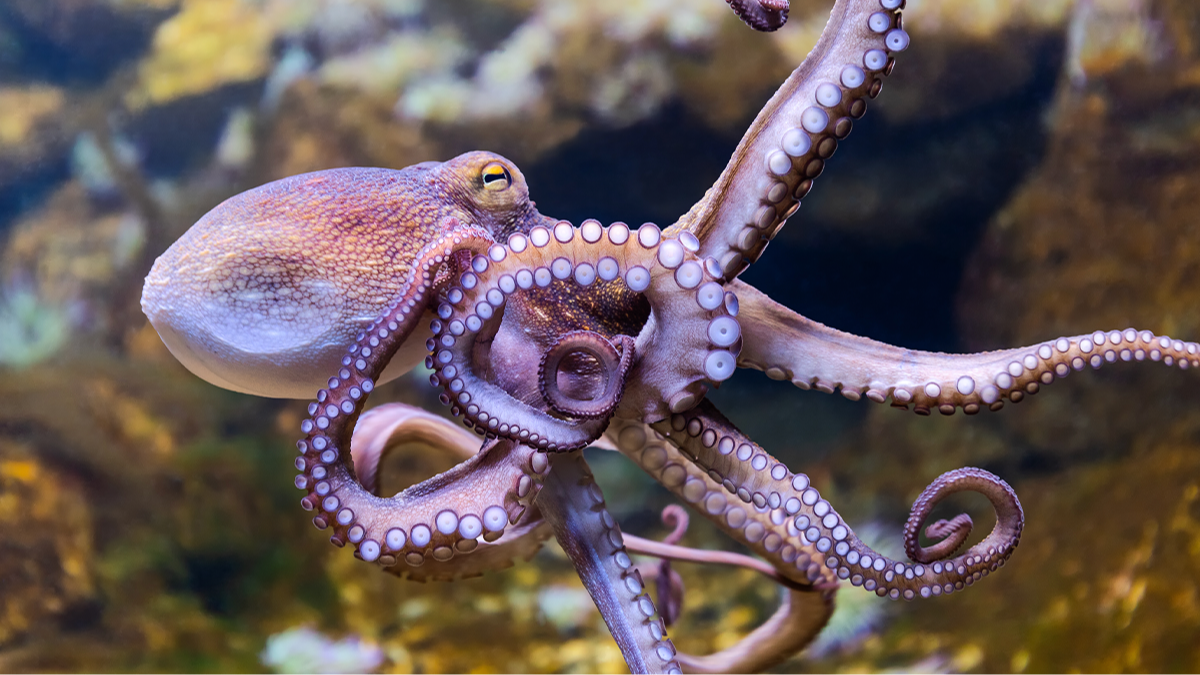
Scientists conducted experiments where they dosed octopuses with MDMA.
First reported in the journal Current Biology, the research explored what happens to octopus behaviour when the animals are exposed to the recreational drug, particularly whether it shifts how social they are.
MDMA, often known as ecstasy, is a stimulant that is illegal in many parts of the world despite its enduring popularity.
It’s widely linked to rave culture because users commonly report surges of energy alongside intense feelings of euphoria.
At a biological level, the drug interacts with transporter proteins in neurons, boosting serotonin activity—the chemical often tied to those euphoric sensations. Researchers wanted to see whether a similar mechanism might influence octopuses.
Because octopuses are known for their intelligence and complex behaviour, the authors tracked how their usual patterns changed after MDMA exposure.
One of the paper’s co-authors was Johns Hopkins School of Medicine neuroscientist Gül Dölen, who helped lead the 2018 study.
“As human beings, we like to know where we came from,” said Dölen.
“MDMA is an amazing tool for studying social behaviors across multiple species.”
So what did the team see when the octopuses encountered MDMA?
The experiments focused on California two-spot octopuses, a species that typically isn’t known for being especially social. In a controlled setup at the Marine Biological Laboratory in Woods Hole, Massachusetts, researchers placed two individuals into the same tank under conditions designed to limit aggression.
To do this, one octopus was positioned beneath a mesh pot, allowing the animals to make contact and interact while preventing serious harm.
When no drug was involved, the octopus that could move freely generally kept its distance, spending most of its time on the far side of the tank—behaviour consistent with what the researchers anticipated.
That pattern shifted after the octopuses were put into seawater containing dissolved MDMA.
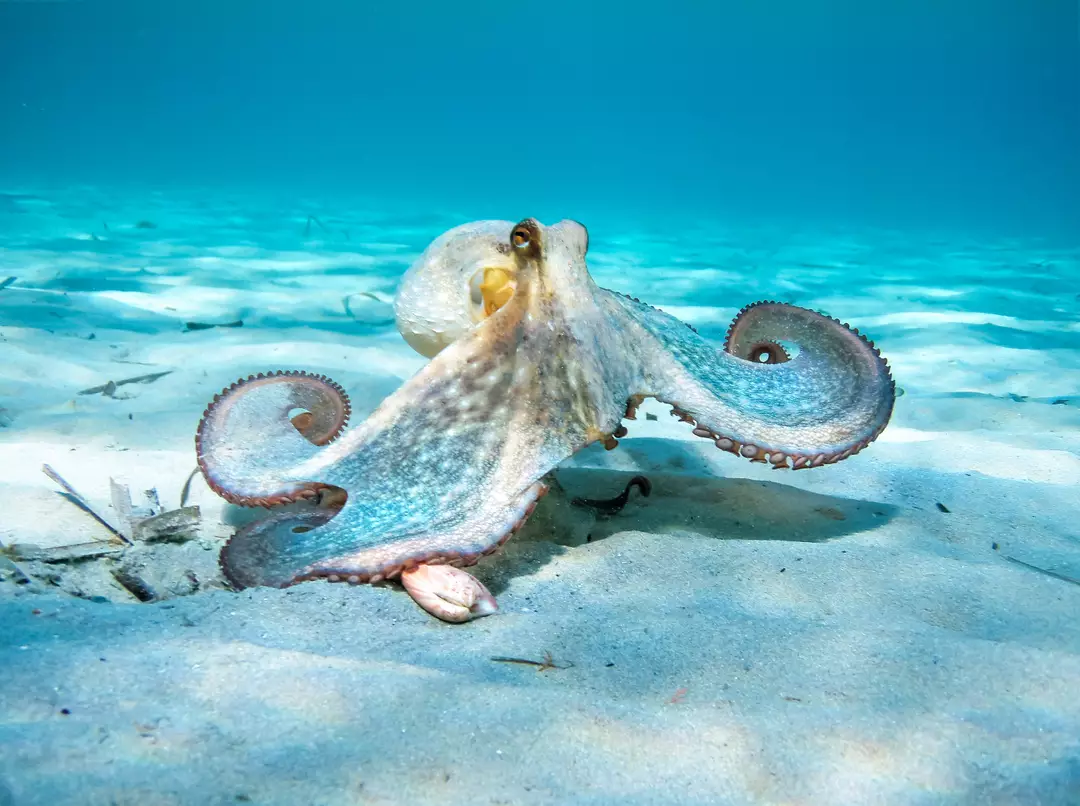
In the MDMA condition, the animals appeared less tense in the water. The researchers noted changes in posture, more fluid movement, and even arm motions and underwater somersault-like swimming.
They also stopped avoiding the mesh container holding the other octopus, which had been typical when they were sober.
Rather than steering clear, the free octopus more frequently approached the mesh pot, attempting contact and at times seeming to hold onto or “embrace” the container.
Based on these observations, the study raised the idea that brain systems involved in social bonding may have deep evolutionary roots—possibly arising through chance, but with meaningful consequences.
Dölen said: “This reiterates the importance of understanding function [at] the level of molecules. Focusing on brain regions does not give us the whole story.”