

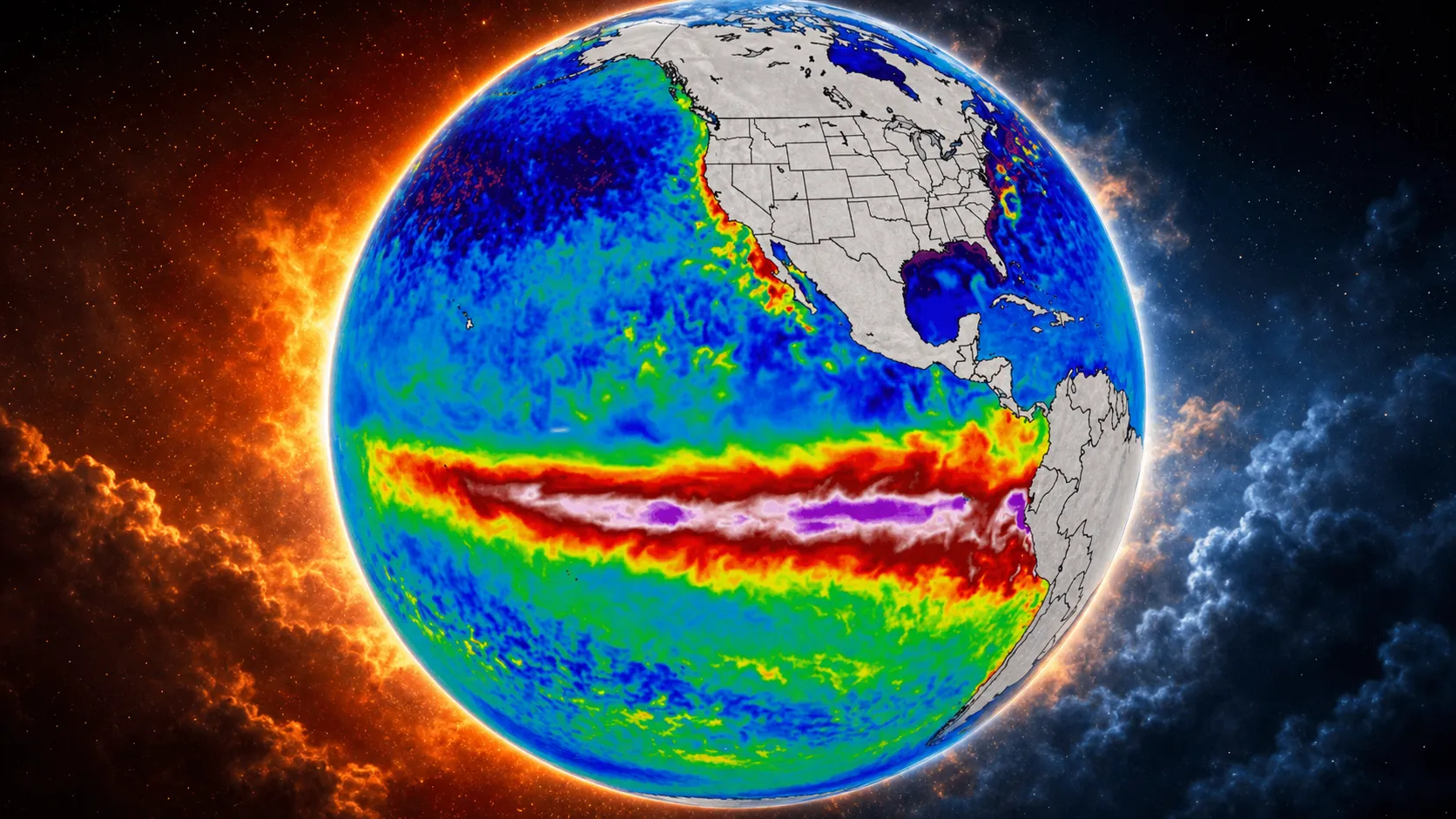
With climate experts warning that a potentially powerful El Niño is building in the Pacific, some scientists are now examining one of the boldest ideas ever put forward in climate intervention: reducing the amount of sunlight reaching Earth.
This method is called Stratospheric Aerosol Injection, or SAI. It would involve releasing huge quantities of tiny sulphur-based particles high into the stratosphere, where they could remain for years and bounce a portion of the sun’s energy back into space.
The idea is not a way to “turn off” El Niño, and researchers stress that it would never replace cutting greenhouse-gas emissions. But fresh modelling suggests that, at a large enough scale, SAI could reduce the severity of marine heatwaves and partially cool the tropical Pacific, which is the region where El Niño begins.
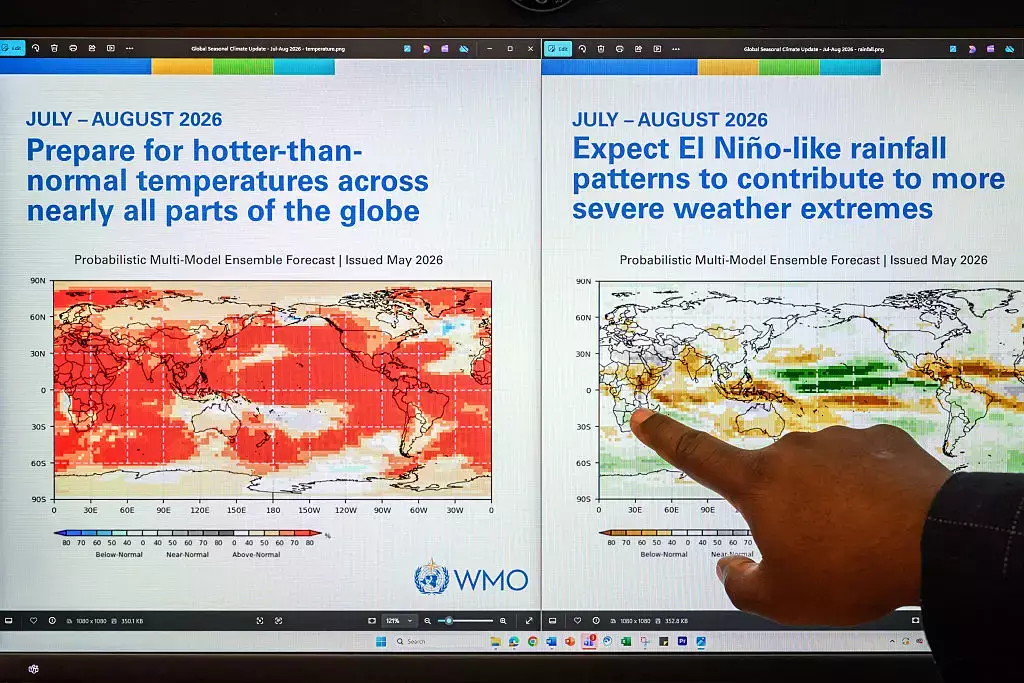
Scientists say the timing of the research is notable because the tropical Pacific has been shifting toward El Niño conditions again, with official forecasts pointing to a growing chance of a moderate or stronger event later in the year. Marine heatwave trackers have also shown unusually warm waters across parts of the Pacific, adding to concerns about another period of extreme ocean heat.

The research arrives amid growing concern about how El Niño interacts with a warming climate. El Niño is the warm phase of the El Niño-Southern Oscillation, a natural climate pattern that can supercharge global temperatures, shift rainfall patterns and worsen drought, flooding and wildfire risk in different regions of the world.
Researchers have also been warning that large marine heatwaves can feed into the broader El Niño signal rather than simply result from it, creating a possible feedback loop in which warm waters help sustain more warmth.
Scientists from Michigan State University used climate simulations to compare a future with no major change in current trends against two separate geoengineering scenarios.
What they found was striking. In a business-as-usual future, marine heatwaves are projected to become both more intense and more prolonged across most of the world’s oceans.
If SAI were used to limit warming to 1.5°C above pre-industrial temperatures, the model suggested that roughly one quarter of the ocean could avoid worsening heat conditions.
Under a stronger intervention designed to hold warming to 1°C, the model showed cooler marine heatwaves across about three quarters of the ocean and shorter events in most regions.
The biggest gains in the modelling were seen in the tropical Atlantic, the Indian Ocean, the Arctic Ocean and the South Atlantic.
Still, the outcomes would not be shared equally. Even under the strongest scenario, the North Atlantic, the Tropical Pacific and parts of the Southern Ocean would continue to experience worsening marine heatwaves unless emissions are reduced as well.
Lead author Dr Lala Kounta put it bluntly: “The geography of protection is deeply unequal.”

There is, however, a major warning attached to the proposal, something the researchers themselves openly acknowledge.
Co-author Professor Phoebe Zarnetske said: “There’s very little known about the ecological impacts.”
Earlier research has suggested that SAI could seriously alter weather systems around the world. Aerosol releases over polar areas may interfere with tropical monsoon cycles, while releases near the equator could potentially alter the path of the jet stream.
Scientists say those side effects matter because SAI would not simply “lower the thermostat” evenly. By changing how sunlight is absorbed and how the atmosphere circulates, it could shift rain belts, storm tracks and regional temperatures in ways that are hard to predict and even harder to reverse.
Dr Ying Chen, a cloud brightening expert at the University of Birmingham who was not involved in the study, said: “Change the solar radiation heating at one place, may lead to change of atmospheric pattern in other places.”
Professor Zarnetske also stressed that geoengineering should not be seen as an easy solution.
“It’s not a substitute for reducing emissions,” she said.
“Reducing emissions is still the priority and is the most effective action to mitigate climate change.”
Put simply, blocking a fraction of sunlight may provide extra time and could reduce some of the worst ocean heat extremes, but it does nothing to remove the underlying cause of the crisis. Scientists say the only durable solution remains the rapid reduction of greenhouse-gas emissions, alongside careful research into any climate intervention that could carry global risks.