

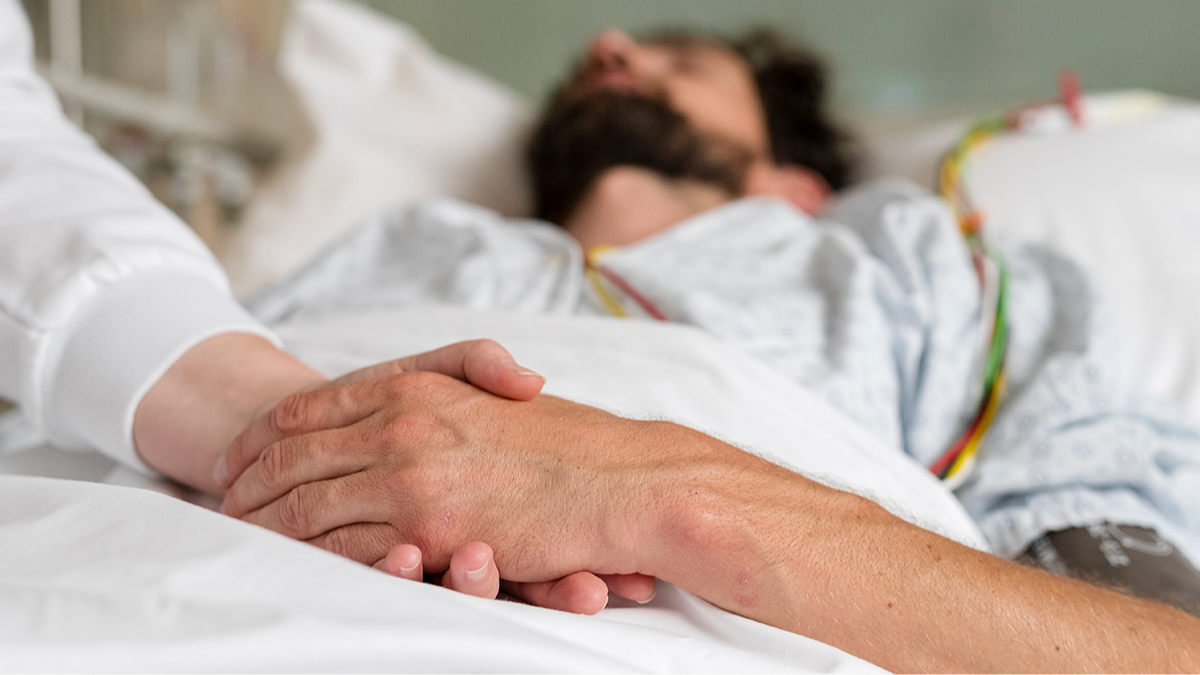
New research indicates that dying may unfold in “stages,” after evidence suggested consciousness could continue for hours even after the heart stops and the brain no longer shows electrical activity.
Anna Fowler, a researcher at Arizona State University, reviewed more than 20 studies detailing people’s near-death experiences, alongside animal research, to explore what may occur in the brain in the period after clinical death.
Based on the findings, Fowler argues that awareness might sometimes persist well beyond the point when the heart and brain appear to have ceased functioning, and she says this could warrant revisiting how science formally defines death.
Her analysis points to reports from some patients who had experienced “complete circulatory standstill” — meaning the heart had stopped — yet later described details of events happening around them.
In discussing the implications, Fowler compared death to something gradual and variable rather than a single, sharply defined line.
“Death, once believed to be a final and immediate boundary, reveals itself instead as a process – a shifting landscape where consciousness, biology and meaning persist longer than we once imagined,” she wrote.
“Consciousness may not vanish the moment the brain falls silent. Cells may not die the moment the heart stops,” she continued.
The study may also affect conversations around the ethics and timing of organ donation, since some donations occur shortly after cardiac activity ends and death is declared.
The American Society of Transplantation (AST) outlines procedures intended to keep organ donation safe and ethical. It explains that donation generally happens through two routes: after brain death, when multiple examinations confirm the diagnosis (DBD), or after circulatory death, when a critically ill patient — or their family — chooses to withdraw life support (DCD).
Returning to Fowler’s conclusions, the work encourages a view of death not as an abrupt shut-off, but as “the sudden extinguishing of life, but the beginning of a transformation”, with the hope that medicine, philosophy, and ethics can meet on this topic “with deeper humility and renewed clarity”.
“What does happen when we die? Nobody really knows,” Fowler added. “I really want people to think and consider what it means to truly die.”
She also argues the US definition of death — largely rooted in standards established in the 1980s — should be revised to reflect the possibility that dying is a multi-step process rather than one discrete moment.
“It should be considered in phases,” she said. “If you have cancer, you could have stage three cancer, stage two cancer. Well, there are stages of death.”