

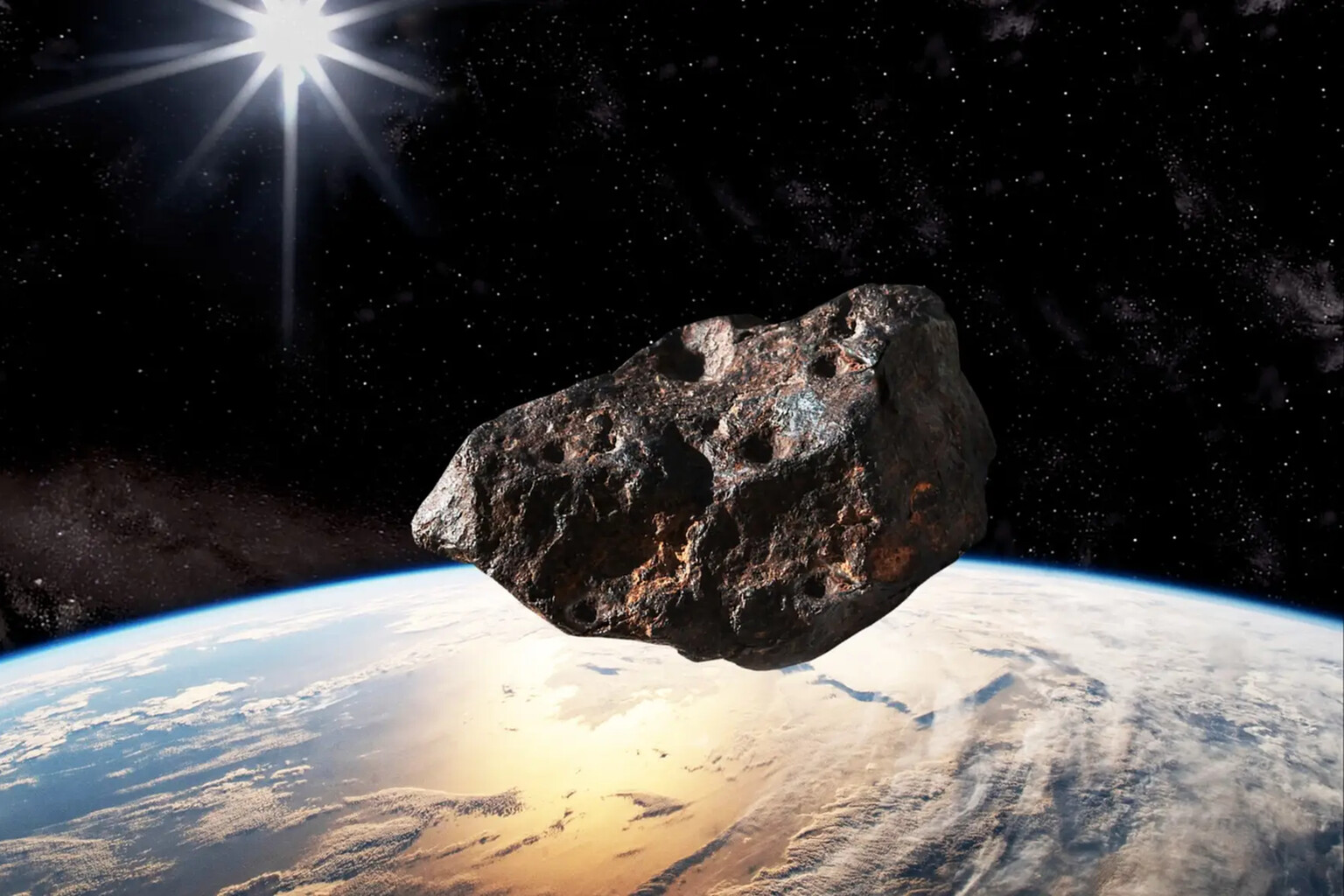
Astronomers have officially catalogued the 40,000th near-Earth asteroid, a milestone that highlights both how far planetary defense has come and how much of the sky remains unmapped.
The European Space Agency, which announced the tally this week, estimates that nearly 2,000 of those tracked objects carry what it calls a “non-zero chance” of striking Earth at some point in the next century. Most are small, and the overwhelming majority pose no genuine threat, but the sheer volume of newly spotted rocks underscores a dramatic acceleration in detection capabilities.
The first near-Earth asteroid ever found, Eros, was spotted back in 1898, yet discovery rates stayed relatively flat for nearly a hundred years. That shifted dramatically once dedicated survey telescopes began operating in the 1990s and 2000s. Luca Conversi, manager of ESA’s Near-Earth Object Coordination Centre, mapped the recent explosion in finds.
“The number of discoveries is rising exponentially, from one thousand at the beginning of the century to 15,000 in 2016 and 30,000 in 2022,” he said. Roughly 10,000 of the current 40,000 total have been added in just the last three years alone.
Conversi projected that the pace will only intensify. “As the next generation of telescopes enter operation, we expect the number of known NEAs to continue to grow at an even higher pace,” he shared.
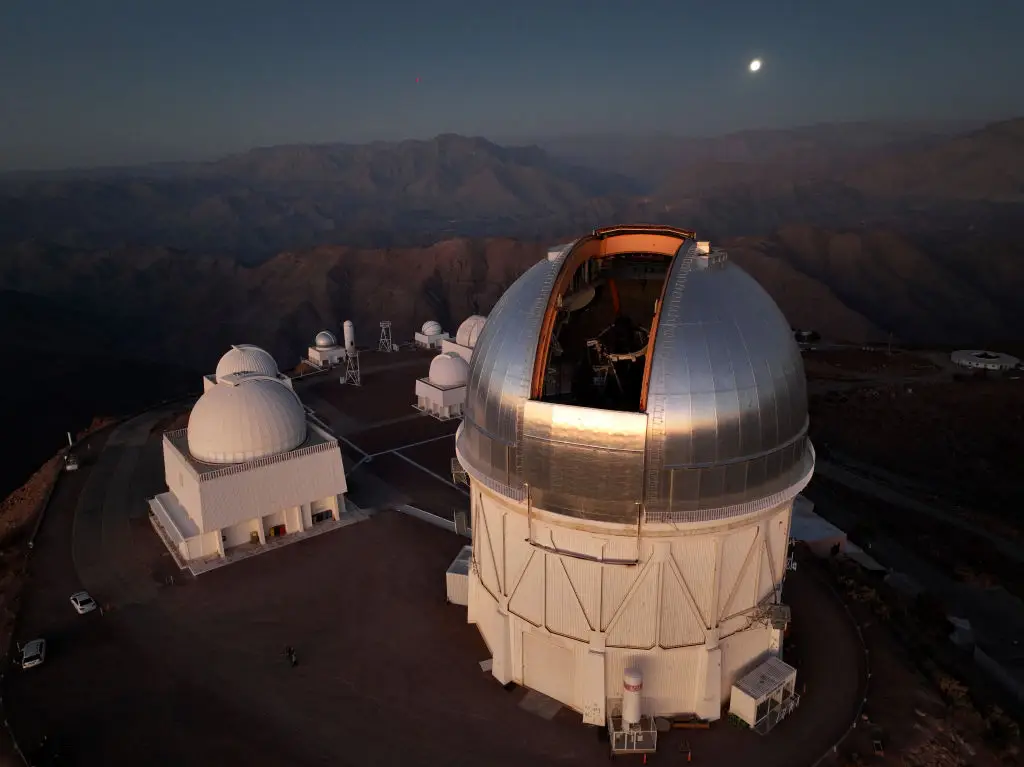
Two major facilities are driving that anticipated surge. The Vera C. Rubin Observatory in Chile, which became operational in 2025, will scan the skies for a wide range of phenomena and is expected to uncover tens of thousands of new near-Earth objects and other small bodies. ESA’s Flyeye telescopes, built with wide, insect-like fields of view, are designed specifically to catch objects that evade existing survey networks.
A near-Earth asteroid is defined as a rocky remnant from the Solar System’s formation more than four billion years ago, whose orbit carries it within roughly 28 million miles of Earth’s path around the Sun. In cosmic terms, that proximity is close enough to keep planetary defense teams watching permanently.
When astronomers identify a new object, they feed every observation into specialist trajectory-modeling software, projecting its path years, decades, or centuries forward to assess collision probability. Additional data typically refines those odds, pushing them upward or downward. Asteroid 2024 YR4 provided one such example earlier this year, as fresh observations revised its risk profile.
ESA notes that the largest asteroids, those exceeding half a mile across, are the easiest to spot, and scientists believe nearly all of them have already been catalogued. The more pressing gap lies in the mid-sized range, between 100 and 300 metres across, which are significantly harder to detect but could inflict serious regional damage if they struck. Current estimates indicate only about 30 percent of these mid-sized objects have been located so far.
The milestone comes as global investment in asteroid detection expands beyond traditional Western-led efforts. China announced plans this year to build an early-warning system for dangerous asteroids, part of a broader push to develop space-ground monitoring networks. The Vera C. Rubin Observatory’s decade-long survey is scheduled to begin its full science operations in the coming months, promising to transform the known population of Solar System objects.