

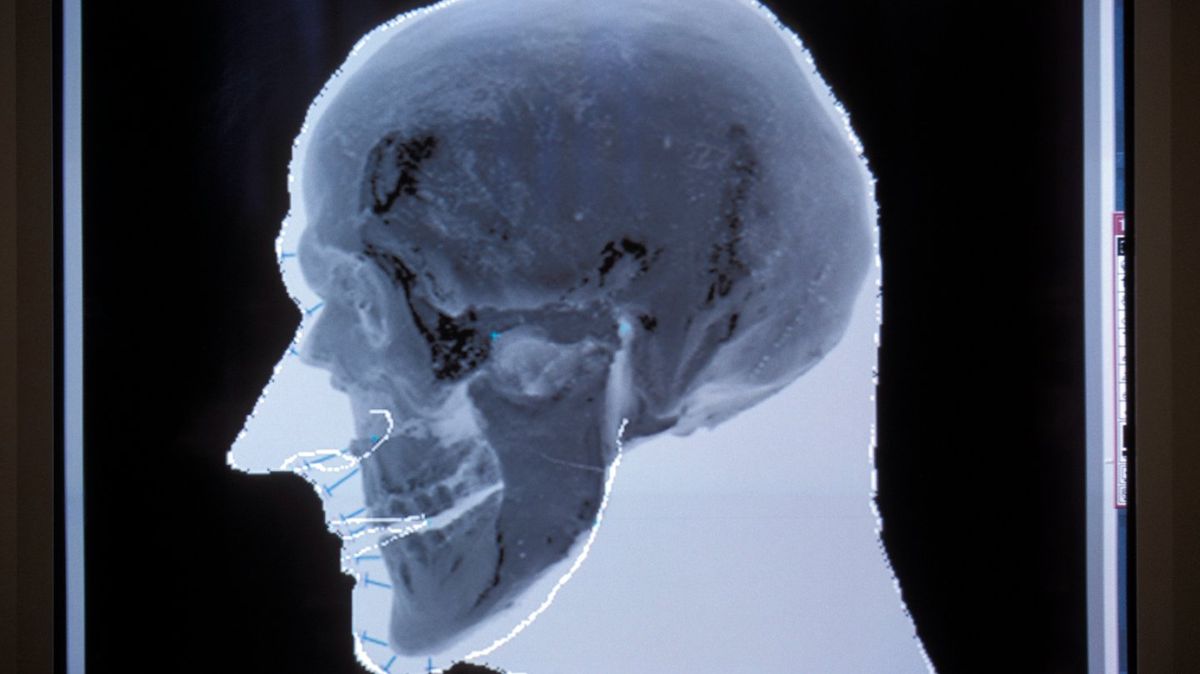
Scientists have successfully baked a sourdough loaf using yeast recovered from one of history’s most famous mummified remains — and they’re already planning what to try next.
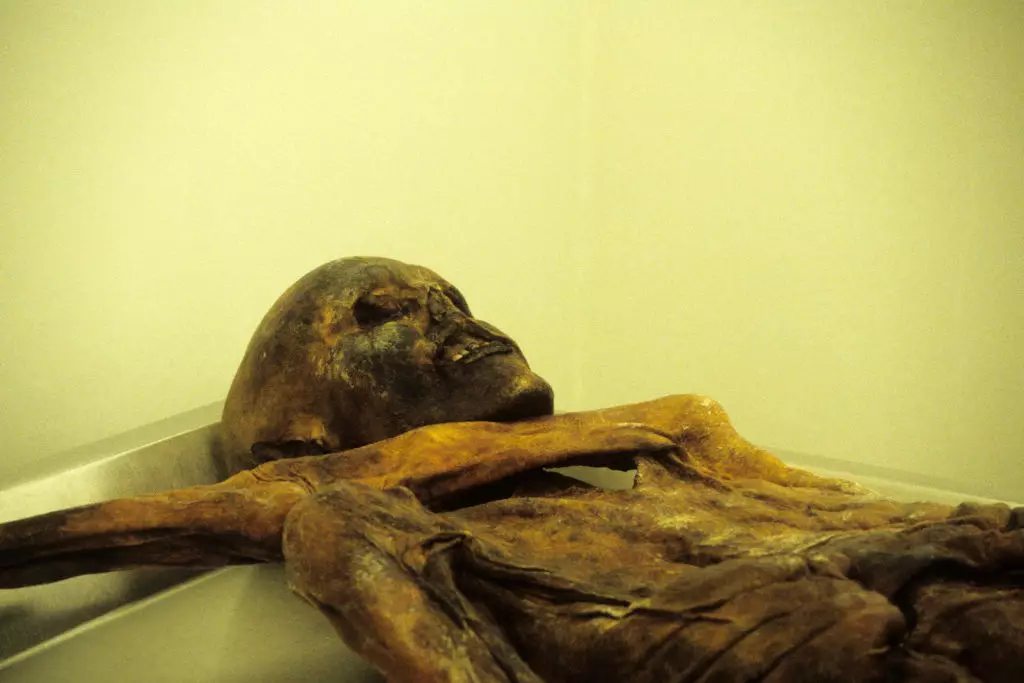
The yeast was collected from Ötzi the Iceman, the 5,300-year-old body preserved for millennia in Alpine ice close to the Italy–Austria border.
Since his discovery in 1991, Ötzi has become one of the most intensively examined individuals ever found from prehistory. Studies of his remains have helped reconstruct details of daily life in ancient Europe — including what he ate, the illnesses he carried, and the equipment and clothing he had with him.
At Eurac Research’s Institute for Mummy Studies, scientists have been focusing on the microorganisms found on and within Ötzi, using them to learn more about long-past environments and ancient biological traces.
In a particularly surprising development, the team managed to isolate living yeast strains — and then put them to work in the kitchen.
Microbiologist Mohamed Sarhan said the baking tests were much less complicated than many might imagine.
Speaking to Eurac Research, he said: “Eventually, we obtained a completely normal dough that rose within 24 hours, basically just like with ordinary yeast. We made some really good dough with it.”
Still, he stressed that the first loaf wasn’t exactly a showstopper. “I’ve never baked bread before, and it showed. So the result definitely had room for improvement.
“But as I said, these were our very first experiments,” he added.
Rather than stopping at a single bake, the researchers are now looking at broader food-science possibilities — exploring what these revived microorganisms could produce under controlled conditions.
“We want to pursue this further and involve specialised research teams from the food sector in the process,” Sarhan said. “Bread is currently one of the obvious applications we’re considering; another is beer, we’ve already discussed this with experts from Weihenstephan,” he said, referring to the renowned German brewer.
The yeast strains recovered so far appear adapted to cold survival, which has led the team to suspect they didn’t originate as part of Ötzi’s living microbiome. Instead, they likely entered his body after death.
Genetic work indicates this occurred relatively soon after he died — meaning the yeast then remained inactive in frozen Alpine conditions for nearly five thousand years before being revived in a modern lab.
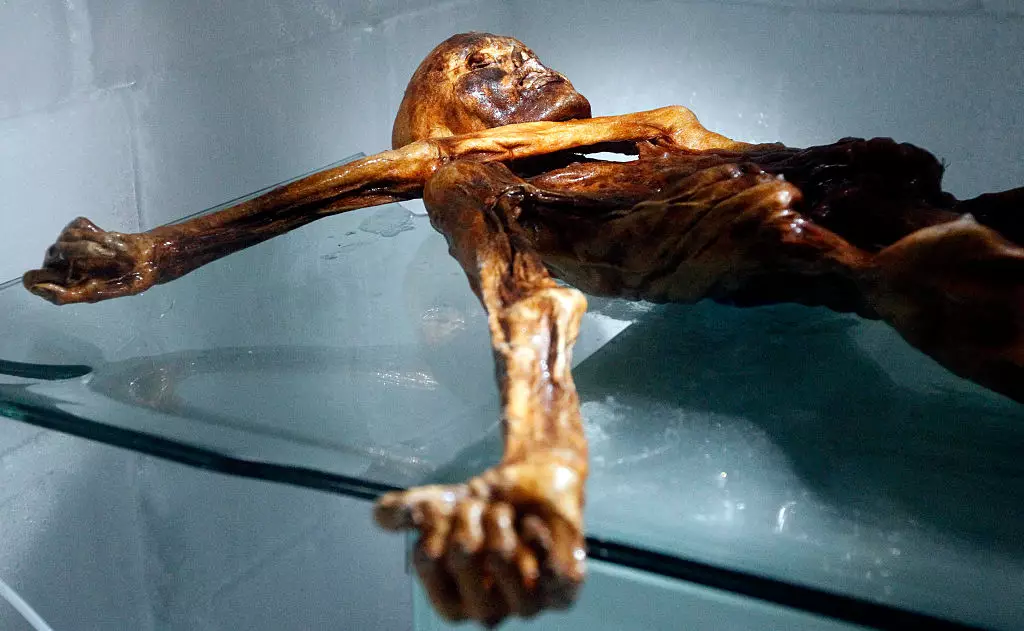
Beyond the unusual bread experiment, Ötzi continues to draw attention for countless other reasons. One of the most striking is the tattooing found on his body — the oldest known examples to date — with 61 separate markings documented.
His death remains equally compelling. Evidence suggests he was struck by an arrow in the back, fueling what is often framed as one of the world’s earliest unresolved murder investigations.
Despite decades of forensic testing and analysis, key questions about what happened in that remote Alpine landscape more than five millennia ago still haven’t been fully answered.