

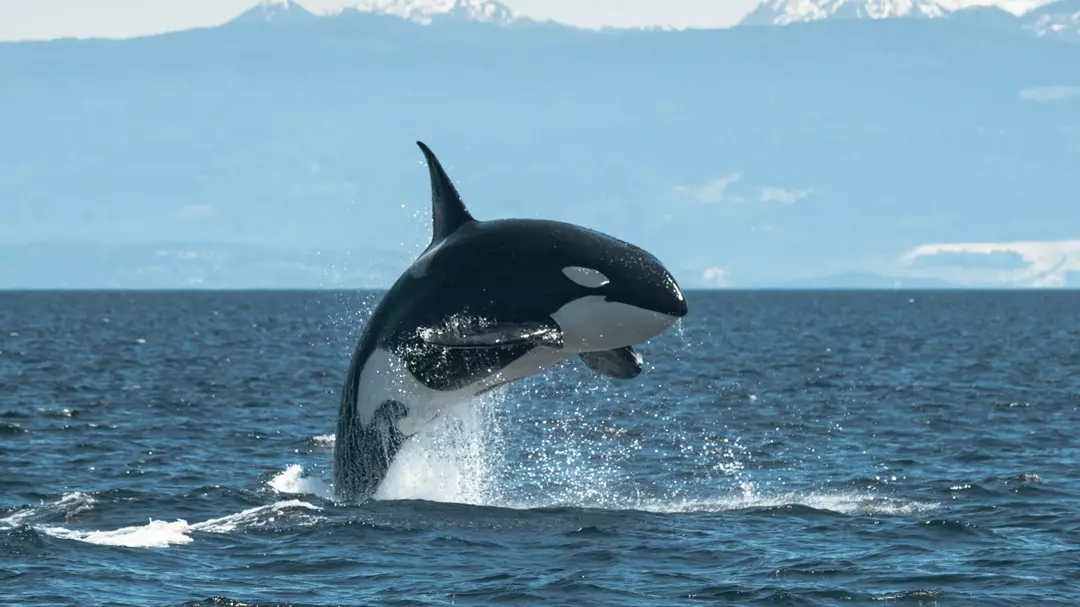
Orca attacks on yachts have led to the discovery of a completely new language among these marine creatures.
Killer whales, the largest members of the oceanic dolphin family, are known as the apex predators of the sea. They hunt a wide range of prey, from small fish like herrings to massive Blue Whales and even Great White Sharks, without facing any natural threats themselves.
With their high intelligence and formidable physical capabilities, orcas are exceptionally efficient hunters, making nearly nothing safe from their predation.
Recently, a particular pod of orcas has made headlines for targeting yachts, stirring widespread online discussions about the affluent.
This pod, located near Gibraltar, was led by a matriarch known as White Gladis. Interestingly, they remained mostly silent, which is unusual for typically vocal orcas.
Orcas are social animals that usually live in pods led by females. They are known for their vocal communication with each other.

Due to their intelligence, orcas have developed complex vocalizations that vary depending on their population.
Additionally, there are often similarities between neighboring populations, suggesting the existence of dialects. This raises the intriguing question of whether different groups of orcas can understand each other’s calls.
This phenomenon is not exclusive to orcas; Sperm Whales, which have the largest brains of any animal, also exhibit regional “dialects.”
Recently, researchers have identified a new dialect in the pod known for targeting yachts, akin to discovering a new language.
Marine biologist Renaud de Stephanis expressed his amazement to The Times: “We’ve been studying these orcas for 30 years.
“Until now they were thought to be very silent. But now we’ve learnt that their calls are totally, totally different to any others.
“From a cultural conservation point of view, that’s just amazing.
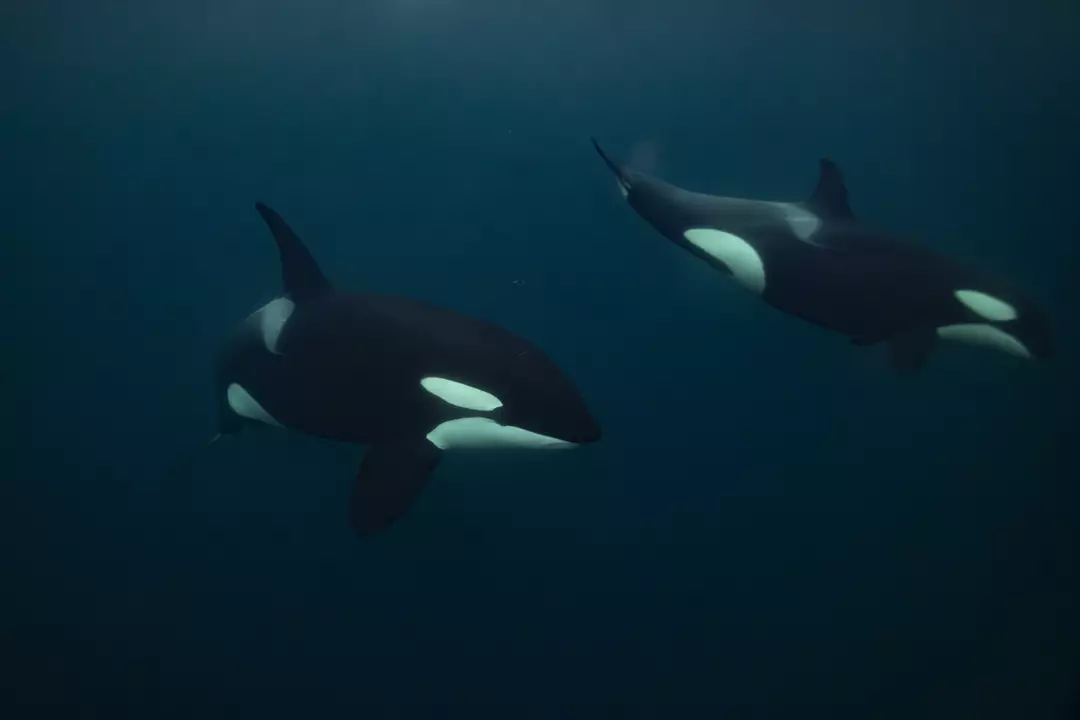
“It’s like suddenly finding a new [human] language in the middle of Europe.”
But just how distinct are these orcas from others?
De Stephanis described the differences as significant, suggesting it is improbable that the calls would be mutually intelligible.
“It’s like the difference between Arabic and Latin,” he explained.
The findings were published in the Journal of Marine Science and Engineering, revealing that these unique calls are used by approximately 40 orcas that roam from the Strait of Gibraltar to the Atlantic coast of Iberia and sometimes as far as the English Channel.
Of these, around 15 orcas have been involved in attacking yachts, with roughly 700 interactions, including incidents where several boats sank.
In the wild, orcas have never been known to fatally attack a human, though captive orcas have been responsible for human fatalities.