


Scientists in China have outlined a dramatic contingency plan that would use nuclear weapons against a so-called ‘Doomsday’ asteroid capable of threatening life on Earth.
While the proposal sounds like something lifted from a disaster movie, the team argues that an approach like this could ultimately become a serious option for planetary defense.
The idea arrives amid warnings from NASA researchers that as many as 15,000 asteroids measuring several hundred feet across may still be undiscovered, even though some would be large enough to devastate entire cities if they struck.
Under the proposed strategy, an incoming asteroid would be destroyed using a nuclear detonation with force comparable to several Hiroshima bombs.
At first glance, the concept appears simple enough.
“Mitigating the risk of near-Earth asteroid (NEA) impacts is critical to global security and the survival of human civilization.
“In particular, large NEAs with short warning times pose a devastating threat to humanity.”
According to the researchers, in the most severe scenarios, ‘directly destroying or rapidly deflecting’ the object may be the only realistic way to protect the planet.
“Asteroid impacts on Earth have occurred several times in human history, causing catastrophic environmental changes and mass extinctions,” the authors added.
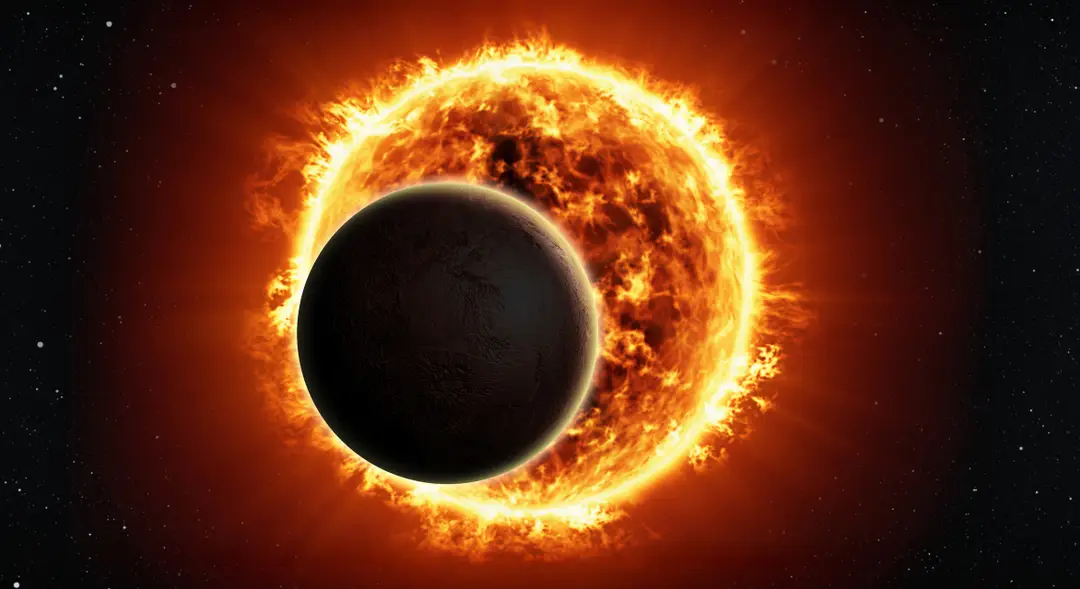
“It is one of the major potential threats that could lead to human destruction and has therefore become a hot topic of concern in the international community.”
And if the warning time is only a matter of days or weeks, any response would need to happen fast.
For the research, the team ran simulations in which a virtual nuclear device was used to eliminate an asteroid before impact. The study was led by researcher Xiaowei Wang from the China Academy of Launch Vehicle Technology and was published in the journal Space: Science & Technology in May.
Instead of exploding the weapon close to the surface, the proposed method would involve a two-stage approach. First, a high-speed metal projectile would be directed at the asteroid to create a deep crater on its surface. In the second stage, a spacecraft would deliver the nuclear device into the crater and trigger a controlled underground explosion.
To examine whether that could work, the researchers modelled asteroids moving toward Earth at roughly six miles per second.
Their findings suggested that a 300-kiloton nuclear explosion could entirely destroy an asteroid about 164 feet (50 metres) wide. A larger 3-megaton blast, they found, could shatter one around 328 feet (100 metres) across. The researchers also found that placing the nuclear charge at a depth of 30 meters increased the effectiveness of the impact by more than three times compared with a shallow explosion on the asteroid’s surface.
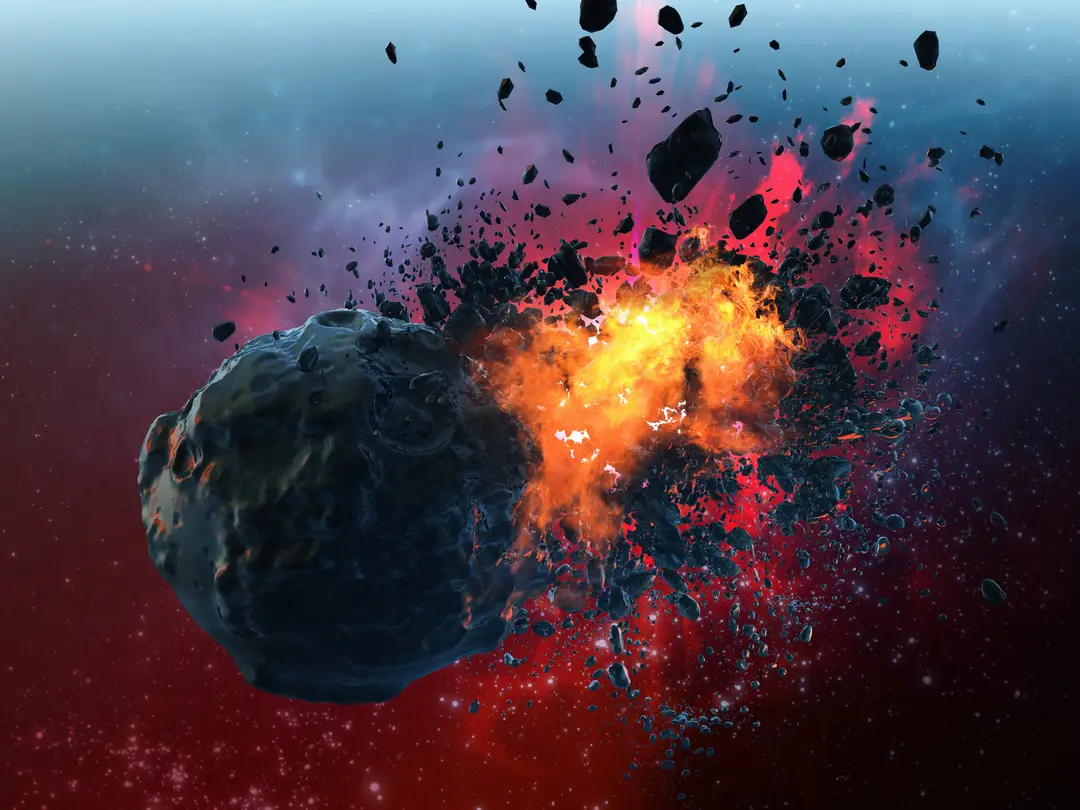
“The defense against asteroid impacts on Earth has always been one of the major challenges in international astronautics,” the scientists added.
“Carrying out research on NEA defense is an inevitable choice for humanity to protect its survival and development.”
The Chinese approach represents a different strategy from existing planetary defense methods. NASA’s Double Asteroid Redirection Test (DART) mission, which successfully impacted the asteroid Dimorphos in September 2022, demonstrated the effectiveness of kinetic impact techniques, reducing the asteroid’s orbital period by 33 minutes. However, the Chinese researchers argue that nuclear detonation buried within an asteroid could provide a more powerful response for large asteroids or those discovered with minimal warning time.
Still, turning the concept into a real mission would be far from guaranteed.
One major hurdle is spotting the asteroid with enough advance notice to plan and launch such an operation before impact. As of 2025, approximately 38,893 near-Earth asteroids have been discovered, but scientists estimate that hundreds of thousands more remain undiscovered. Current detection efforts focus on finding 90 percent of asteroids larger than 140 meters, with NASA’s upcoming NEO Surveyor mission planned to launch between September 2027 and June 2028 to accelerate discovery rates.
Another challenge is engineering a spacecraft capable of transporting both a drilling system and a nuclear payload deep into space, then deploying them successfully. Scientists also emphasize that using nuclear devices in space would be a last-resort option, with the primary goal of planetary defense programs being to detect potentially dangerous objects as early as possible and redirect them safely before they become a serious threat.
Even so, the researchers said they believe the theory ‘holds profound strategic significance for enhancing humanity’s capability to respond to asteroid impact threats’.