

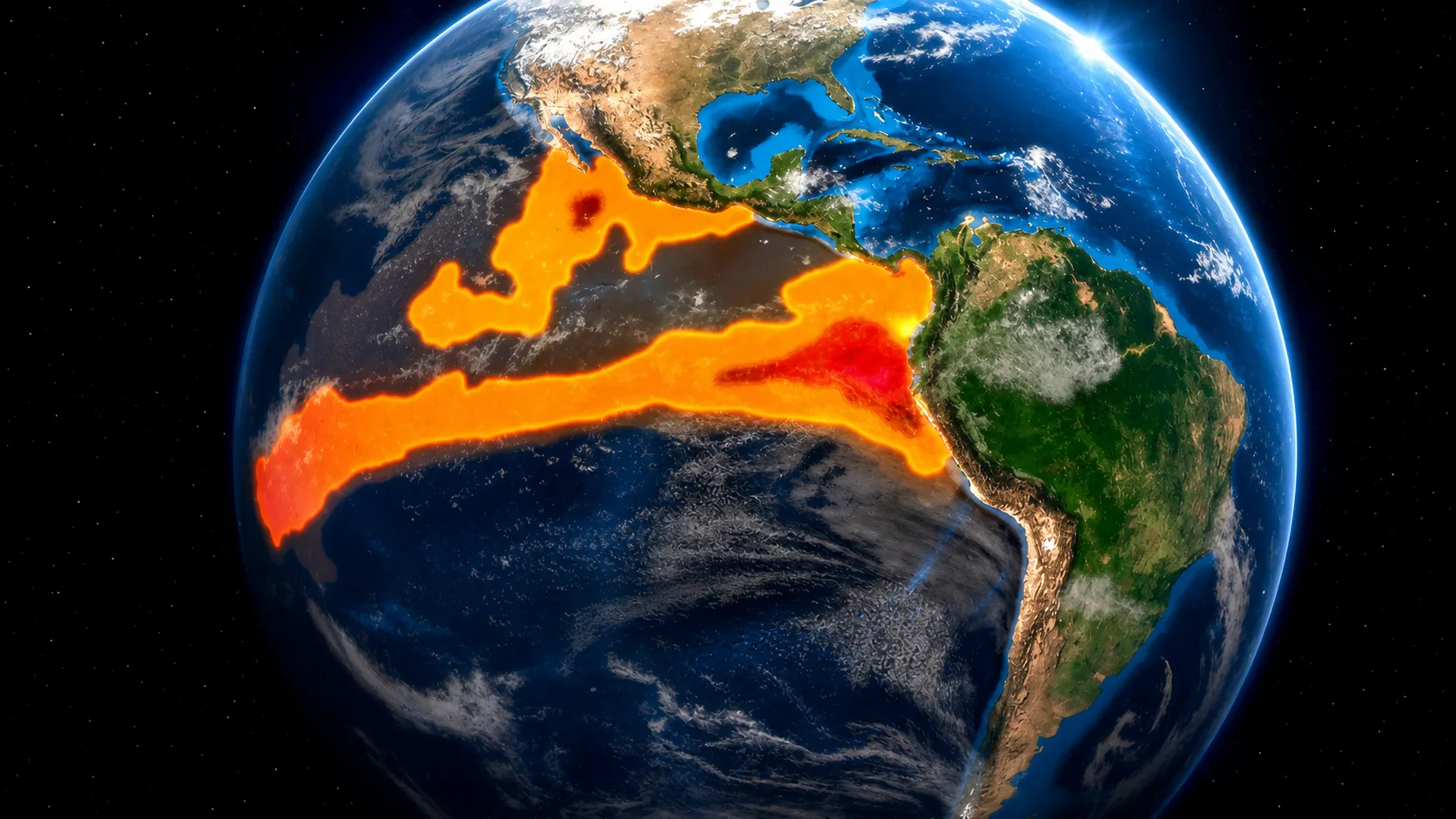
Researchers are exploring a possible way to limit the harmful effects of El Niño, as forecasters warn that global temperatures could continue climbing.
The National Oceanographic and Atmospheric Administration has said the climate event started last month and is likely to continue into the early part of 2027.
El Niño develops when sea surface temperatures across parts of the Pacific Ocean become warmer than average. That shift can upset weather patterns worldwide, bringing dry conditions to some regions and intense rainfall to others.
East African countries such as Tanzania, Kenya, Ethiopia and Somalia are expected to face heavier rain, while parts of southern Africa including Malawi, Mozambique, Zimbabwe and Madagascar may be at risk of severe drought.
Forecasters say the current event is being watched closely because the tropical Pacific has already warmed sharply, with NOAA’s latest outlook pointing to a sustained El Niño through the end of the year and into early 2027. The World Meteorological Organization has also warned that El Niño conditions are developing and could help keep global temperatures near record highs over the next several years.
That matters because even a naturally driven climate swing can amplify already dangerous heat. Scientists say an El Niño unfolding on top of long-term ocean warming may increase the odds of extreme rainfall, drought, coral stress and record-breaking temperatures in different parts of the world.
In response, scientists are investigating whether cloud brightening over the Pacific could help reduce the strength of an El Niño event.

A recent study involving researchers from the University of California-San Diego suggests that “marine cloud brightening” may be able to weaken El Niño as it begins to take hold.
The idea is that, if used early enough, the technique could soften the event’s effects and lessen some of the disruption developing over the Pacific.
Although cloud brightening has often been discussed as a tool that might help slow global warming, specialists have also raised concerns about how it would be used in practice.
Jessica Wan, lead author on the study, said: “One of the biggest social concerns around geoengineering is the fact that if we use it to reduce long-term climate risks, we have to deploy it continuously for an indefinite period of time.
“If we could target natural variability [such as an El Niño event], we could get some of the benefits of geoengineering without having to employ it indefinitely.”
In simple terms, marine cloud brightening aims to increase how much incoming sunlight is reflected back into space by clouds above the ocean.
The University of Cambridge alongside Centre for Climate Repair explains: “Increasing cloud albedo is achieved by increasing the number of cloud condensation nuclei (CCN) present within the clouds which leads to smaller cloud droplets and a whiter, brighter, appearance – a phenomenon known as the Twomey effect.
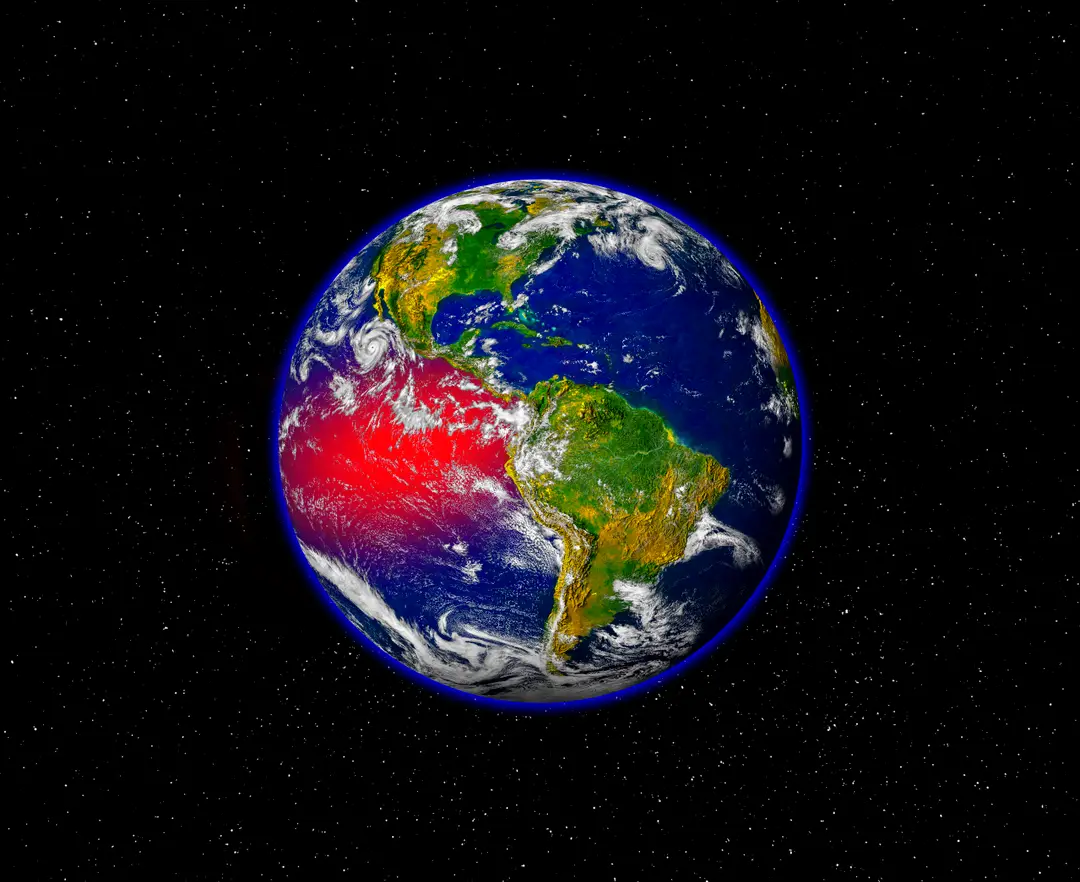
“Marine Cloud Brightening involves spraying small seawater droplets into the atmosphere which then evaporate, and the resulting salt crystals act as new CCNs when they reach the cloud boundary layer.”
Research interest in the approach has grown in recent years, but scientists stress that it remains a modelling and small-scale testing area rather than a proven climate fix. Some studies suggest brightening low marine clouds could have local cooling effects, while others warn that the technique may become less effective as oceans continue to warm.
Australia’s Bureau of Meteorology (BoM) has warned that this El Niño could become one of the most powerful ever recorded and may contribute to extreme heat in 2027.
Climatologist Dr Zhi-Weng Chua said: “There is a realistic chance that the peak anomaly of this event will rank in the top events, with a chance it could rank as the highest. It is remarkable, and it shows just how much heat there is in the ocean.”
“It’s perhaps not a surprise, given climate change and how oceans have been gathering heat in the last few decades.”
Scientists say the biggest question now is not only whether interventions like marine cloud brightening could reduce some El Niño impacts, but also whether they could ever be deployed safely, fairly and at a meaningful scale. For now, the research is still exploratory, and forecasters remain focused on preparing for the weather risks that a strong El Niño can bring.