

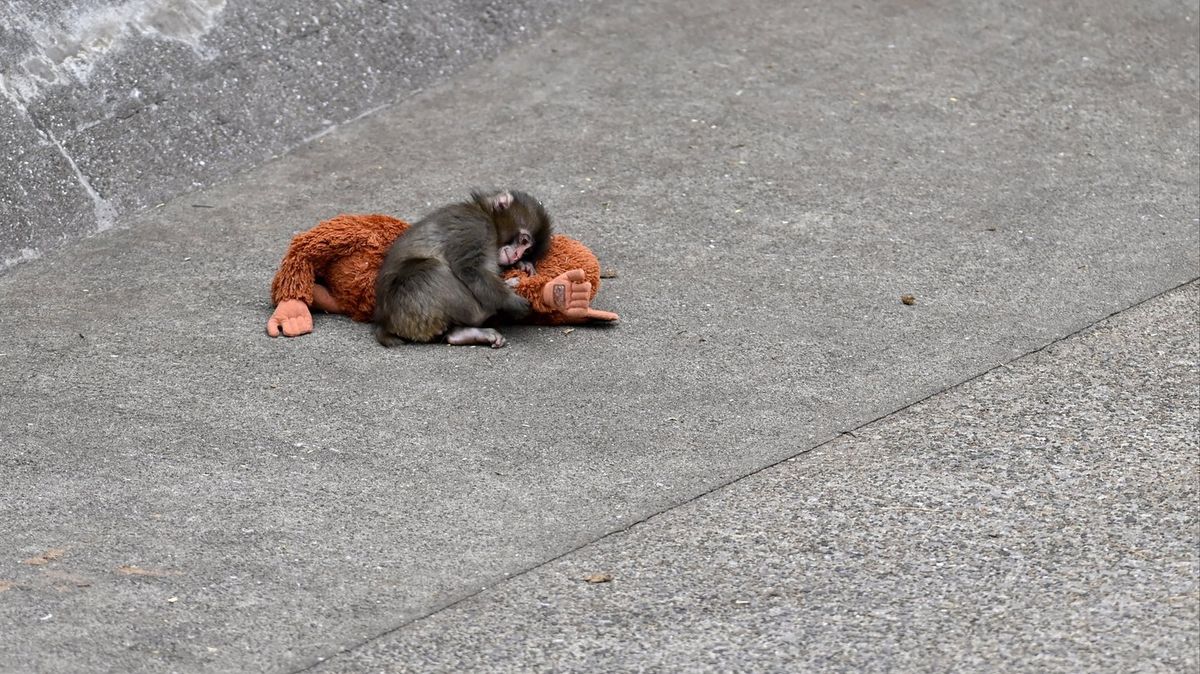
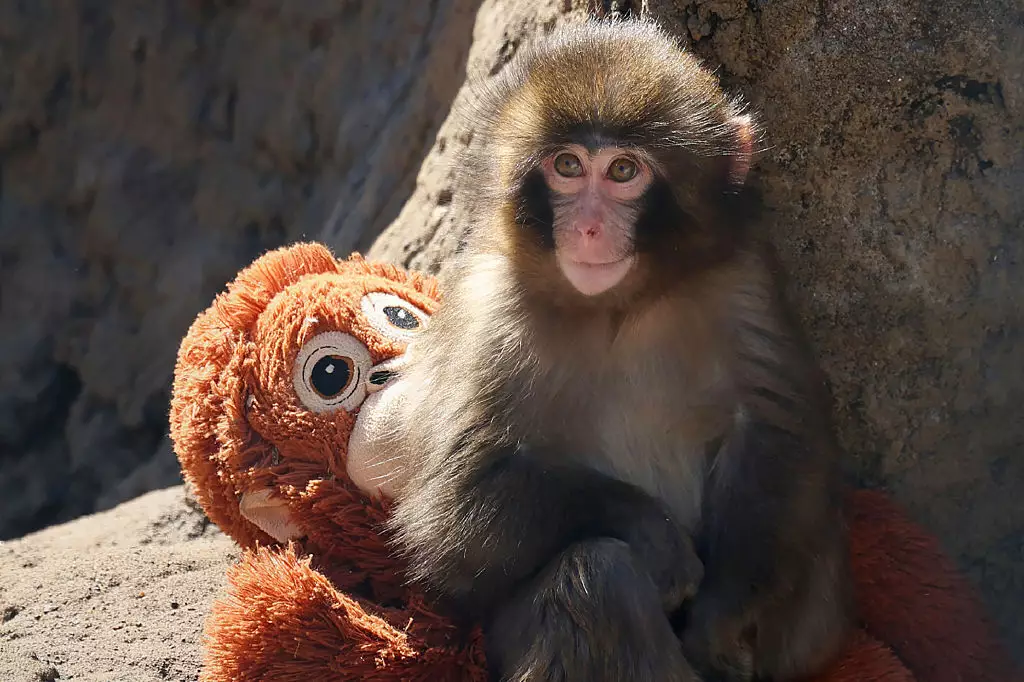
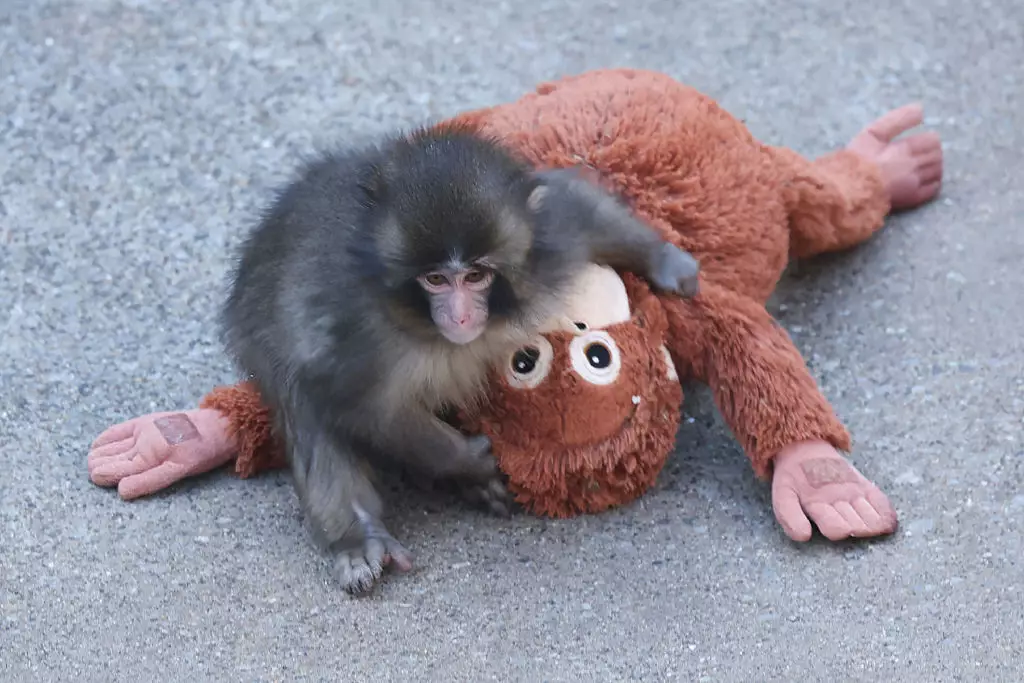
The tale of Punch the monkey has touched people worldwide. The baby macaque was left behind by his mother and now clings to an orangutan plush for comfort, while experts warn what could happen if the rest of the troop continues to push him away.
Over recent weeks, the seven-month-old Japanese macaque has become an online talking point at Ichikawa Zoo in Chiba Prefecture, Japan.
Punch’s early life has been difficult. After being rejected by his mother, caretakers tried to soothe him by giving him an orangutan stuffed toy—something he now rarely lets go of, especially as other macaques in the enclosure reportedly continue to pick on him.
Observers felt hopeful when footage appeared to show another macaque grooming and comforting Punch, but the apparent breakthrough didn’t seem to last.
With his situation still uncertain, scientists have outlined the likely steps and risks ahead if he remains excluded by the group.
Dr Emily Bethell, Associate Professor in Primate Cognition and Welfare at Liverpool John Moores University, said Punch will likely be monitored closely as staff assess the safest and most beneficial way forward.
“I expect Punch will be under careful observation by the keepers, and it sounds like they are trying various approaches to find a way to keep Punch in the group, which is best practice,” Dr Bethell told the Daily Mail.
“If it looks like he is at risk of physical harm he would be removed from the group. As macaques are highly social intelligent primates this would be the last resort, only if he were deemed to be at risk of physical harm.”
Dr Bethell noted that while an aggressive incident would be devastating, another danger could be even more damaging over time: prolonged separation. If Punch is repeatedly isolated, he could miss key chances to develop the social skills macaques normally learn by growing up within the troop.
“Having been abandoned by his mother and the social group more broadly he has missed key developmental opportunities to learn appropriate social behaviours that would help him to navigate the hierarchical social world of macaques,” Dr Bethell explained.
“At 6 months old a wild macaque would still be somewhat reliant on the mother for comfort, nutrition and opportunities to learn about social behaviour.”
There may, however, be a longer-term factor that works to Punch’s advantage. Because he is male, he may eventually have the chance to integrate elsewhere as he matures.
“Japanese macaques are female–bonded and males typically migrate out of the social group at sexual maturity,” Dr Bethell said.
“There is evidence that mothers may invest more in raising daughters since they will stay in the natal group,” she added.
“He may therefore be moved to a new social group when he gets older and have an opportunity to forge new social relationships.”
For now, many are simply hoping Punch can find stability—whether that means safely remaining with his current troop or eventually building connections in a new group.