

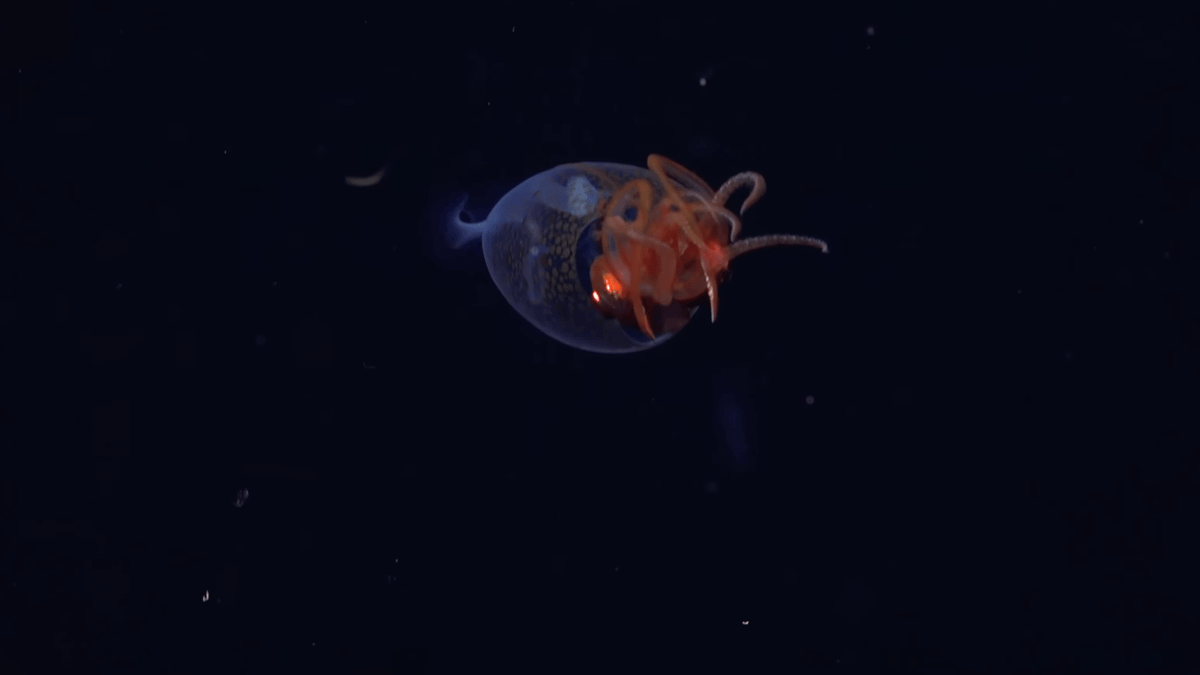
Newly released video has captured what researchers say is a landmark first: a fabled deep-sea animal filmed alive in its natural habitat.
In the clip, a squid drifts through the water with a ghostly, translucent body that ripples as it moves, while a cluster of short tentacles extends out in front.
The animal is about 12 inches long in the footage, but that modest size is misleading.
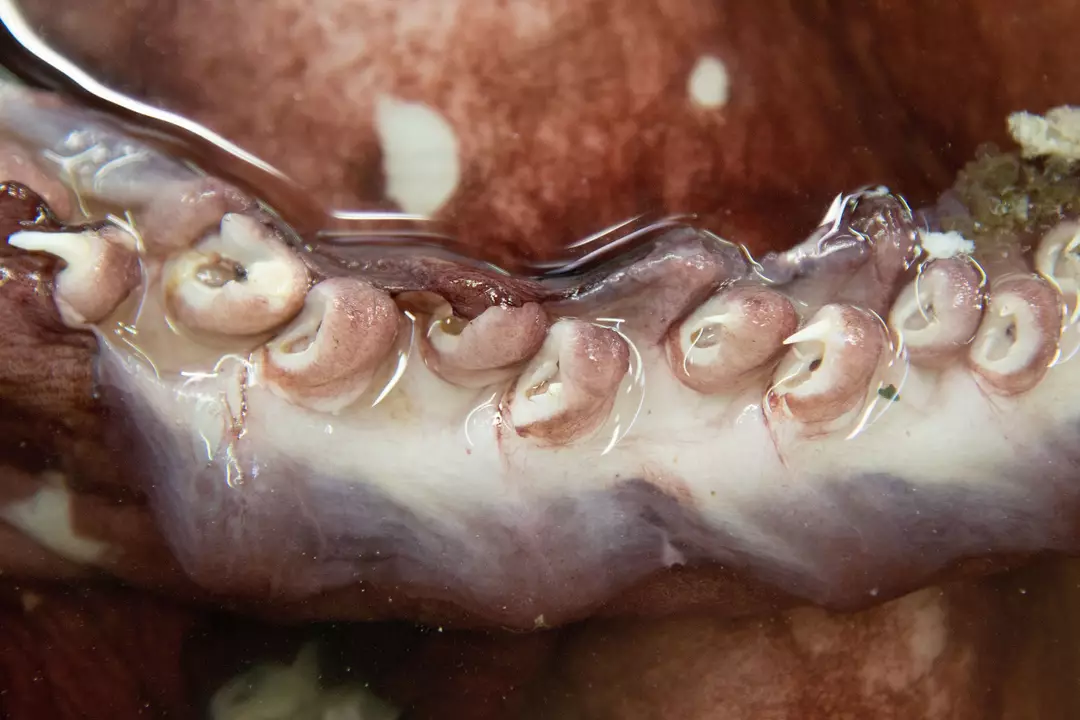
Even at this young stage, distinctive hooks and barbs on its suckers hint at what it really is.
The squid was recorded by a remotely operated vehicle roughly 2,000 feet beneath the surface near the remote Sandwich Islands during a Schmidt Ocean Institute expedition.
Researchers have described the recording as historic.
That’s because it appears to be a juvenile colossal squid—one of the largest squid species known to science.
While this individual is only around a foot long, scientists estimate adults may grow to about 33 feet and weigh close to 990 pounds.
Those hooked tentacles become far more formidable with age, helping an adult seize prey in the deep ocean’s darkness.
The colossal squid’s size doesn’t make it easy to spot, since it typically lives in the lightless depths where it can remain almost invisible, feeling through the water for food.
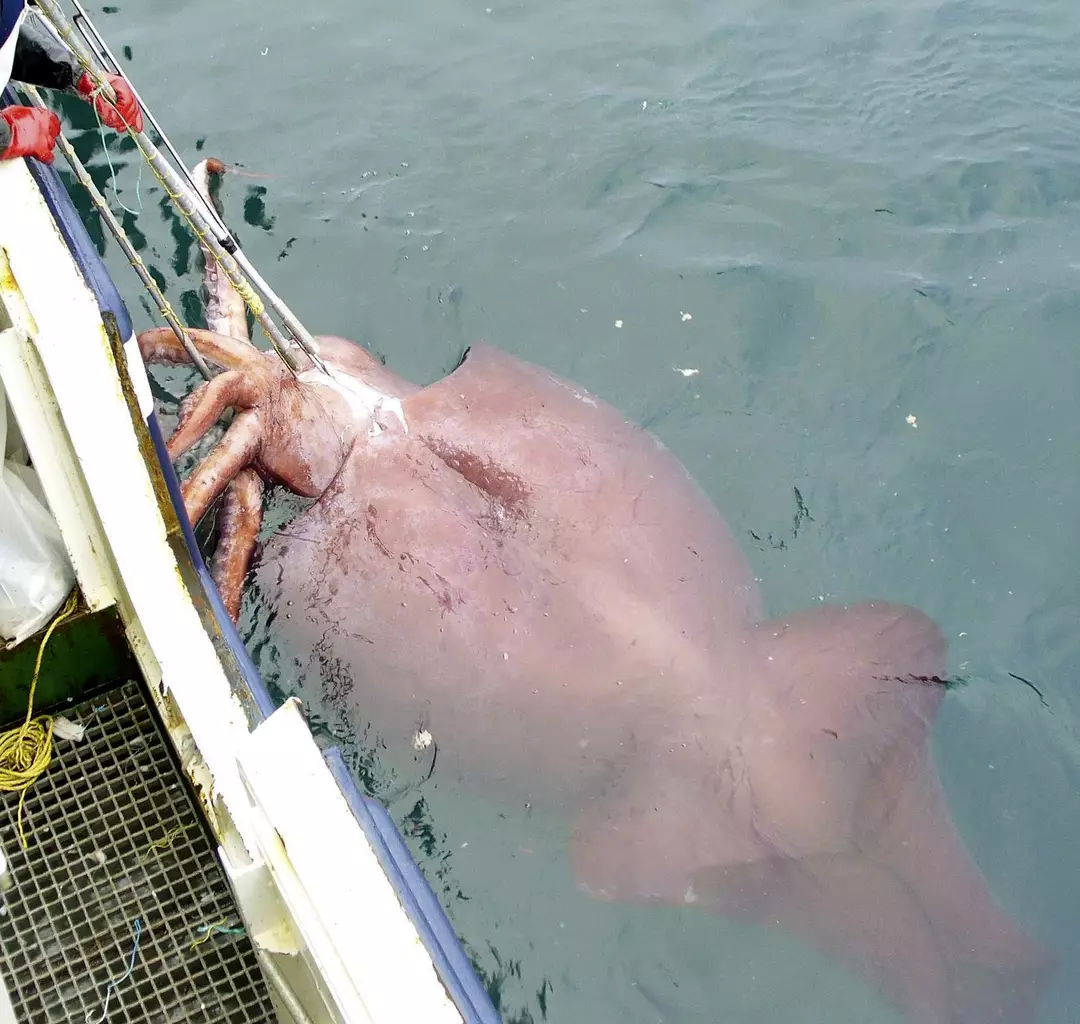
It’s not the first time the species has been encountered—an adult was hauled to the surface by a New Zealand fishing vessel in 2007.
But this footage is believed to be the first observation of a colossal squid alive in its natural environment.
Because it’s still young, the squid is likely more exposed to threats, and its see-through body may help it blend into the dim water column.
Even so, colossal squid are preyed upon by sperm whales, and some whales bear scars that may come from violent encounters in the depths.
In fact, evidence of these clashes helped confirm the species’ existence: colossal squid beaks have been found inside sperm whale stomachs.
For years, creatures like this were wrapped up in legend, feeding tales of krakens and other sea monsters.
This kind of video is scientifically valuable because it offers clues about behavior—how the animal moves, how it holds itself in the water, and how it navigates its environment.
It’s also a reminder of how much of the ocean remains unexplored, and how many mysteries may still be waiting in the deep.