

New Testament fragments believed to be around 2,000 years old are being described as some of the earliest surviving pieces of the Christian text.
The New Testament forms the second major section of the Christian Bible. Made up of 27 books, it centres on the life, ministry, death, and resurrection of Jesus Christ.
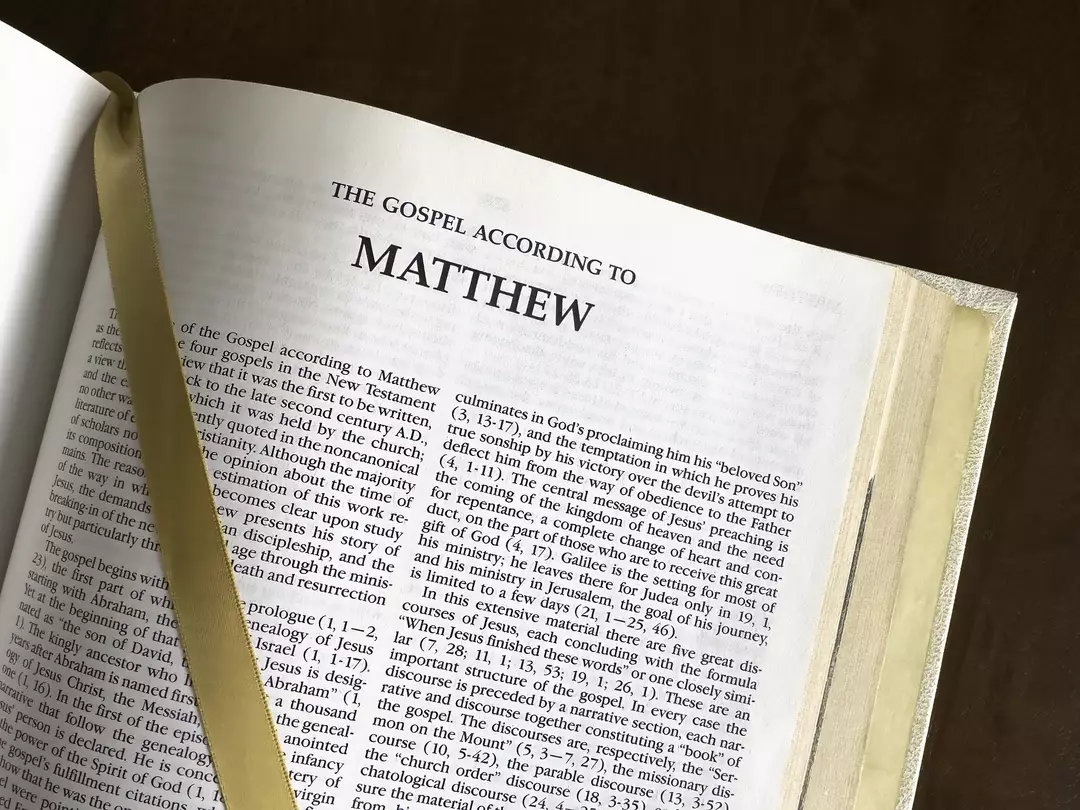
While the writings are traditionally linked to early Christian figures including the apostles — with the Gospels attributed to Matthew, Mark, Luke, and John — these particular fragments are widely associated with the Gospel of Matthew.
Today, the pieces are preserved at the Magdalen College Library, part of the University of Oxford in the UK.
Beyond their importance as among the earliest known surviving New Testament remnants, they’re also considered the oldest known portions of a codex — meaning they come from an early bound book rather than a scroll.
Scholars point to a key detail supporting that conclusion: each of the three fragments contains writing on both sides.
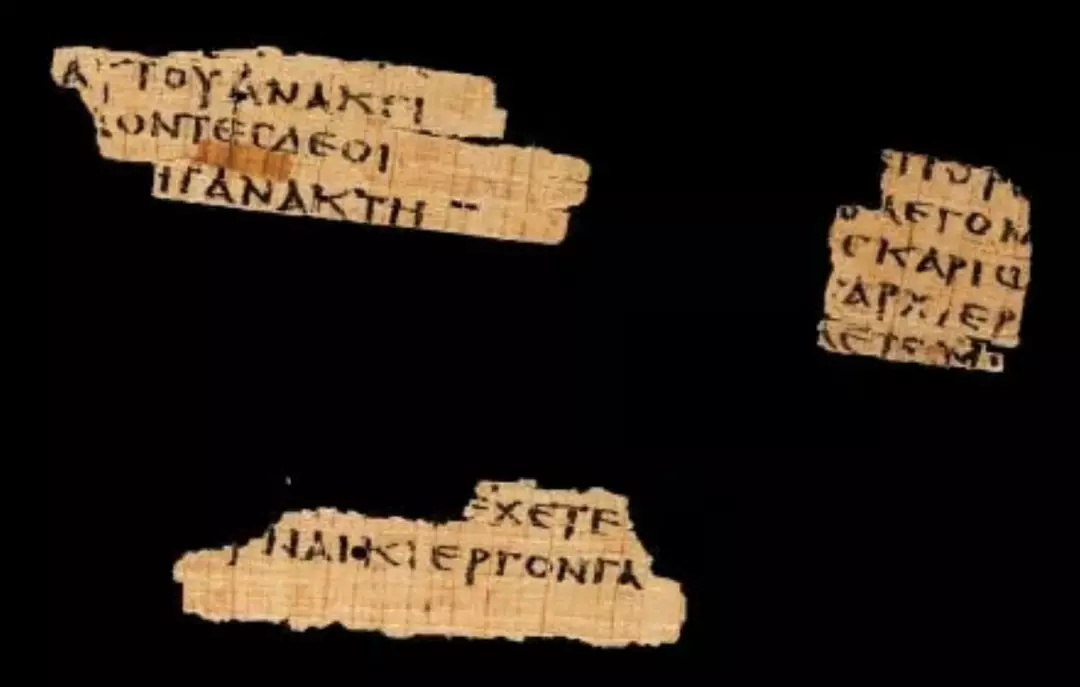
The library obtained the material — commonly referred to as the Magdalen Papyrus (P64) — in 1901, after it was donated by Reverend Charles Bousfield Huleatt.
Huleatt is said to have acquired the fragments in Luxor, Egypt, before later gifting them to Magdalen College, where he had previously studied.
As for what appears on the surviving pieces, the text (written in Koine Greek) includes references connected to figures and locations such as Judas, Jesus, and Galilee. Because the fragments are incomplete, they preserve only partial lines and broken sentences.
“Poured it on his head as he was at table. When they saw this, the disciples said indignantly.”
“Jesus said to them, ‘You will all fall away from me tonight, for the scripture says…'”
“Jesus noticed this and said, ‘Why are you upsetting the woman? What she has done for me…'”
“I shall go ahead of you to Galilee.’ At this, Peter said to him…”
“Then one of the Twelve, the man called Judas Iscariot, went to the chief priests and said, ‘What are you prepared to give me…'”
“They were greatly distressed and started asking him in turn, ‘Not me, Lord, surely?’ He answered, ‘Someone who has dipped his hand into the dish with me.'”
Dr Jeremiah Johnston, who has closely examined the Magdalen Papyrus P64, has viewed the fragments in person and said the moment had a profound impact on him.
“It was literally taken out of what looks like a shoebox, not even on display, and I had as much time as I wanted with one of the most priceless Christian artefacts on earth,” he told Mail Online.
“I’m holding that fragment, and to know that it’s 2,000 years old, and to know that it’s true, and that the scales of truth tip in the favor of Christianity, was transformational for me.”