

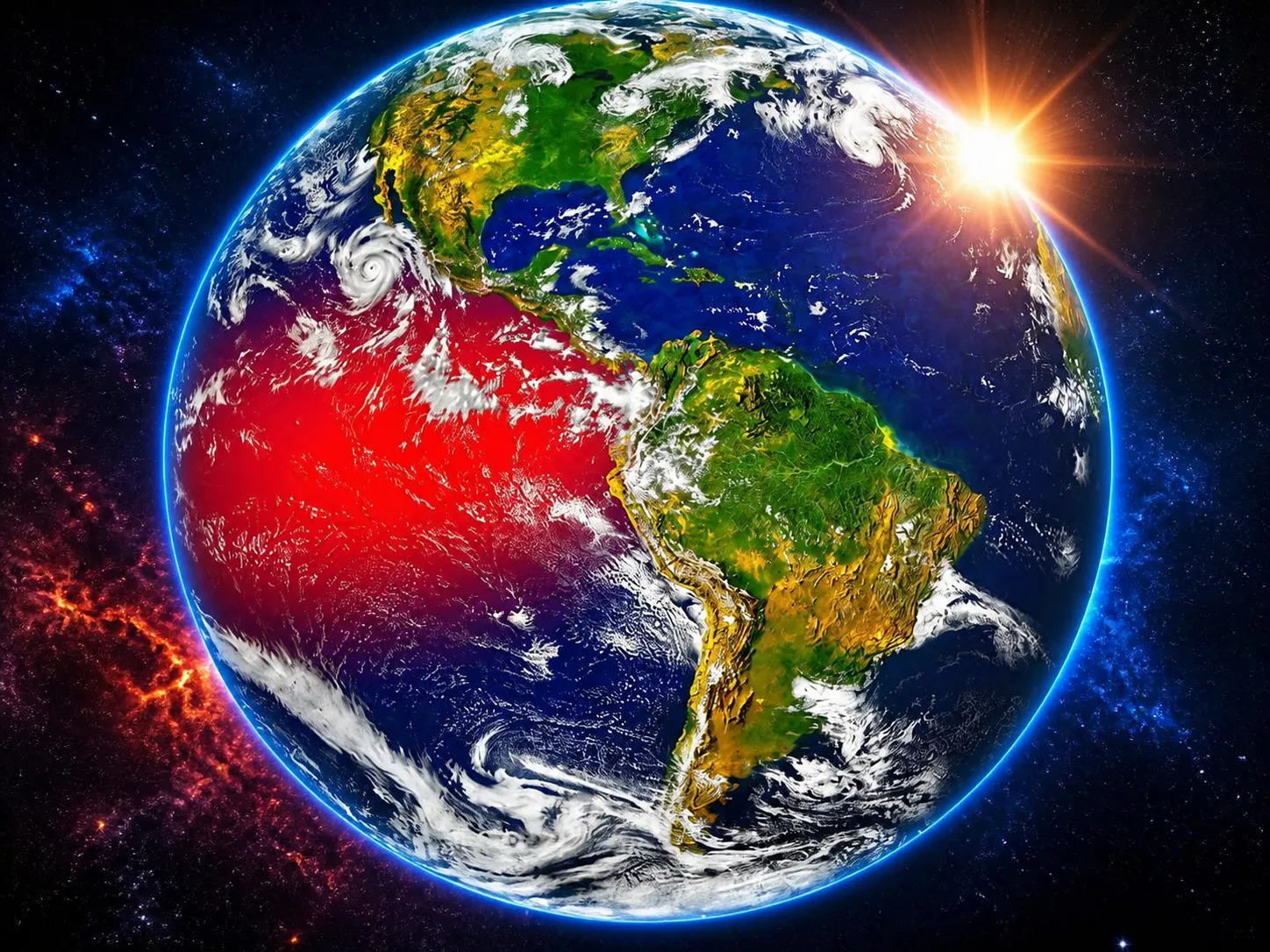
Scientists warn the developing El Niño event could become the most powerful on record, with unusual marine sightings already surfacing along the California coast.
The event, which began in June 2026 and is forecast to persist into early 2027, has prompted NOAA to issue an El Niño Advisory with a 63 percent chance of “very strong” conditions peaking between November 2026 and January 2027. Climate scientist Michael Mann told the Los Angeles Times that “it does look like it will potentially be the largest El Niño event on record.” Meanwhile, recently retired NOAA senior scientist Michael McPhaden, who spent over 40 years studying the phenomenon, said the 2026-27 event will rival or exceed the three most extreme El Niños of the past 50 years. “There have been three what we would call extreme El Niño events in the past 50 years, in 1982-83, 1997-98 and 2015-16,” he said. “This event we’ll get to in 2026-27 will rival those, if not exceed those, in magnitude.”
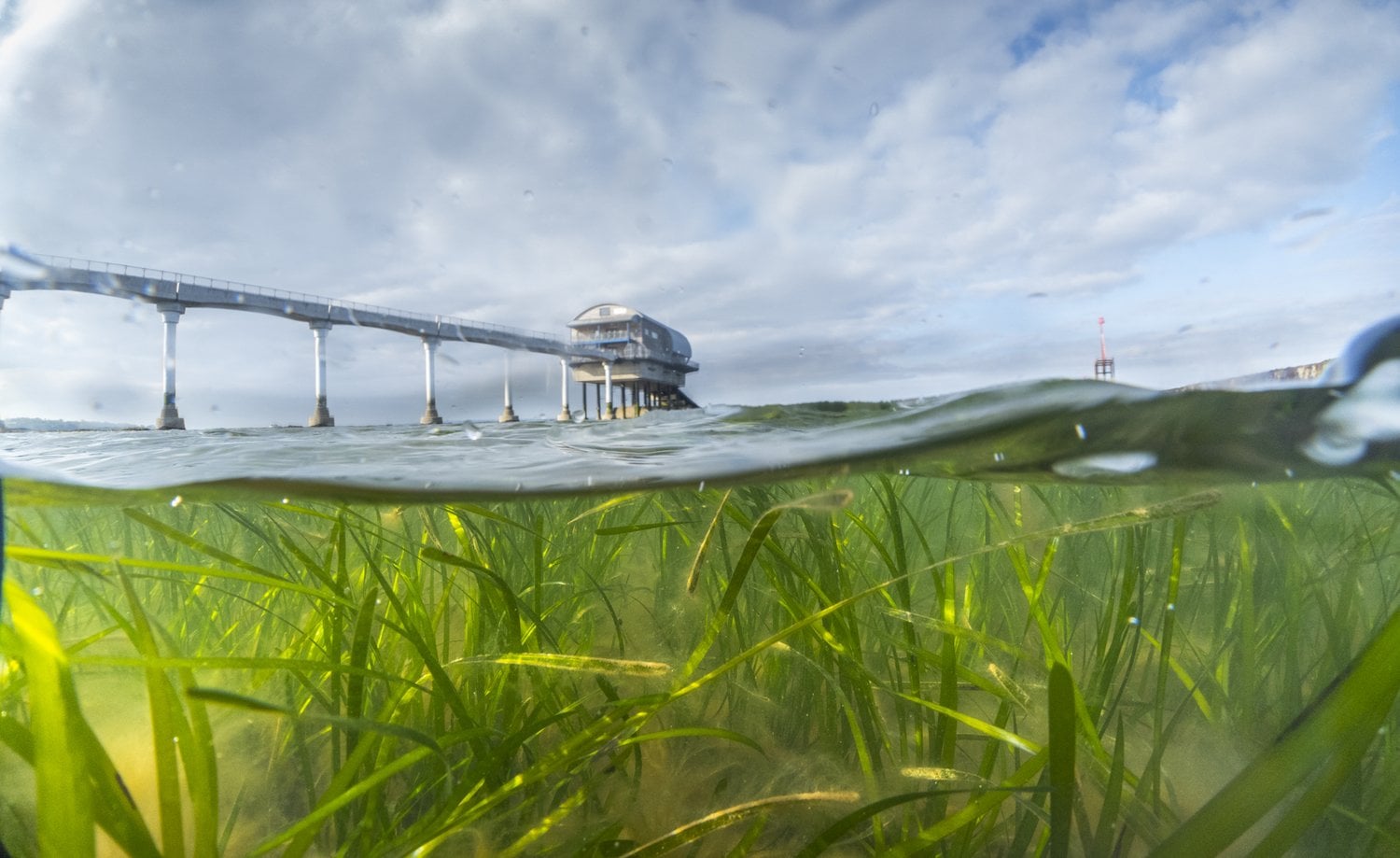

The warming Pacific has already produced striking wildlife behavior. Two shark species are reportedly moving in patterns outside their typical range, with Great White Sharks expected to shift into Southern California waters as warm currents take effect. More surprising was a hammerhead sighted off Malibu Pier, a species that generally prefers warmer waters than those historically found off the Southern California coast. Brendan Talwar, a shark specialist at the University of California San Diego Scripps Institution of Oceanography, addressed the anomaly with the Los Angeles Times. “It’s uncommon but not impossible,” he said. “If someone had asked at the beginning of this summer what shark species we should expect… I would’ve definitely said hammerheads.”
The unusual sightings stem from a combination of factors. El Niño’s warm water influx is compounded by broader climate change-driven temperature rises, pushing coastal waters above historical norms. NASA’s PACE satellite has documented corresponding changes in the marine food web, with chlorophyll concentrations dropping substantially in the central Pacific around the equator due north of New Zealand as nutrient-rich upwelling suppresses. Oceanographers Matthew Kehrli and Graham Trolley at NASA’s Goddard Space Flight Center noted that as the El Niño progresses, “this may manifest as a greater difference in values across the current region, as a broadening region of reduced surface chlorophyll-a concentration, or both, depending on the behavior of the equatorial trade winds.”
The ecological ripple effects extend far beyond shark migrations. NOAA fisheries expert Andrew Leising told Eos that past El Niño events have triggered harmful algal blooms that closed crab and shellfish fisheries, though the current warm patch is smaller and farther from shore than 2014’s notorious “Blob.” Brett Long, vice president of animal care at the Aquarium of the Pacific, warned that California sea lions serve as indicator species for broader ocean health, with past events producing smaller pups and lower reproduction rates. “California sea lions are indicator species, meaning they will be one of the first species which may show signs of domic acid toxicity, respond to changes in their ecosystem, and signal to the public how our oceans and ecosystem are doing,” Long said.
Global impacts are already materializing. Peru’s Ministry of Production has repeatedly suspended anchovy fisheries to protect the country’s main fishing resource, while pelicans have been spotted venturing into Peruvian ports and urban areas seeking food. Indonesia’s National Research and Innovation Agency climatologist Prof. Dr. Erma Yulihastin posted on her X account, @EYulihastin, that “El Niño is predicted to continue strengthening and reach SUPER status in August 2026 based on data from the Bureau of Meteorology Australia (BOM) and the Japan Agency for Marine-Earth Science and Technology (JAMSTEC),” She added that the current index value of 1.74°C “is higher than the peak of the 2023 El Niño. It’s now confirmed that El Niño 2026 will be much stronger than the 2023 event.”
Footage of the Malibu hammerhead circulated online as observers noted how dramatically the species’ range had shifted. The sighting came amid broader discussions of how “Super El Niño” conditions—though not an official scientific term—were already reshaping coastal ecosystems. Waters off Southern California have warmed sufficiently to support species historically found farther south, while the same conditions may reduce market squid abundance and shift tuna populations closer to shore.
NOAA oceanographer William Sweet highlighted another coastal concern, telling a NOAA news story that strong El Niños deliver “a double whammy” to shoreline communities. “The first punch is decades of sea level rise, which has waters close to the brim in many coastal communities,” Sweet said. “And now with this second punch—a strong El Niño—coastal communities face more frequent, deeper and widespread high tide flooding along both the West and East Coasts.” The World Economic Forum warned in June that the 2026-27 event would strike “a hotter planet already facing brittle food systems, fragile public finances, stressed energy markets and growing geopolitical instability.”
The Copernicus Marine Service continues tracking El Niño development through its real-time ENSO dashboard, with warm subsurface waters building and forecast models increasingly aligned on strengthening conditions through the remainder of 2026.
NOAA’s Climate Prediction Center expects the current El Niño to continue strengthening through the end of 2026, with a 97 percent chance of lasting through early Northern Hemisphere spring 2027.