

As the “major combat operation” against Iran enters its second week, the possibility of US troops being sent into ground fighting appears to be rising, with “Operation Epic Fury” threatening to spill further across the region.
After years of costly, widely criticized conflicts—from Vietnam to Iraq and Afghanistan—many Americans seem reluctant to support another long war. With those wars collectively taking the lives of 68,000 young Americans and new polling indicating most people oppose this latest military action, online discussion has shown little enthusiasm for fresh sacrifices.
A week after an Israeli strike reportedly decapitated Iran’s leadership, including Supreme Leader Ayatolla Khamenei, and following retaliatory attacks that have killed at least six American soldiers, a darkly satirical slogan has spread across social media: #SendBarron.
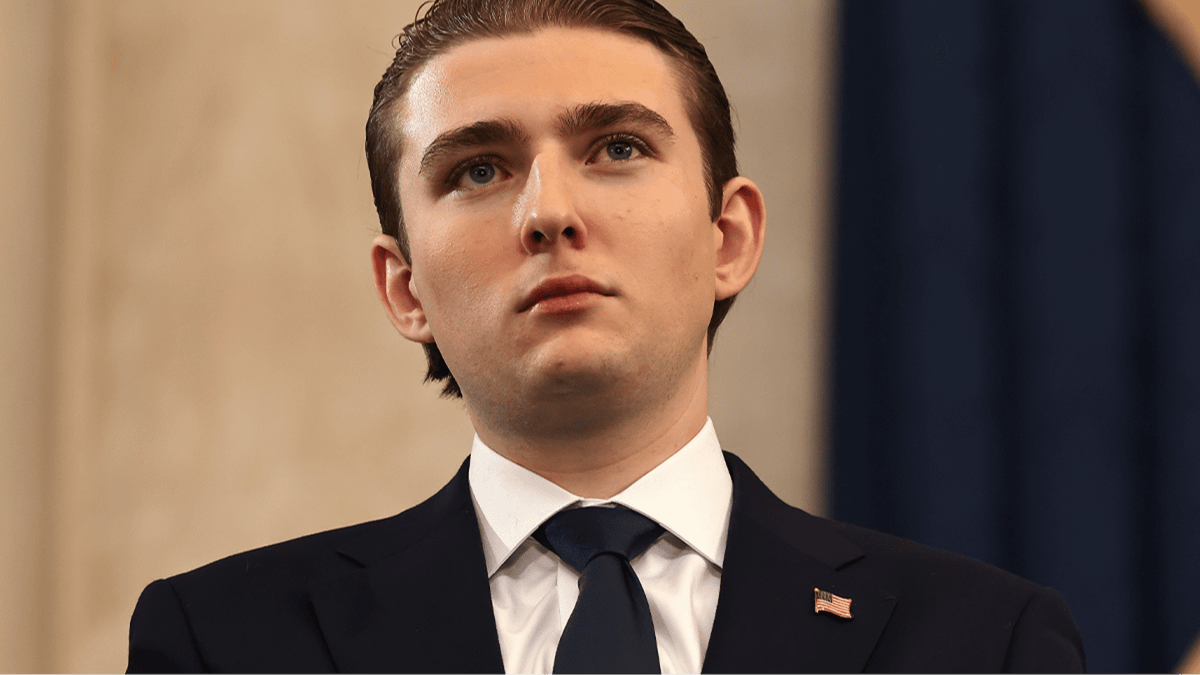
The meme points at the president’s 19-year-old son, Barron—frequently noted online for being far taller than other members of his family. Despite his youthful appearance, he is the same age as many service members who could be placed in harm’s way if the conflict develops into a full-scale ground campaign.
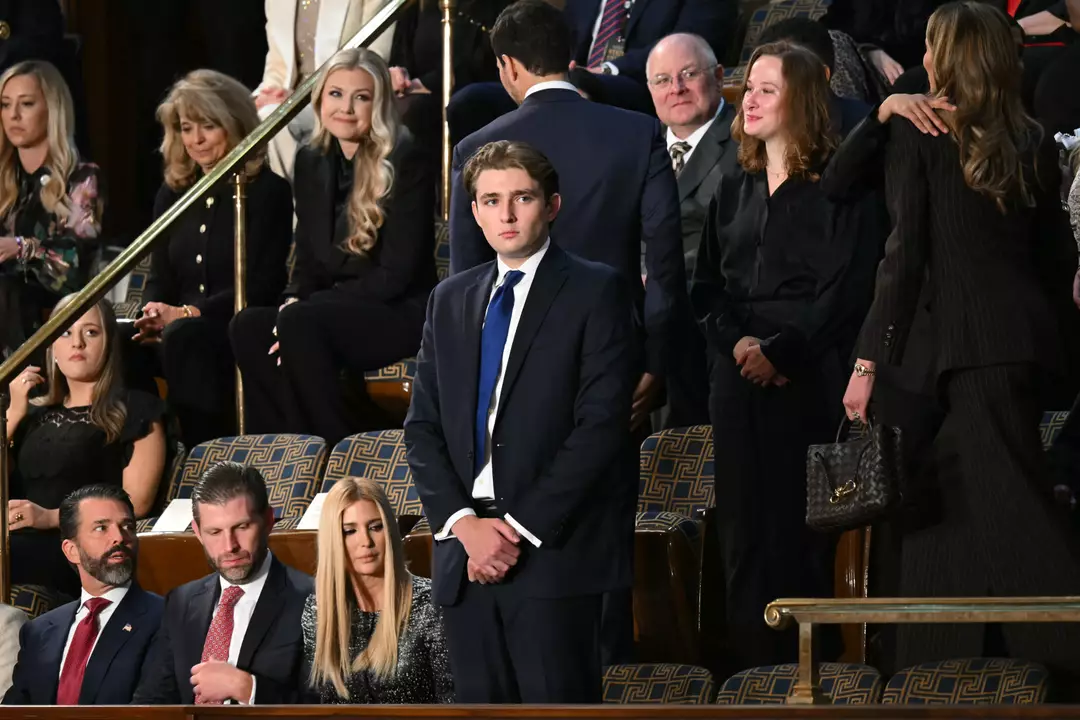
As some users joke that the military should “draft Barron” if US forces end up fighting in Iran, MirrorUS resurfaced a longstanding argument about whether the children of presidents or vice presidents should ever be placed in combat roles.
John Eisenhower, the second son of President Dwight D. Eisenhower, served during the Korean War—another conflict many later viewed as an unsuccessful attempt at regime change. In 2008, he said the memory of his service had become “tinged with regret,” largely because of the pressure it could have placed on his father.
In an essay for The New York Times, he recalled being asked whether presidents’ (or vice presidents’) children should be sent to combat zones, and described his instinctive response:
“My unique position in this regard was called to my attention a few days ago in a radio interview. Did I believe that the children of presidents (or vice presidents) should be assigned to combat zones? I was surprised by my own quick reaction:
“‘No,’ I declared automatically. ‘They have no place there.'”
His reasoning, he wrote, was that a commander-in-chief already carries responsibility for the lives of roughly 1.3 million service members—without adding the personal fear that their own child might be among those in immediate danger.
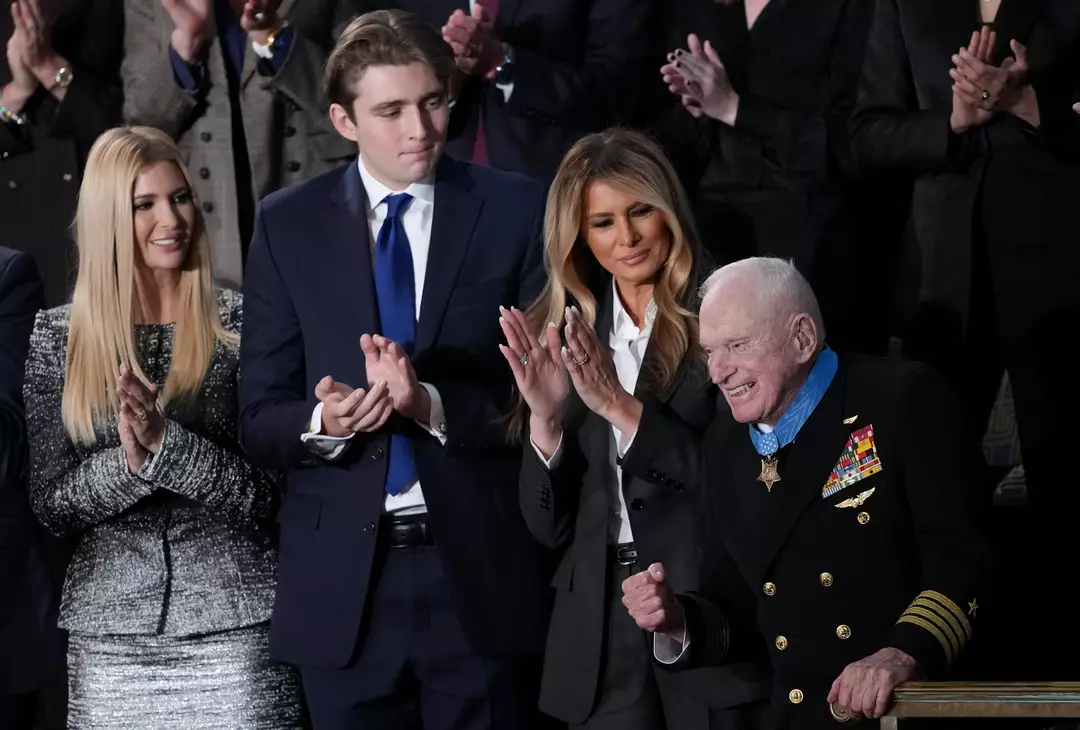
John Eisenhower also described the extraordinary condition he said he had to accept in order to serve in Korea—one that underscored the stakes of having a president’s child on a battlefield. He wrote:
“[President Eisenhower] would accept the risk of my being killed or wounded, but if the Chinese Communists or North Koreans ever took me prisoner, and threatened blackmail, he could be forced to resign the presidency.
“I agreed to that condition wholeheartedly. I would take my life before being captured.”
In the case of Barron, the meme also draws attention to the fact that no member of the Trump family has served in the US military, and that the president avoided the Vietnam draft after citing “bone spurs.” Still, even as a joke, sending Barron to fight would face at least one practical obstacle.
His height is widely reported as somewhere between 6’7″ and 6’9″. Because the military’s height cutoff is 6’8″, that could potentially make him ineligible if he exceeds the limit.
Even if an exception were granted given how close he is to the threshold, his size would likely prevent him from fitting into certain roles—such as operating an F-35 or serving inside a tank.
For now, the safer option may be for him to remain at NYU’s Washington campus.