

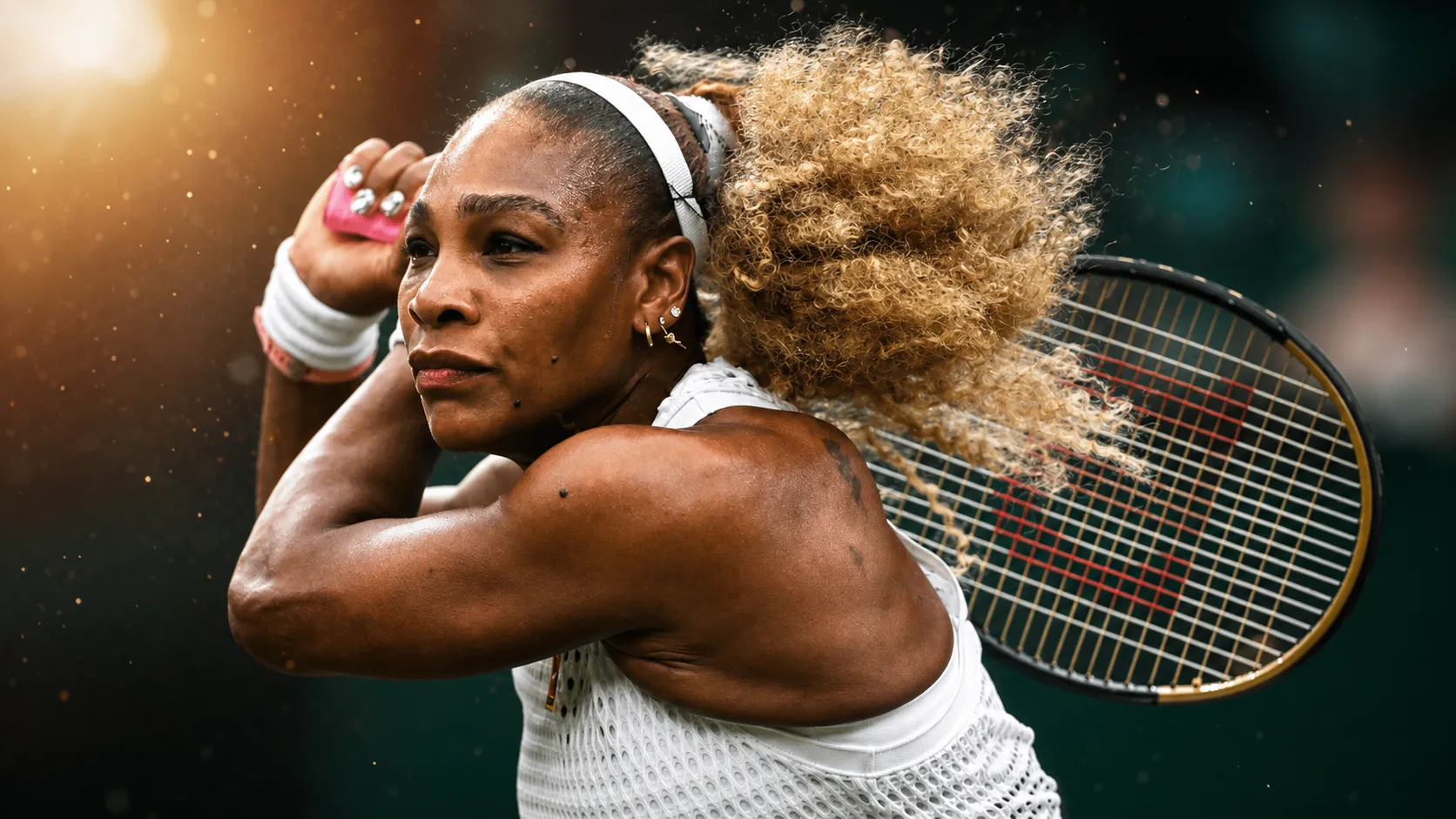
Serena Williams faced the prospect of a fine of up to $50,000 after her controversial Wimbledon exit on Tuesday, June 28, 2022.
Williams, then 40, was making her return to professional singles tennis after nearly a year away and had accepted a wild card from the All England Club. It was her first Wimbledon singles appearance since she suffered an injury in 2021 and her first Grand Slam singles match since the 2022 US Open.
Although she remained one of the biggest names in the sport, Williams was upset in a gripping opening-round match by world No. 115 Harmony Tan, who was making her Wimbledon debut. Tan prevailed 7-5, 1-6, 7-6(10-7) in a match that lasted just over three hours.
Attention then shifted away from the court, as Williams did not appear for her scheduled post-match media obligations, something that could lead to a punishment if officials decided she had breached tournament rules.
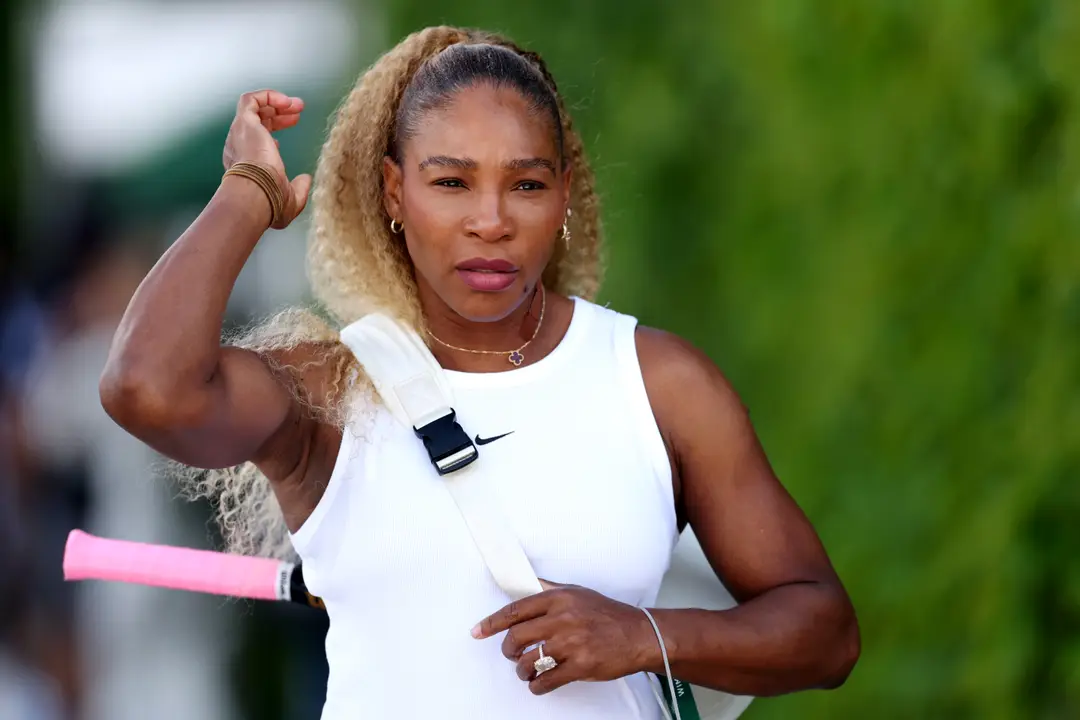
After Williams did not attend her press conference, Wimbledon issued a brief update.
“Unfortunately Serena Williams will not be able to undertake media this evening.”
Organisers did, however, distribute comments from Williams after her defeat.
“It was really great to be back at Wimbledon. I never expected to be here. The atmosphere was amazing. Walking out was amazing. I definitely relished it and missed it and enjoyed the moment more than anything.”
Even though those remarks were shared with reporters, the absence itself could still become an issue under the Grand Slam rulebook.
The rules states that all players must attend post-match media duties ‘unless unable to appear on reasonable grounds (for instance illness or injury)’.
“If a player is unable to appear, the appropriate level of direct communication is requested. Violation of this Section shall subject a player to a fine up to $50,000,” the rules adds.
Whether any action would actually be taken was unclear at the time. Williams’ loss also appeared to bring an end to one of the most watched comeback storylines of the tournament, although she later returned to the US Open and formally said goodbye to professional tennis there in 2022.
Missing a press conference is only one example of how tightly Wimbledon is regulated.
The tournament is known for detailed standards covering almost everything, from player conduct to the condition of the grass and even the way the tennis balls are stored.
Unlike some other Grand Slams where matches can stretch late into the night, Wimbledon enforces a firm 11pm curfew.
That rule has led to some major matches being halted at awkward moments.
Novak Djokovic and Rafael Nadal’s 2018 semi-final was stopped after the third set. Andy Murray also voiced frustration in 2023 when his match with Stefanos Tsitsipas was suspended overnight while he was ahead, only for him to lose after play resumed the next day.
Toilet breaks are restricted too. Players are allowed one in matches of up to three sets, and two if the contest runs longer.
Those breaks can only happen during a set change, and players must return within three minutes or risk a point penalty.
Given that the longest match in Wimbledon history lasted 11 hours across three days, timing those breaks matters.
Racket abuse can also be costly, with fines reaching $50,000. Djokovic is thought to have broken more than 60 rackets during his career.
Swearing can bring the same maximum punishment.
There are also strict time limits between points. Once the ball is dead, the server has 25 seconds to begin the next point or face a violation that could ultimately cost them a point.
Players are expected to compete properly too. Bernard Tomic was once hit with a $60,000 fine after being accused of failing to give enough effort in a defeat to Jo-Wilfried Tsonga that lasted just 58 minutes.
Age restrictions apply as well. Competitors must be at least 14 years old, which meant young stars such as Coco Gauff had to wait before appearing.
For spectators, anyone under 16 must attend with a guardian, while children under five are not allowed on show courts.
Wimbledon’s attention to detail extends to the surface itself. The grass is maintained at 8mm, a length considered best for the modern game while also protecting the courts.
The tennis balls are stored in refrigerated conditions to keep them at a consistent 68°F, since temperature can influence how they bounce.
The tournament’s famous all-white clothing rule originally applied only to women. According to Tennis Fashions: Over 125 Years of Costume Change, it was introduced because it was ‘quite unthinkable that a lady should be seen to perspire’.
That rule was later extended to male players as well.
Only a very limited amount of colour is permitted, with a single trim allowed around the neckline and sleeve cuffs as long as it does not exceed 1cm.
In 2022, Wimbledon introduced an exception allowing women to wear dark undershorts so they could feel more comfortable during their periods.