

Warning: This article contains discussions of rape and murder that some readers may find upsetting
A criminologist who spent years speaking to one of Britain’s most infamous serial killers has described the disturbing point at which John Duffy linked his adult crimes to behaviour that had already surfaced in childhood.
Dr Graham Hill, a former senior detective and criminologist who established the UK’s first behavioural analysis unit focused on sexual crimes against children, reflected on a series of prison interviews he conducted with Duffy, one of the men later dubbed the “Railway Killers”.
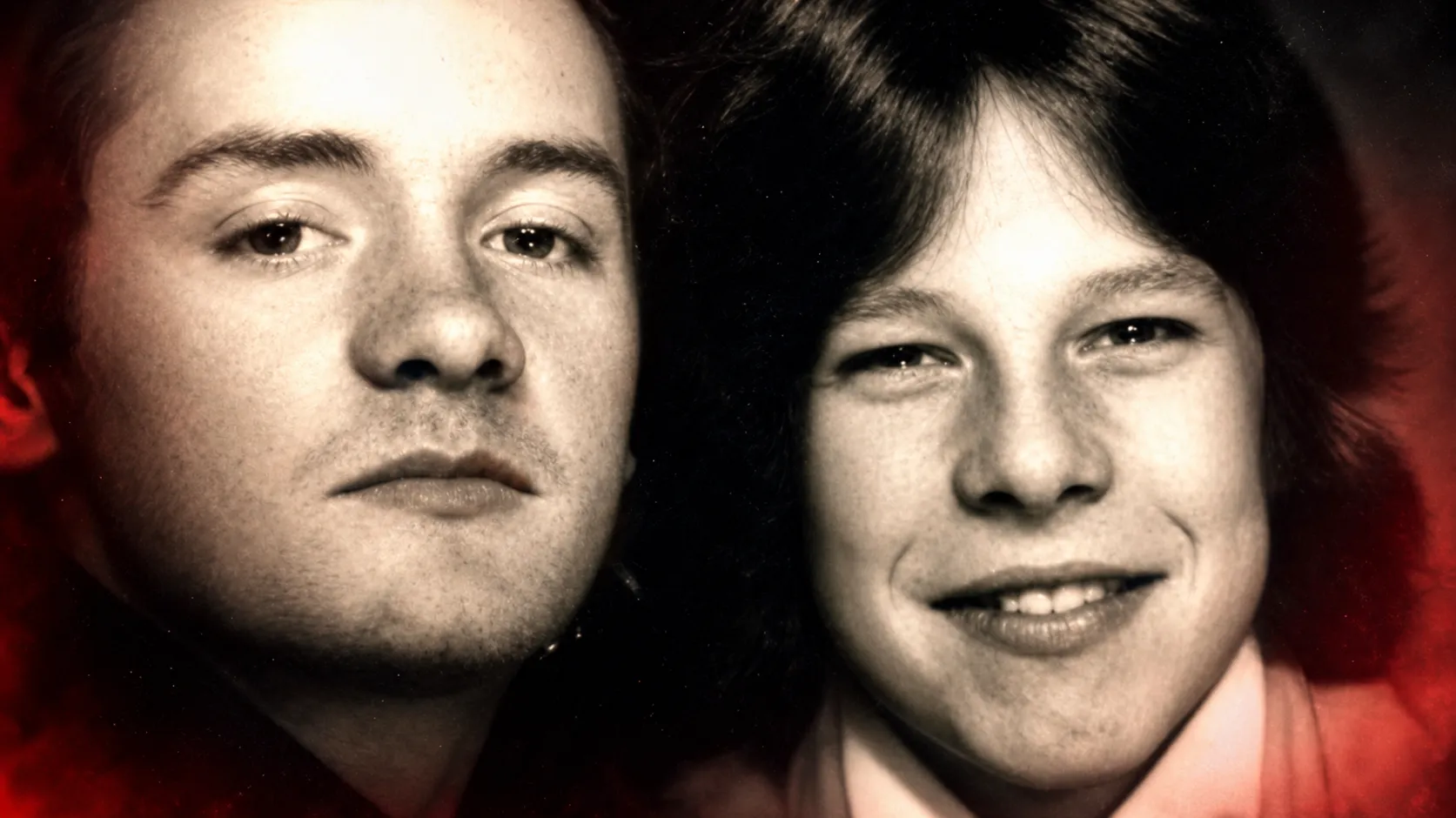
Duffy and David Mulcahy carried out a series of sexual attacks in London and the south of England during the 1980s, targeting women and girls near railway stations and secluded rail-side locations. The case became notorious not only for its brutality, but also because it helped bring offender profiling into mainstream British policing.
Between 1982 and 1986, the pair committed multiple rapes and other assaults, and their crimes escalated into murder. Police initially believed they were dealing with a single offender, earning Duffy the nickname “the Railway Rapist” before the first killing changed that label to “the Railway Killer”.
The first killing came on 29 December 1985, when 19-year-old Alison Day was pulled from a train at Hackney station, raped repeatedly and strangled with string. From that point on, the “Railway Rapist” became known as the “Railway Killer”.
Just under four months later, 15-year-old Maartje Tambozer was abducted from Horsley station, raped and murdered, before her body was set alight in an apparent attempt to remove evidence.
On 18 May 1986, 29-year-old television presenter Anne Locke was also abducted and killed after getting off a train in Hertfordshire.
Duffy was arrested in November 1986. In 1988, he was convicted of two murders and four rapes and given a minimum term of 30 years. It was not until 1997 that he identified Mulcahy, who was later sentenced to three life terms in 2001 after being convicted of the murders of Alison Day, Maartje Tambozer and Anne Locke, alongside multiple rapes and attempted rapes.
The inquiry became a landmark in British policing because it marked one of the first major uses of psychological offender profiling in a UK criminal case. Professor David Canter of Surrey University produced a profile containing 17 characteristics of the unknown suspect.
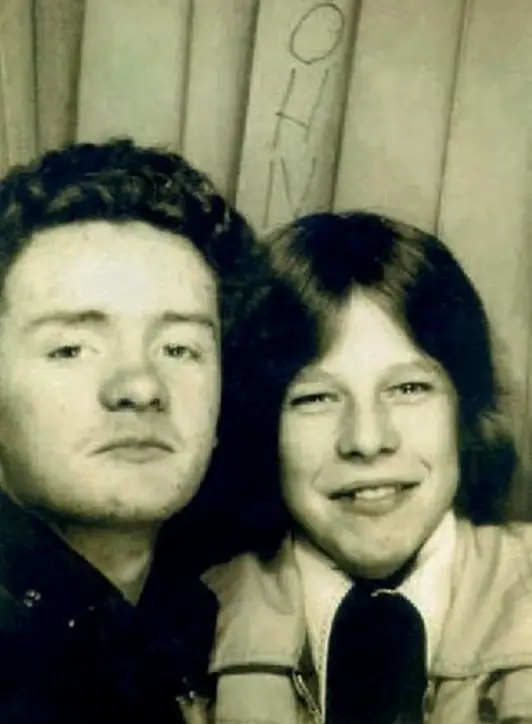
After Duffy’s capture, Canter’s profile proved strikingly accurate, with at least 12 of those traits matching.
When Dr Hill later began interviewing Duffy in prison, he said the man he encountered was not what he had anticipated.
Speaking during Minutes With, Dr Hill said:
“The thing about John Duffy that I found when I interviewed him was that he seemed very vulnerable to me. He seemed somebody had committed a crime, which seemed to be completely out of character.”
Rather than concentrating only on the offences, Hill said he tried to trace Duffy’s life back to its earliest stages, including his school years.
Initially, Duffy treated that part of his past casually.

“He said, ‘Oh yeah, that was good, good, good’,” says Dr Hill.
But as the conversation deepened, a much darker pattern began to emerge.
“It turns out that he was expelled several times for chasing one particular little girl in the playground and sexually assaulting her.”
For Hill, that history appeared to reveal an early version of the same behaviour that would later define Duffy’s adult crimes: pursuit, stalking and the thrill of targeting someone vulnerable.
“To me, there seemed to be the origins of this intrigue about stalking and hunting,” he explains.
According to Hill, Duffy later progressed from chasing animals and birds to stalking women around railway stations.
“There seemed to be some sort of connection between his behavior in childhood and his later adult sexual offending.”
Hill said Duffy seemed taken aback when that connection was put to him directly.
“He said, ‘You know, I’ve never really thought about that, but now you mention it, you might be right’.”
That response, Hill argued, shows why lengthy, carefully structured interviews can be so important.
“If you give people enough time and ask them the right questions, sometimes you can give them something that helps them understand their own behavior.”
Duffy also described the offences in a way that, for Hill, reinforced the same underlying pattern.
“I found the thrill of the chase much more exciting than the actual crime itself.”
During later court proceedings, Duffy testified against Mulcahy and described how the two men referred to their outings as “hunting parties”, using balaclavas and knives.
“We used to call it hunting,” Duffy said.
“We did it as a bit of a joke. A bit of a game.”
Hill has stressed that examining those childhood and psychological roots is not the same as diminishing the severity of the crimes.
“The most commonly asked question I’m asked is, ‘why would someone do that?'” he says.
“And I always have to say the same thing, that is the wrong way of approaching it. What you should be asking is, ‘how do they see the world so that they think it’s rational and acceptable to behave in that way?'”
That distinction, he argues, matters not only for investigators but also for the public understanding of offenders. One persistent misconception is that men like Duffy and Mulcahy would have seemed obviously dangerous to the people around them.
Watch Dr Hill’s full Minutes With episode below:
Hill said that assumption is false. In his view, many sex offenders maintain ordinary-looking lives, stable work and a seemingly normal place in society, allowing them to remain hidden in plain sight. Mulcahy, for example, was a married father of four.
The Railway Killers investigation also helped reshape British policing. Offender profiling, based on studying known patterns among similar criminals to predict the traits of an unidentified suspect, became a major tool during the hunt for Duffy and Mulcahy and has since influenced the way serious sexual and violent crime is investigated.
Duffy remains in prison and is expected to spend the rest of his life there.
For Hill, one of the most unsettling aspects of the case is Duffy’s own acknowledgement that the behaviour he displayed as a child may have contained the earliest clues to the violence he later inflicted.