


During a recent interview with “CBS Mornings,” the 60-year-old singer opened up about her difficult upbringing, saying “I started life out a little bit on the tough side.”
Shania Twain grew up in a home so violent and broken that most kids would not have survived it, born in Windsor, Ontario, in 1965.
She never knew her real father, and when her mother, Sharon, remarried Jerry Twain, life only got harder as he was an alcoholic with a temper that turned their house into a war zone.

Twain said, “When I was younger, I was so over-responsible for the household. My mother was depressed a lot of the time. She spent a lot of her days in bed. She lived off coffee and cigarettes that I would bring her in bed just to see if she was still alive. There was a lot of violence in the house.”

Shania grew up bracing for the sound of fists slamming into walls and waiting to see if her mother would survive the night.
She once admitted, “I thought they’d kill each other.”
“Many nights I went to bed thinking, ‘Don’t go to sleep. Wait until they are sleeping. Make sure everybody is breathing,'” she recalled.
The violence was constant.
In her memoir, Shania described one night when Jerry beat her mother unconscious, shoved her head into a toilet, and left her gasping for air, with eleven-year-old Shania grabbing a chair and smashing it across his back.
Eleven-year-old Shania grabbed a chair and smashed it across his back, and he hit her in the face before she hit him back.

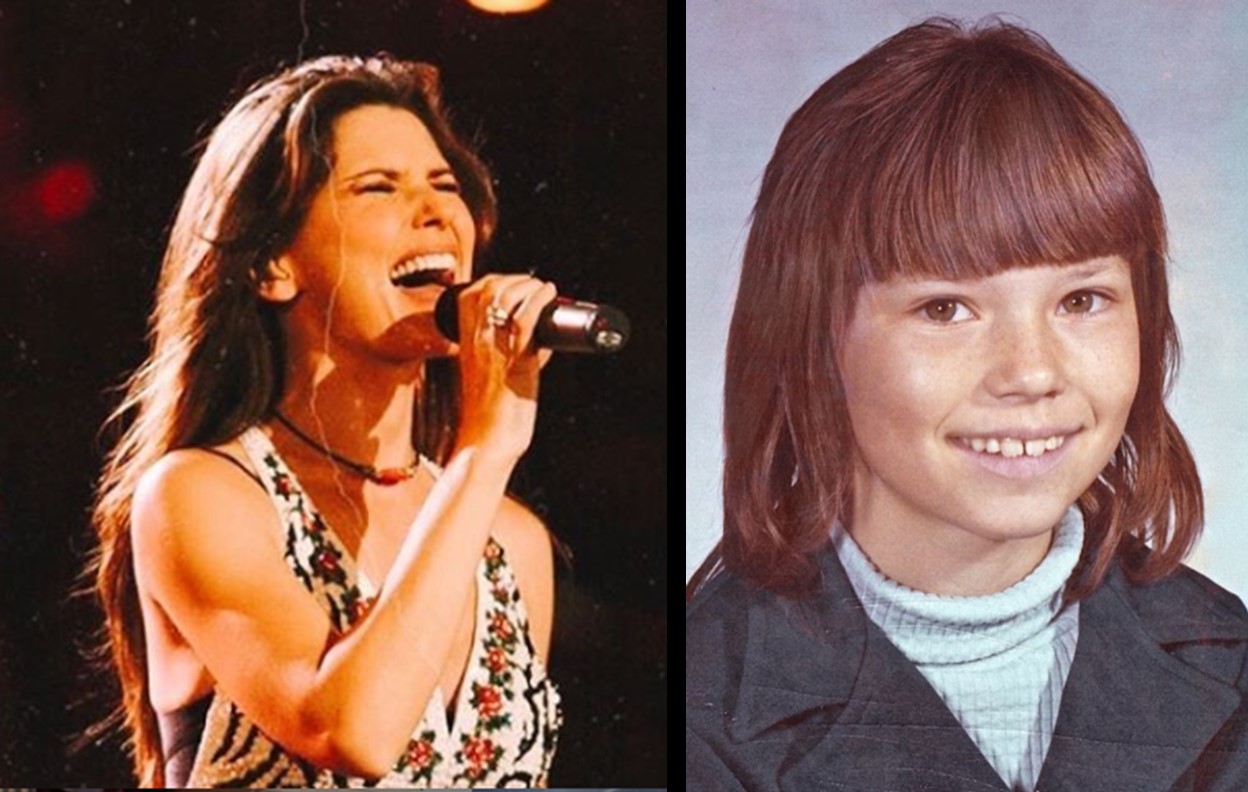
Additionally, she endured sexual abuse.
Speaking with The Sunday Times, Twain said that her stepfather physically and sexually abused her while growing up, and “I hid myself, and I would flatten my boobs. I would wear bras that were too small for me, and I’d wear two, play it down until there was nothing girl about me. Make it easier to go unnoticed.”
She added, “Because, oh my gosh, it was terrible—you didn’t want to be a girl in my house.”
She also experienced hunger as a constant companion.
“When you’re hungry you can’t do anything about it but distract yourself from the hunger. And it really works. It’s therapeutic,” she said.
Twain said that having nothing to eat was a regular occurrence in her childhood home and that she would often go to school with an empty stomach, envying the lunches of the kids around her.
“I would certainly never have humiliated myself enough to reach out and ask for help and say, ‘You know, I’m hungry. Can I have that apple that you’re not going to eat?’ I didn’t have the courage to do that,” she said.
Her stepfather’s violence extended to verbal assaults.
“He just had issues — and, at the time I was looking at this man as somebody who was not being himself. It was like he was two people,” Shania said, adding her stepfather often shouted “vulgarities” at her.
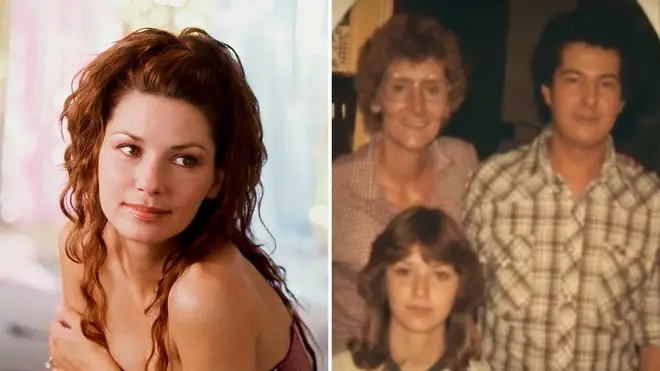
Twain learned to physically fight back against her stepfather to defend herself and her mother, Sharon Morrison, from his abuse, saying, “I think a lot of that was anger, not courage. And it took a long time to manage that anger.”
She said, “I wanted to escape. From everything. Violent home. Tensions. Nothing to eat. When you’re hungry you can’t do anything about it but distract yourself from the hunger. And it really works. It’s therapeutic. A lot of kids play with dolls and I played with words and so[nds].”

Music became her lifeline.
Before Shania Twain became Shania Twain, she was a child performing in Canadian bars, singing to miners, lumberjacks, fishermen and hunters drinking the night away.
“I could only enter after the bar closed. That was after midnight because I was underage. And as long as the bar wasn’t still serving, then I could go in and play while everybody was finishing up their last call.”
Her mother depended on her income.
“I developed a little broken, I think,” Twain told Drew Barrymore, recalling drunk adults “falling all over” her at while being in nightclubs at age 8 and “just being put in situations that were very unnatural.”
Twain reflected on how the violence shaped her entire worldview.
There was a lot of violence in the house and they didn’t eat well a lot of the times, with Twain not clothed properly a lot of the time.
The abuse was constant.
She learned to fight back, to hide, and to survive by channeling her pain into music.
“I feel lucky that I was so resilient, but I paid a price for it,” Twain told Barrymore.
In 1987, when she was 22, her mother and stepfather were killed in a car accident.
While both Twain and her older sister were already adults, their three younger siblings were underage and needed a legal guardian, and Twain put her career on hold and moved back to Ontario to care for her younger siblings.
Twain said “I am in charge again” and that she “had to learn how to be brave really early on and not crumble” after growing up in poverty and taking on adult responsibilities while still young.
Her seventh studio album, “Little Miss Twain”, is out now and revisits memories from her childhood.