

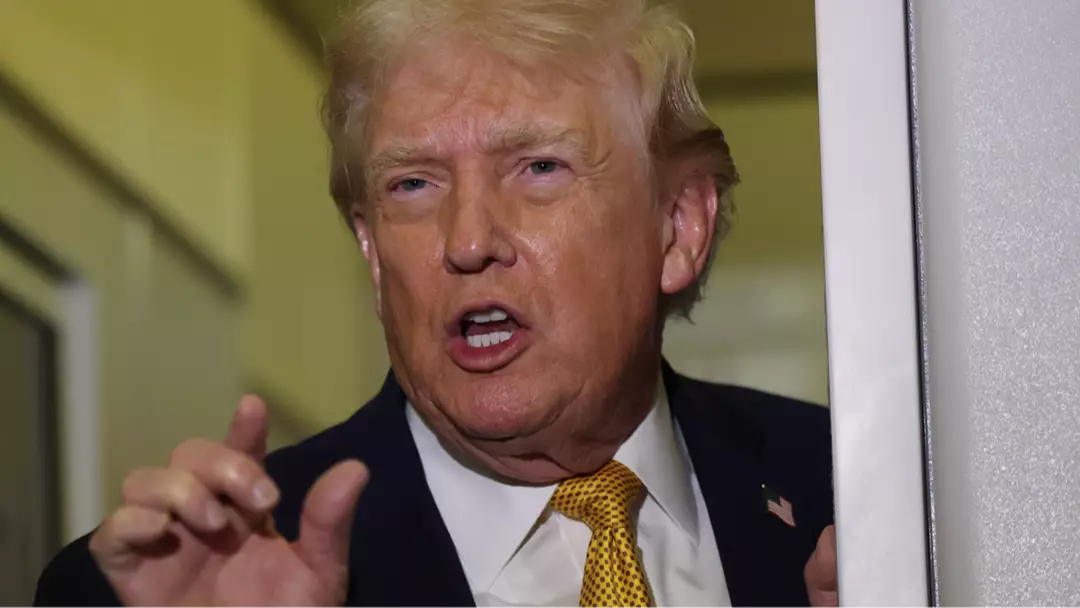
Donald Trump is proposing a significant shift in credit card policies to protect Americans from being overcharged by companies, though implementing this change may face challenges.
In recent years, interest rates in the United States have been on the rise. From February 2022 to August 2023, rates surged from approximately 16.17 percent to 22.7 percent, according to data from Macro Trends.
The increase continued, and by the following year, interest rates had exceeded 23.37 percent. Thankfully, these rates have slightly decreased, and as of November 2025, they stand at 22.3 percent.
Nonetheless, this situation might shift by the month’s end if President Trump succeeds with his proposed changes.

In a recent update on Truth Social, the President promised to limit interest rates to 10 percent for a year, aiming to prevent US citizens from being overcharged.
Trump stated: “Please be informed that we will no longer let the American public be ‘ripped off’ by Credit Card Companies that are charging Interest Rates of 20 to 30%, and even more, which festered unimpeded during the Sleepy Joe Biden Administration. AFFORDABILITY!”
He further explained: “Effective January 20, 2026, I, as President of the United States, am calling for a one year cap on Credit Card Interest Rates of 10%. Coincidentally, the January 20th date will coincide with the one year anniversary of the historic and very successful Trump Administration.”
This idea was initially part of his 2024 campaign, where he assured voters that his administration would ‘put a temporary cap on credit card interest rates’.
However, implementing this could be complex.

While lower interest rates seem beneficial, the banking sector warns that this measure might negatively impact consumers in the United States.
The Bank Policy Institute, American Bankers Association, Consumer Bankers Association, Financial Services Forum, and Independent Community Bankers of America collectively stated: “We share the president’s goal of helping Americans access more affordable credit.
“At the same time, evidence shows that a 10% interest rate cap would reduce credit availability and be devastating for millions of American families and small business owners who rely on and value their credit cards, the very consumers this proposal intends to help.”
They also noted: “If enacted, this cap would only drive consumers toward less regulated, more costly alternatives.”
In essence, imposing a 10 percent cap might push banks to adopt tighter lending criteria, potentially making it more challenging for lower-income Americans with lower credit scores to obtain credit cards.