


Annually, approximately 55,000 individuals in the United States lose their battle with colorectal cancer. Recently, James Van Der Beek, well-known for his role in Dawson’s Creek, became the latest prominent figure to pass away due to this illness.
At 48, the actor died on Wednesday, February 11, with his family sharing the unfortunate news through social media.
“Our beloved James David Van Der Beek passed peacefully this morning. He met his final days with courage, faith, and grace. There is much to share regarding his wishes, love for humanity and the sacredness of time. Those days will come. For now we ask for peaceful privacy as we grieve our loving husband, father, son, brother, and friend,” they stated.
James was a vocal advocate for the early detection of cancer, frequently speaking about the stealthy nature of the disease and how it unexpectedly affected him.
“I think the biggest misconception is the same one I had, which is that you need to have something seriously wrong with you to get screened for colorectal cancer. You don’t. You can have no symptoms and still have cancer,” he explained.
“There wasn’t any red flag or something glaring,” the actor acknowledged. “I was healthy. I was doing the cold plunge. I was in amazing cardiovascular shape, and I had stage 3 cancer, and I had no idea.”
He only sought medical advice after a slight alteration in his bowel habits, leading to the shocking diagnosis of advanced colorectal cancer.

The American Cancer Society identifies symptoms such as bleeding from the rear, blood in stool, unintentional weight loss, fatigue, and abdominal pain as common indicators of colorectal cancer.
Additional symptoms include any pain or lumps in the abdomen and a feeling of incomplete bowel evacuation after using the toilet.
Like James, individuals might observe changes in bowel habits, ranging from increased constipation to diarrhoea.
Any persistent changes in stool consistency lasting over three weeks should be evaluated by a healthcare provider.

Initial steps for diagnosing colorectal cancer involve consulting a primary care physician, who will review symptoms and perform a physical exam. This may include a back passage examination with a gloved, lubricated finger.
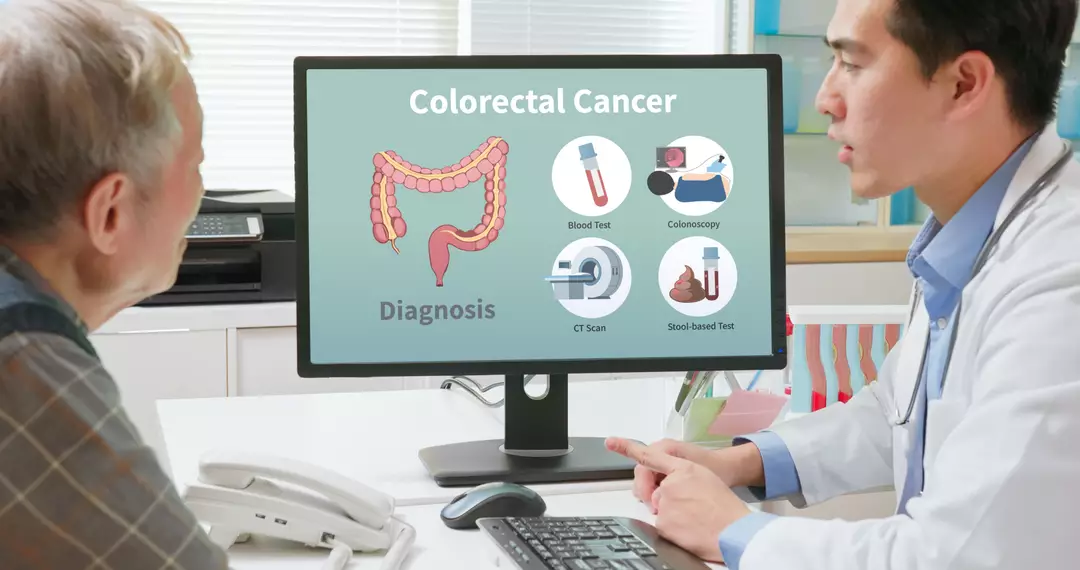
If concerns persist, further screening tests such as a fecal occult blood test might be recommended. This test involves sending a stool sample to a lab to check for hidden blood.
A doctor may also recommend a colonoscopy or sigmoidoscopy. These procedures, conducted under sedation, involve inserting a small camera into the rectum to detect abnormal growths or bleeding. Biopsies can be performed, and small lesions or polyps may be removed during this process.
An alternative to traditional colonoscopy is a virtual one, where a CT scan is utilized instead of a camera.
As with many cancers, a combined treatment approach is often most effective for colorectal cancer. This typically involves a mix of chemotherapy, radiotherapy, and surgery.
For some, minimally invasive surgery might suffice to remove early-stage cancer. However, more advanced cases often require surgery followed by chemotherapy to minimize recurrence chances.
In certain situations, patients may need a portion of their bowel surgically removed and a stoma created. This procedure involves making a temporary or permanent opening in the abdomen to allow waste to exit the body, particularly when the bowel cannot be reconnected.