

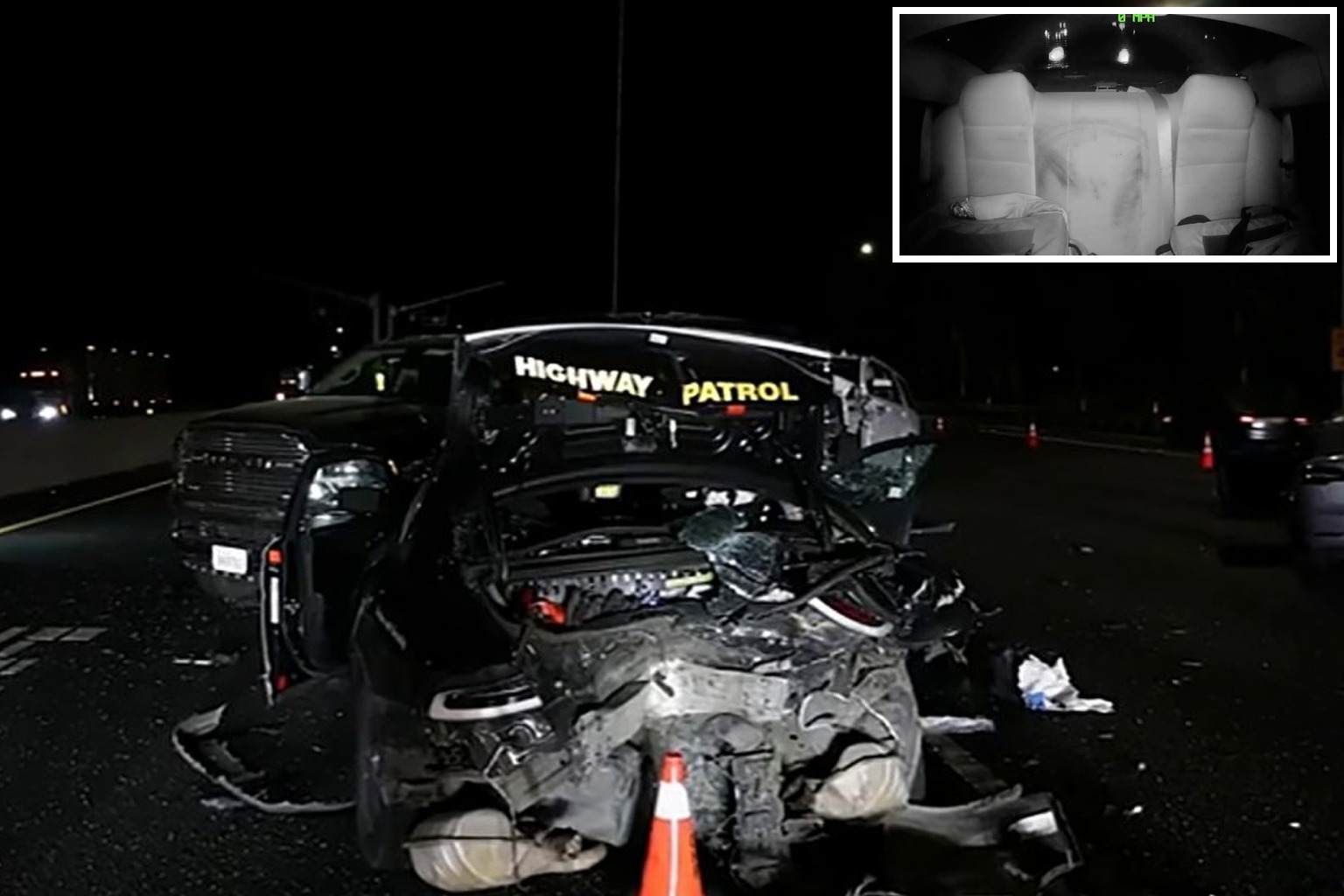
A California Highway Patrol cruiser became the latest casualty of a sleeping Tesla driver who treated freeway speeds like a nap pod.
The two officers inside the patrol vehicle, a 22-year-old Sacramento man behind the Tesla’s wheel, and the broader debate over autonomous driving promises collided on eastbound Interstate 80 west of Air Base Parkway on Oct. 13. The young driver later told investigators he had been asleep while his vehicle’s Full Self-Driving system remained engaged, according to CHP’s Solano area office.
The Tesla barreled into the occupied patrol car at freeway speeds, seriously injuring both officers who had been working the scene of a fatal crash. The driver himself walked away with only minor injuries. The officers are now recovering from their serious wounds, authorities confirmed.
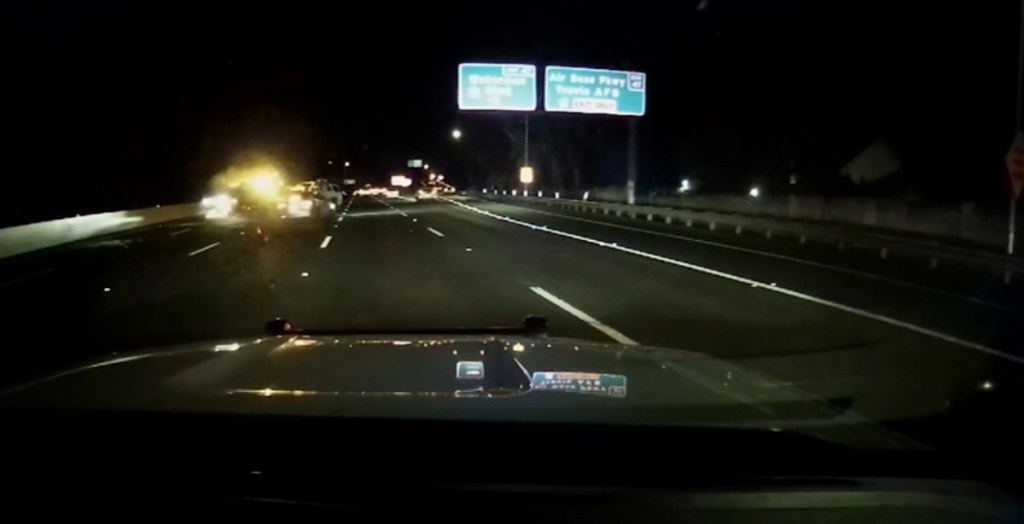
What made the collision especially troubling to investigators was the unmistakable warning signs the driver passed. CHP said the lanes had been blocked with flares and cones, while emergency vehicles flooded the closed-off stretch with flashing lights. The patrol vehicle sat in that illuminated cordon when the Tesla entered the restricted lanes and smashed into it.
The Sacramento man, whose name authorities have not released, faces an uncertain legal path forward. California law carries provisions covering unsafe speed and reckless driving, though officials have not announced what charges, if any, he could face.
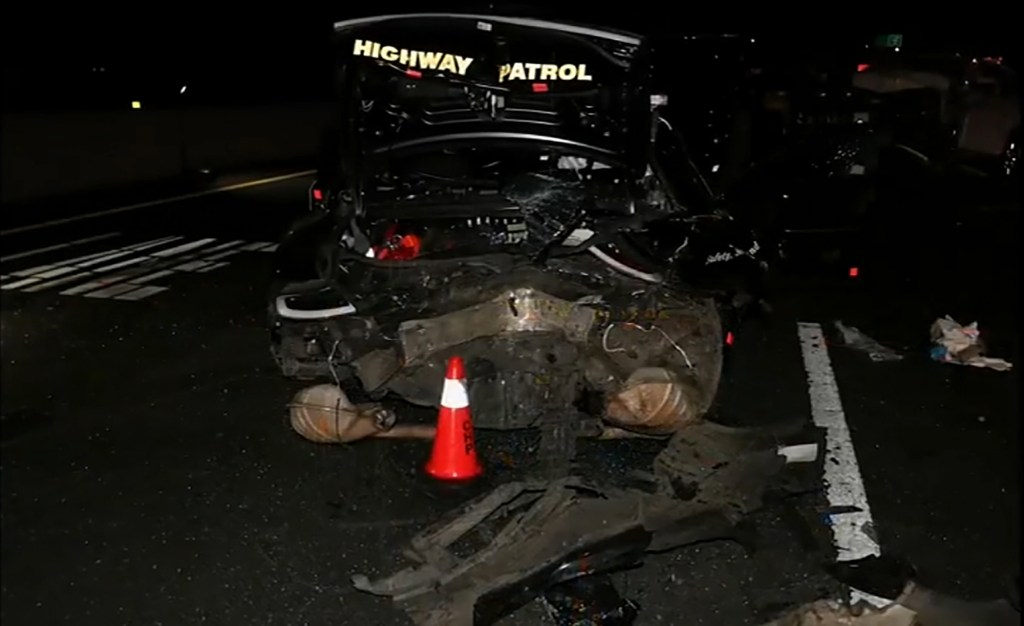
CHP delivered an unambiguous message about the technology’s limitations in a statement to KRON. “The driver claimed he was asleep and that the vehicle was operating in Tesla’s Full Self-Driving mode at the time of the crash. Despite its name, Full Self-Driving is not fully autonomous. It is an SAE Level 2 driver assistance system that requires continuous driver supervision.”
The agency’s wording left little room for interpretation about where responsibility ultimately rests.
Tesla’s Full Self-Driving system has long occupied a gray zone between marketing language and engineering reality. The SAE Level 2 designation means the system can steer, accelerate, and brake under certain conditions while demanding that a human driver remain ready to intervene at any moment. The “Full” in its name has drawn repeated criticism from safety advocates who argue it overpromises capabilities that remain years from true hands-off, eyes-off operation.
The Oct. 13 wreck adds to a growing file of incidents where Tesla drivers have apparently misunderstood or ignored that distinction. Federal regulators have opened multiple investigations into crashes involving the company’s driver-assistance systems, particularly where stationary emergency vehicles were struck.
The injured officers had been responding to a fatal collision when their own vehicle became a target. That original crash, which occurred in the same stretch of eastbound I-80, had prompted the lane closure and emergency response that drew the patrol car into position. The fatal collision’s victims and circumstances remain separate from the Tesla incident, though the two scenes became physically intertwined when the second driver failed to recognize the active emergency zone.
CHP’s statement carried a blunt bottom line for anyone tempted to test the boundaries of assisted driving technology. The system’s name, the agency emphasized, does not grant permission for drivers to treat their vehicles as self-operating sleep chambers.
The Sacramento man’s case now sits with authorities who must weigh whether his admitted sleep behind the wheel rises to criminal recklessness. No court date has been announced.