

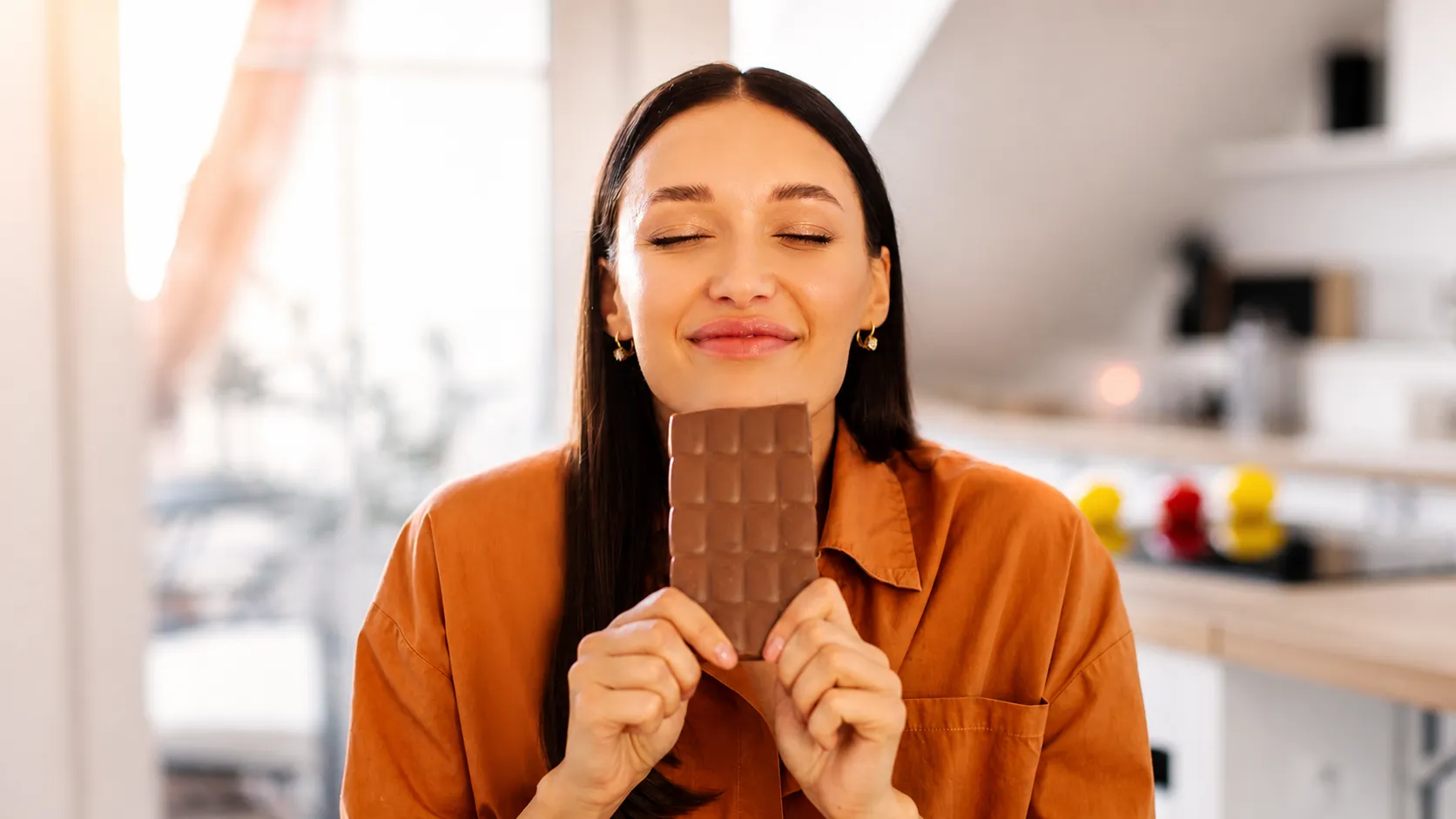
You may not need a supplement stack to boost your next workout, because the answer could be as simple as opening the cupboard and taking in the smell of chocolate.
A recent exploratory study published in Frontiers in Physiology indicates that inhaling the scent of chocolate shortly before exercise may help improve gym performance, without requiring you to take a single bite.
A team of sports scientists in Malaysia investigated the connection between scent, hunger and physical performance. Researcher Mohamed Nashrudin bin Naharudin said the subject had not been ‘systematically’ examined before, even though it is already well established that smell has a strong link to the brain areas involved in appetite and emotion.
The research focused on a very specific group: 23 healthy, moderately trained men in their early to mid twenties who regularly lifted weights. They were tested in the morning after an overnight fast of at least 10 hours, so the findings may be most relevant to people who train before breakfast or during fasting routines.
To examine the idea, researchers brought the participants into the lab and divided them into three separate groups. One group smelled liquid dark chocolate made with 90 percent cocoa, another smelled milk chocolate containing 60 percent cocoa, and a third group was given water.
After that, each man completed a leg extension exercise using a machine that required them to raise a weighted bar with their shins.

The performance gap was notable. Those who smelled the dark chocolate completed 18 more repetitions than the water group, while the milk chocolate group still achieved an additional nine reps.
Even more interesting was the fact that the men did not say the exercise felt any harder, despite the increase in output. Naharudin described this as “a fascinating psychobiological outcome.”
The dark chocolate group also said they felt less hungry, more satisfied and less motivated to eat after the session. By contrast, milk chocolate was rated as a more pleasant smell, but it did not appear to meaningfully change appetite.

The researchers think the explanation may lie in how the brain interprets the deeper, more bitter aroma of dark chocolate as something substantial and filling, effectively convincing the body it has already been fed.
They believe that merely smelling food could begin preparing the digestive system for eating, producing some of the same physiological responses as a meal. The team also suspects this phenomenon may not be limited to chocolate alone.
Nashrudin Naharudin said the smell probably has to be familiar and pleasant to the individual, or at the very least not unpleasant, if it is going to influence appetite in the same way and potentially improve performance.
The study is still small and preliminary, and the researchers say more work is needed to see whether the effect holds up in women, in older adults, in different sports and under non-fasted conditions. The experiment also looked at a single exercise movement rather than a full training session, so it should be viewed as an early clue rather than a finished rule of thumb.
The results may be especially relevant for people who regularly train while fasting.
Previous research suggests that around 38 percent of athletes exercise before eating, either because they think it helps with performance or body composition, or because they are following intermittent fasting routines.
So for anyone hoping to feel more energised without dealing with a heavy stomach during a workout, breathing in the scent of chocolate beforehand might be a surprisingly easy strategy to test.