


Scott Martin was alone in his car in the garage when a dark thought entered his mind.
He had just returned from court after losing a two-week, $10 million medical malpractice case against the physician who failed to diagnose him years earlier.
He was out of work, had no income, and couldn’t see what came next.
For a man whose adult life had been shaped by sport, drive, and constant momentum, it felt like everything had stopped. As he later put it, he had run into “the brick wall of depression.”
“I pulled into the garage, and it occurred to me that there are a lot of people who wouldn’t have been surprised if I didn’t turn the car off,” Martin says of that moment in 1993.
“Or if I’d gone out and bought a pistol.”
He didn’t do either. Instead, his life would eventually take a very different path.
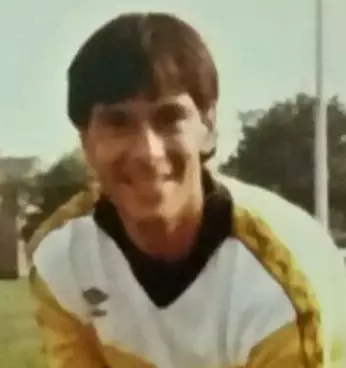
During the summer of 1993, Martin felt like his career was heading exactly where he wanted it to go. Raised in Wisconsin and already experienced at the college level, he had been chosen to lead a group of elite college players on a European trip. Nike had also invited him to speak at a major scouting camp in the Midwest near Chicago, the kind of opportunity that could shape a coaching future.
“Everything was moving in a positive direction,” he says.
That same camp is where things suddenly changed. While taking part in a coaches’ game, he began to feel seriously unwell and had to pull out, something he says had never happened before. That night, he was either vomiting or shivering in his dorm. The next morning, he drove to his mother’s home, and she immediately told him to go to the emergency room. His memory ends when his stepfather backed the car out of the driveway.
He spent the next month in a coma.
When he woke, he learned he had developed necrotizing fasciitis, commonly known as flesh-eating disease, and that the infection had already become life-threatening. Doctors had initially dismissed his symptoms as heat exhaustion. By the time he returned and the scale of the illness was clear, he had already slipped into multiple organ failure.
To save his life, surgeons had no option but to amputate. He regained consciousness without his hands and with parts of both feet gone.
“The first thing I thought was: I’m done,” he says. “Playing was my art. That was my big love. And it was gone.”
What came after was, in his view now, several years of refusing to fully confront what had happened. He threw himself back into coaching almost immediately, a decision he now believes was damaging.
“I dove into my work because that was my way of avoiding the disability and avoiding how to deal with all of this,” he says.
“Before, I was immersed in it, now I was drowning in it. Because I couldn’t do a cold call, go to a tournament, introduce myself to players. Say, ‘Hey, love your game, here’s my card.’ I didn’t feel I could.”
Recruitment stalled. Performances suffered. While not every setback was his responsibility, Martin absorbed each one as if it were.
“I was faking it so much,” he says. “In public I smiled. In private I toiled.”
Eventually, he stepped down. Two months later came the trial. Two weeks after losing it, he found himself sitting in that garage.
“I said to myself: I need to break myself down in order to build myself back up,” he says. “I got rid of all my awards, trophies, everything. Pitched it. Found a place out in Washington State, on the other side of the country, and started fresh, on food stamps, working for free. Just to cleanse myself. Get back to where I maybe was in college. And rebuild.”
That rebuilding process ended up leading him somewhere he never expected.
After moving to Washington and coaching at Gonzaga University, where he believed he was in line for a head coach role, he saw a television report about a couple who had adopted two children from Haiti. Within minutes, he had started looking into adoption himself. The next morning, he called the athletic director to remove himself from consideration.
“I’m glad he didn’t pick up,” Martin laughs, “because he probably would have thought I was crazy.”
In the years that followed, Martin adopted five children in total, two from Romania and three from Ethiopia. For nearly 20 years, soccer largely moved into the background.
“I went from coaching soccer to being the parent of a basketball team of five kids,” he says. “That’s what I did for 20 years.”
Even so, he never fully disconnected from the sport in his mind. He continued studying the game, watching closely, and thinking through tactics, tracing the influence of Johan Cruyff through to Pep Guardiola.
Publicly, though, his coaching career was effectively on hold.
When he did return, it was at a club in Wisconsin, where he was assigned the under-13 third team after two other coaches had already been preferred. He says the message was simple: keep the parents satisfied.
“No respect,” he says simply. He took the team unbeaten to a championship.
Today, Martin works with older youth players and coaches a fluid system without fixed positions, inspired by the total football ideas he has admired since the Cruyff era and the Dutch national team. His approach emphasizes speed, attacking freedom, and trust, with players encouraged to move constantly and make their own decisions on the pitch.
“I’m probably having the most fun I’ve had coaching, if not ever, then in a very long time,” he says. “I connect with these kids. They work hard. Their biggest problem is themselves, they lack confidence.
“But I think we’ve finally turned the corner on them trusting that I’m giving them freedom.”

For people who have endured major trauma, illness, or a sudden loss of identity, Martin offers advice shaped by the years he feels he lost by resisting reality.
“Cut yourself some slack,” he says. “Give yourself some time. Allow yourself to absorb. The male ego gets in the way, it got in mine. Just be honest about it and look at it for what it is: one hell of a struggle.”
His memoir also includes a Spotify playlist of 15 or 16 songs meant to be played while reading. It features artists like Tom Petty, B.B. King, and the Rolling Stones, music suited to resilience and determination.
There is one song, though, that seems to capture Martin’s outlook better than any other: “I Won’t Back Down” by Tom Petty.
Martin’s memoir, Play From Your Heart, was published in June 2026 and recounts the years from his rise in college soccer through his illness, recovery, and return to the game. He has described writing it as a form of therapy, a way to revisit the loss and rebuild the story on his own terms.
“I tried it,” he says, “and it’s really cool. Something I’ve never seen before.” He’s still coaching. Still thinking about the game. Still, by his own account, not quite done.
Scott Martin’s book Play from the Heart is available now on Amazon.