

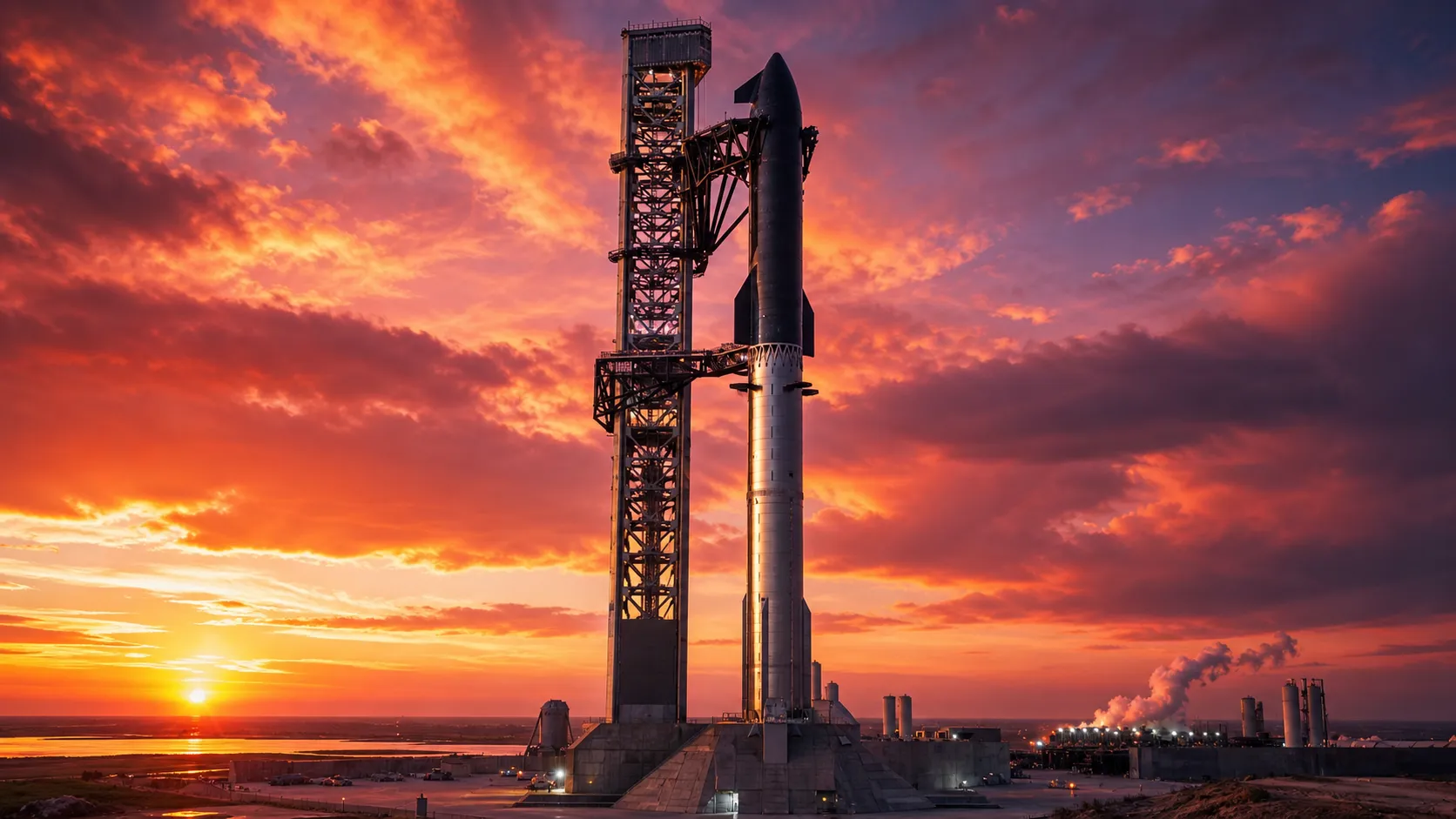
SpaceX’s massive Starship rocket blasted off Friday on another test flight stretching halfway around the world, this time releasing 20 of the most advanced Starlinks ever built. Towering 407 feet, the stainless steel spacecraft soared from the company’s base at the southern tip of Texas after delays caused by engine trouble and tropical weather.
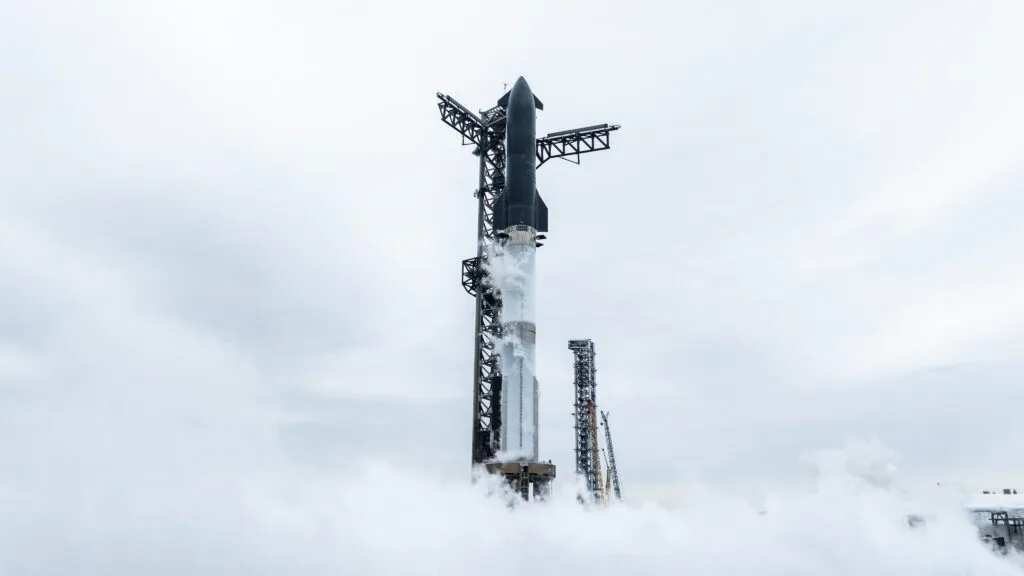
The flight, known as Flight 13, marked the second launch of the vehicle’s upgraded Version 3 configuration and represented a significant milestone: the first deployment of operational Starlink V3 satellites to space. The hourlong journey ended with what observers called the softest splashdown yet, with the spacecraft coming to rest intact in the Indian Ocean more than 10,000 miles from the launch site, drawing cheers from employees back at Starbase.
NASA monitored the space-skimming flight closely, as the mission is a critical step toward using Starship as a lunar lander for moon crews under NASA’s Artemis program. The agency plans to use Starship to land astronauts on the lunar surface for the first time in more than 50 years, with an early 2028 target date if development proceeds on schedule.
The path to Friday’s launch had been rocky. SpaceX initially attempted to lift off on July 16 when four engines on the Super Heavy booster failed to ignite properly at the last second, triggering an automated abort. SpaceX founder Elon Musk said the team would replace two Raptor engines to ensure a good flight. Another launch attempt was scrubbed on July 23 due to thick clouds from Tropical Storm Bertha. When Friday’s weather finally cooperated, all 33 first-stage engines fired up normally.
Once aloft, the rockets handled their mission objectives nearly flawlessly. After stage separation, the booster attempted to return to Earth for a splashdown in the Gulf of Mexico, though not all of its engines relit as planned, causing it to descend faster than intended. The upper stage, Ship 40, continued soaring eastward on its suborbital trajectory.
At an altitude of 124 miles, the spacecraft began dispensing its primary payload: 20 next-generation Starlink V3 satellites. The satellites extended their solar arrays and antennas in space, then immediately went to work. Within just 20 minutes before reentering over the Indian Ocean as planned, the new satellites managed to communicate via lasers and radio with the thousands of older Starlink models already in orbit, successfully downloading data from each one. SpaceX engineers made contact with every satellite deployed, a significant technical achievement for equipment traveling at orbital velocities during its brief operational window.
Six of the newly launched Starlinks carried cameras that photographed Starship’s heat shield during reentry, capturing remarkably crisp images even as the spacecraft bobbed in the ocean. The heat shield was also equipped with sensors measuring the extreme pressures placed on the spacecraft during flight. Some of the thermal tiles were deliberately painted white to simulate missing tiles, allowing SpaceX to test how the protective system would perform under damaged conditions. This data will be crucial for improving Starship’s reliability for future crewed missions.
The Starlink V3 satellites represent a dramatic technological leap. Each V3 satellite can deliver up to 1 terabit per second of downlink capacity, roughly 10 times more than the V2 satellites that currently comprise most of the Starlink constellation. The new satellites also offer 160 gigabits per second of uplink, representing a roughly 22-fold increase from the previous generation. When deployed via Starship’s massive payload capacity, a single rocket launch can deliver 60 V3 satellites, adding approximately 60 terabits of network capacity in one mission—roughly 23 times more capacity than a typical Falcon 9 mission carrying V2 satellites.
With over 10,000 Starlinks already providing internet globally, SpaceX boasts the world’s largest satellite constellation. The V3 generation is designed to dramatically expand Starlink’s capabilities, including enhanced direct-to-cell connectivity that would allow ordinary smartphones to connect to satellites directly without special equipment. That service is expected to deliver full 5G-equivalent cellular connectivity from space, particularly benefiting remote areas without terrestrial tower coverage.
“We got all the heat shield data we needed and then some!” Musk said on X following the successful mission. SpaceX engineer Kate Tice called the flight “lucky flight 13,” and the team atmosphere reflected genuine optimism about the progress made.
The successful deployment represents a validation that Starship can reliably carry advanced payloads, moving the vehicle closer to regular operational use. SpaceX has indicated that V3 satellite deployment at scale will begin in late 2026, with the company planning dozens of launches before the new satellites represent a meaningful share of total network capacity. Each Starship launch is projected to add roughly 60 terabits of network capacity, dramatically accelerating the pace at which SpaceX can expand its internet constellation compared to the smaller Falcon 9 rocket.
Despite the overall success, the mission underscored SpaceX’s ongoing engineering challenges. The booster’s landing burn problems during this flight echo similar engine relight issues during the May flight. Industry analysts note that any similar failure during an attempted landing at the company’s launch site could potentially cause severe damage to the launchpad, underscoring the importance of perfecting these critical procedures before attempting crewed missions.
The Flight 13 mission follows a pattern of incremental progress for the ambitious Starship program. Each test flight builds toward the ultimate goal of a fully reusable super-heavy launch vehicle capable of reaching the moon, Mars, and beyond. Friday’s successful satellite deployment and controlled reentry demonstrated that SpaceX is steadily advancing toward that vision, even as the company works through persistent engineering hurdles that remain to be solved before humans can safely ride the massive rocket.