

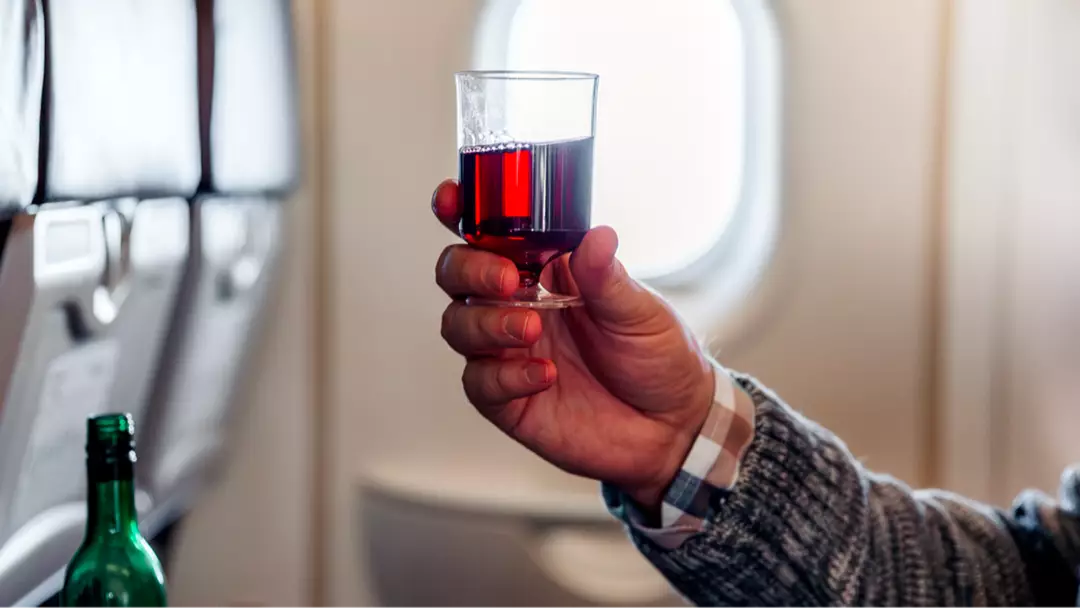
It’s common for airline passengers to indulge in an alcoholic drink during a flight, but experts have outlined reasons why these drinks may affect you more intensely at high altitudes and leave you feeling worse upon landing.
Whether drinking to mark the start of a holiday or to calm flying nerves, many adults look forward to the drinks cart making its way down the aisle during a flight.
Many are even willing to part with their money to enjoy a glass of wine or beer in the sky, but certain aspects of air travel can make consuming alcohol less enjoyable over time.
Various experts have weighed in on the topic, discussing how factors like low humidity and lengthy flight times can amplify the effects of alcohol.
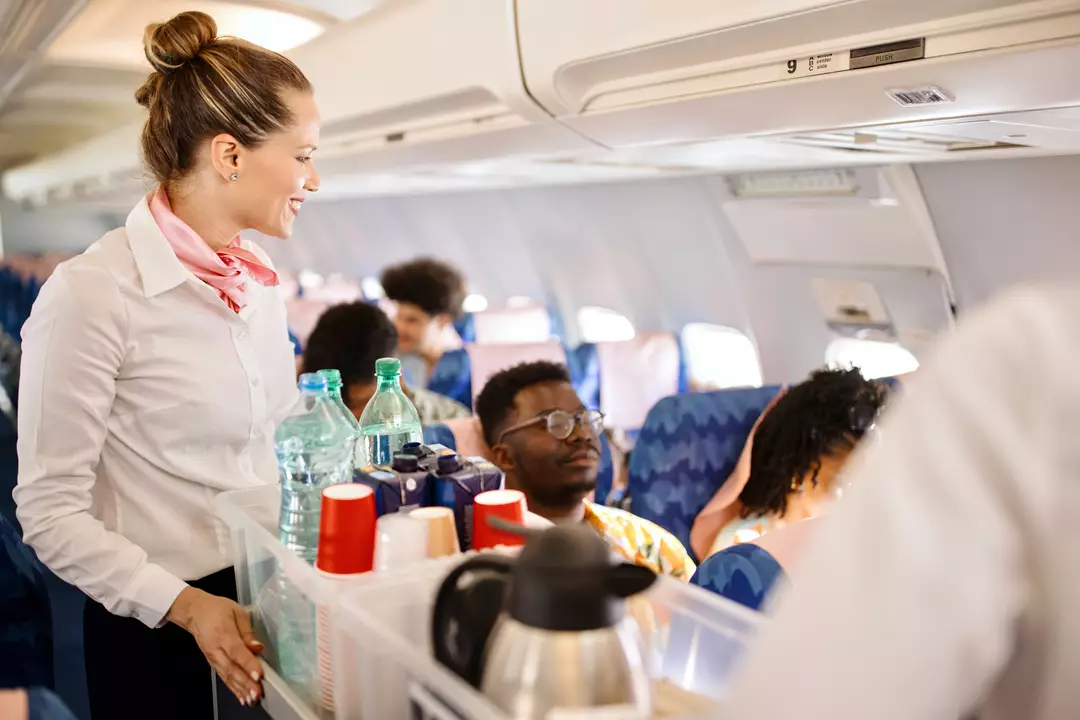
Though you might indulge in several drinks, alcohol acts as a diuretic, causing your kidneys to expel more fluids and leading to increased urination.
We all know the inconvenience of maneuvering to the plane lavatory from a window seat, but this is just one of the reasons to reconsider drinking onboard.
Dr. Sanjay Kurani, medical director at Santa Clara Valley Medical Center, told SELF that the increased need to urinate can result in dehydration, which may cause tiredness and headaches.
These are symptoms also encountered on the ground, but Dr. Joshua Zeichner, a dermatologist in New York, pointed out that the lower humidity in aircraft cabins already leaves you more dehydrated, so alcohol exacerbates the issue.
Consequently, you may notice signs such as dry mouth, chapped lips, and dry eyes.

The low air pressure in airplane cabins means passengers receive less oxygen in their blood and brains, potentially causing lightheadedness. Combined with dehydration, this can make alcohol’s effects more pronounced and quicker to set in.
While it might take fewer drinks to feel intoxicated, you may find the aftermath worse than expected after only a couple of drinks.
Travelling by plane can already leave you feeling unwell, particularly on overnight flights. Alcohol can disrupt restorative REM sleep, so even if you manage to nap, you may not feel refreshed upon awakening.
The simplest way to avoid post-drink discomfort is to abstain from alcohol. It’s not what you’d want to hear, but it’s effective.
If you still wish to enjoy a drink, Dr. Omid Mehdizadeh, an otolaryngology and head and neck surgeon at Pacific Neuroscience Institute in Santa Monica, advised SELF on how to reduce its effects.
First, remember you need less alcohol on flights to feel its effects, so limit your intake to one or two drinks.
Combat dehydration by drinking a cup of water for each alcoholic drink and consider using eye drops and saline nasal spray to counteract low humidity.