

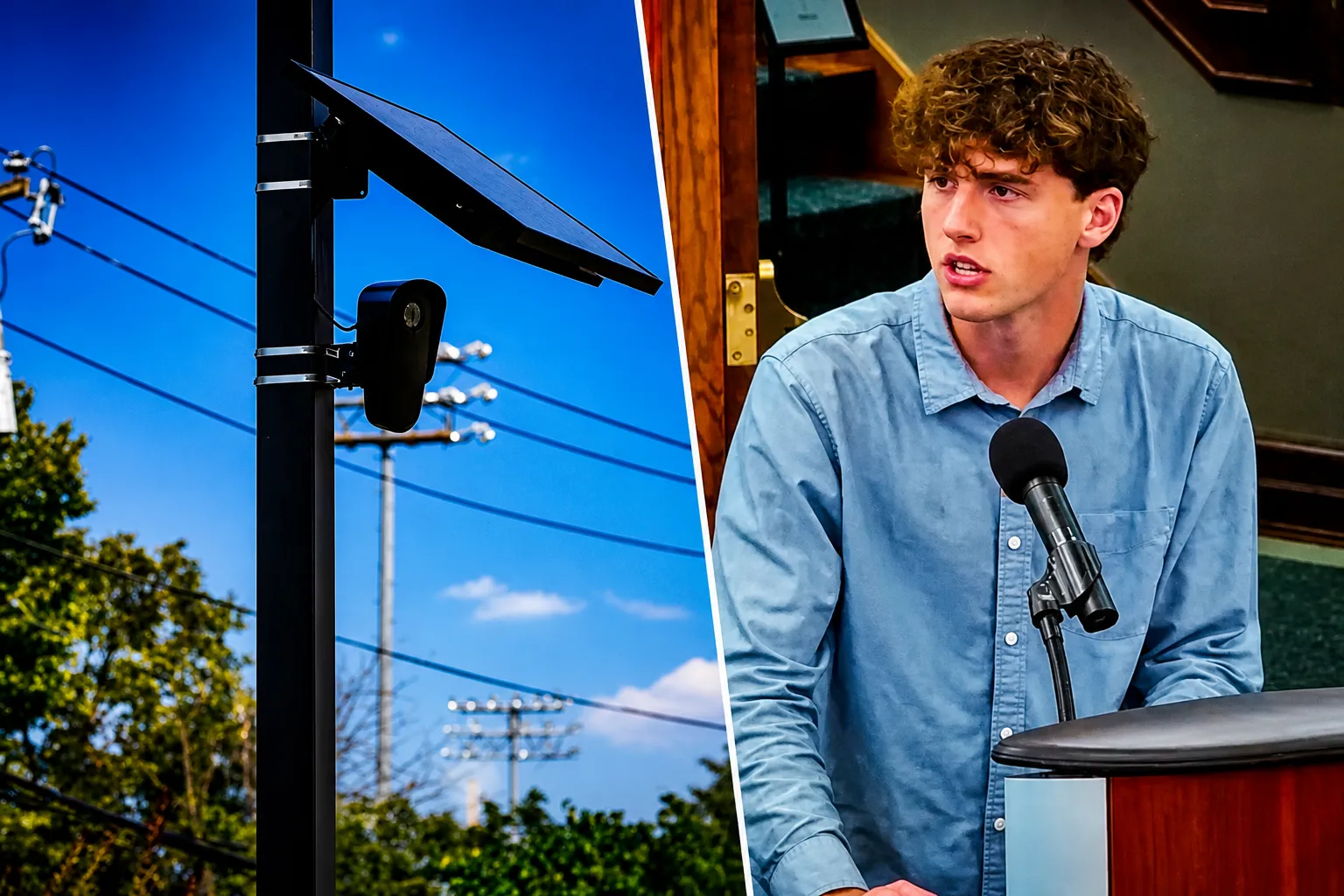
Gabe Sayer has launched a student-led campaign to dismantle AI-powered Flock surveillance cameras in his Colorado school district.
Sayer, 17, a high school senior from Loveland, Colorado, organized a Change.org petition and founded DeFlock Loveland after five Flock cameras were installed across his district. “I was just so disgusted,” he told The Post. “I decided that we had to at least try and get rid of them in Loveland.” His petition has gathered 719 signatures and argues that widespread corporate surveillance puts American liberties “dangerously in question.”
“It seems like the government’s trying to watch you more and more,” Sayer told The Post. “It makes me feel a little unsafe.” He believes the cameras violate Fourth Amendment protections against unreasonable surveillance for both students and community members.
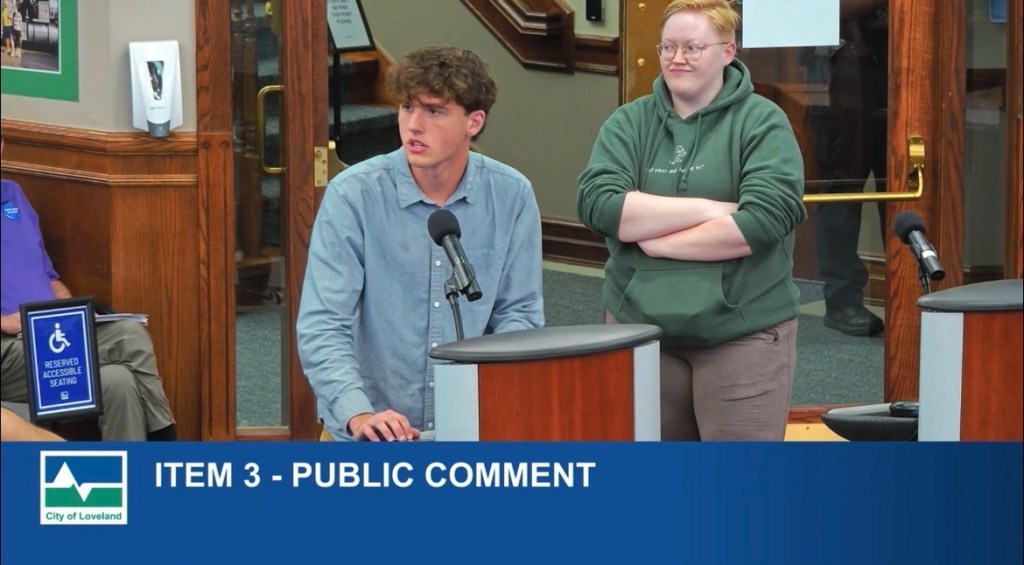
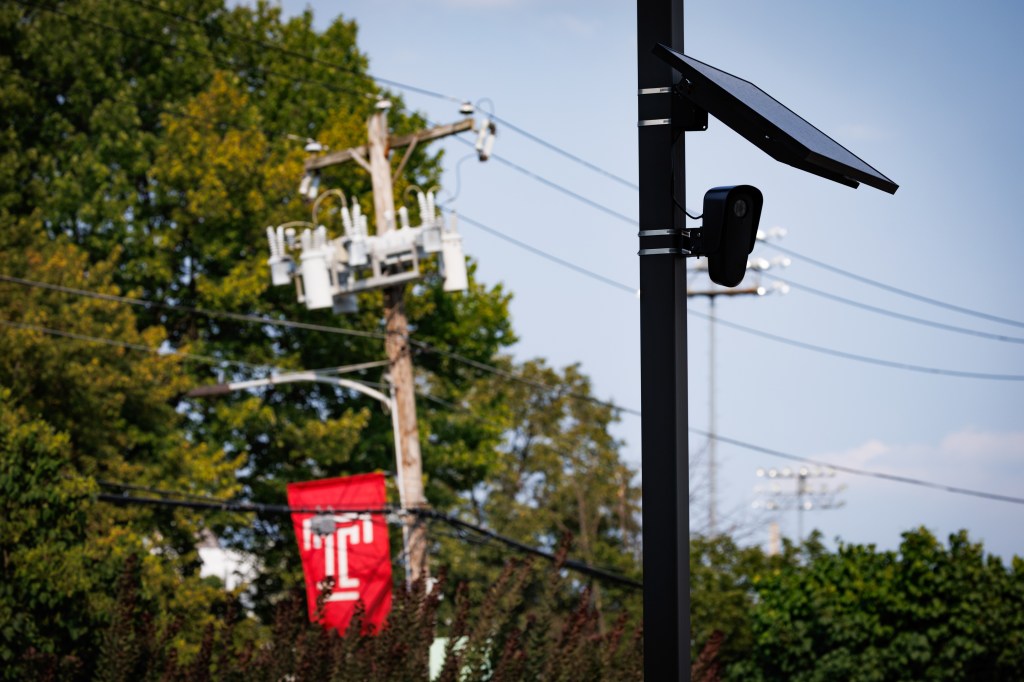
The Loveland school district told The Post that the cameras, installed in 2024, have been disconnected. A spokesperson said the decision came because “the district determined that the amount of money being spent on the cameras was not providing the service that [they] had hoped to get.” However, the hardware remains mounted because the equipment belongs to Flock, and removal is at the company’s discretion. Sayer continues pressing the city council to remove cameras it operates directly, and a spokesperson confirmed ongoing dialogue between officials and activists.
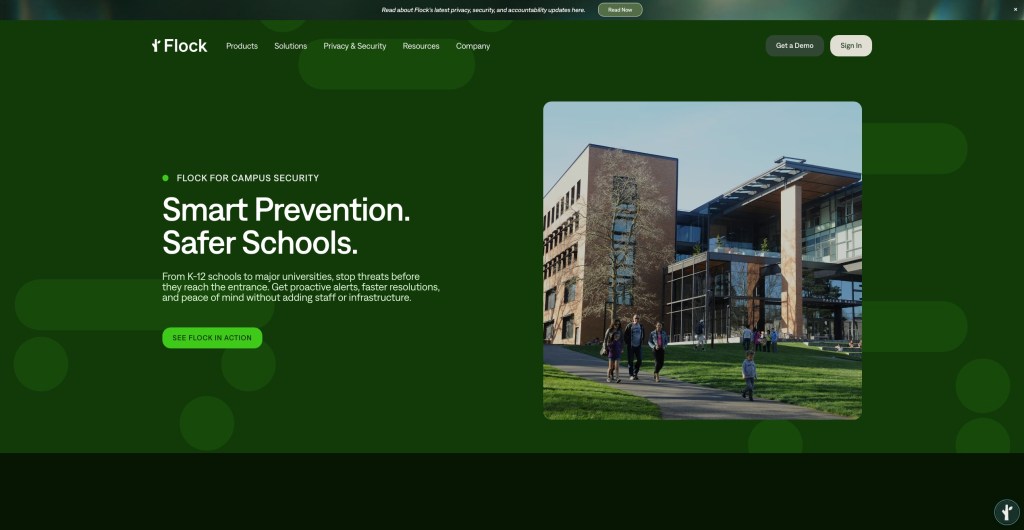
Flock markets aggressively to educational institutions, promising “peace of mind” from “K-12 schools to major universities” through license plate readers, video cameras, mobile units, gunshot detectors, and a staff mobile app. The company says it can “stop threats before they reach the entrance” by scanning for banned visitors and verifying suspicious vehicles. Unlike conventional security equipment, Flock’s systems use artificial intelligence to build searchable databases tracking people’s movements.
“What are you doing to a whole generation of students that basically have to be resigned to the fact that what they do is constantly surveilled?” asked Sophia Cope, staff attorney at the San Francisco-based Electronic Frontier Foundation. “There’s sort of a democratic, philosophical question in that.”
An analysis by nonprofit news organization The74 found Flock cameras deployed in at least 100 school districts nationwide. The same investigation uncovered striking examples of data sharing: one Texas district granted US Border Patrol access to its Flock feed, while another Texas district’s eight cameras were queried more than 733,000 times in a single month between December 2025 and January 2026 by 3,100 different law enforcement agencies nationwide.

Adam Scott Wandt, associate professor of public policy at John Jay College of Criminal Justice, told The Post that “the ability of Flock systems to help fight crime in America is legitimate. It works.” But he added a critical caveat: “The problem is, with Flock, we are unsure of the boundaries.”
Critics warn that schools with Flock installations risk becoming surveillance outposts for police and government agencies, with unclear rules governing exactly who can access campus-collected data. The company did not respond to The Post’s request for comment.
American schools were already heavily monitored before AI enhancement. In 2021, 93% of public schools operated security cameras. But AI-powered systems introduce distinct capabilities: they actively analyze, automatically flag, and interconnect across jurisdictions rather than simply recording passively.
Flock faces growing competition in the school AI surveillance market. ZeroEyes and Omnialert also sell to districts, sometimes integrating directly into existing security infrastructure. Omnialert uses AI to detect firearms and claimed over 3,000 “AI gun detection events” in 2025. The company drew national scrutiny last fall when its system at Baltimore’s Kenwood High School triggered a police response with guns drawn to a student carrying only a Doritos bag.
“Our system operated as designed — it identified a possible threat, elevated it for human review, and relied on authorized safety personnel for final determination,” Omnialert told The Post. “The principal mistakenly escalated the situation after the school security staff dismissed it.”
Kenneth Trump, a school safety consultant with 40 years of experience, told The Post that rapid rollout has outpaced readiness. “We’re not quite ready for prime time,” he said. He also emphasized that technology cannot replace human presence. “You could put a million dollars’ worth of technology in one school and it’s still not going to be as effective as having adults who are visible in the hallways, engaged with kids, building relationships, actively supervising,” he warned.
Sayer’s DeFlock Loveland initiative is part of a broader pattern of student-led resistance, with similar petitions emerging across multiple states as young people challenge what they view as unconstitutional monitoring of their daily movements.