

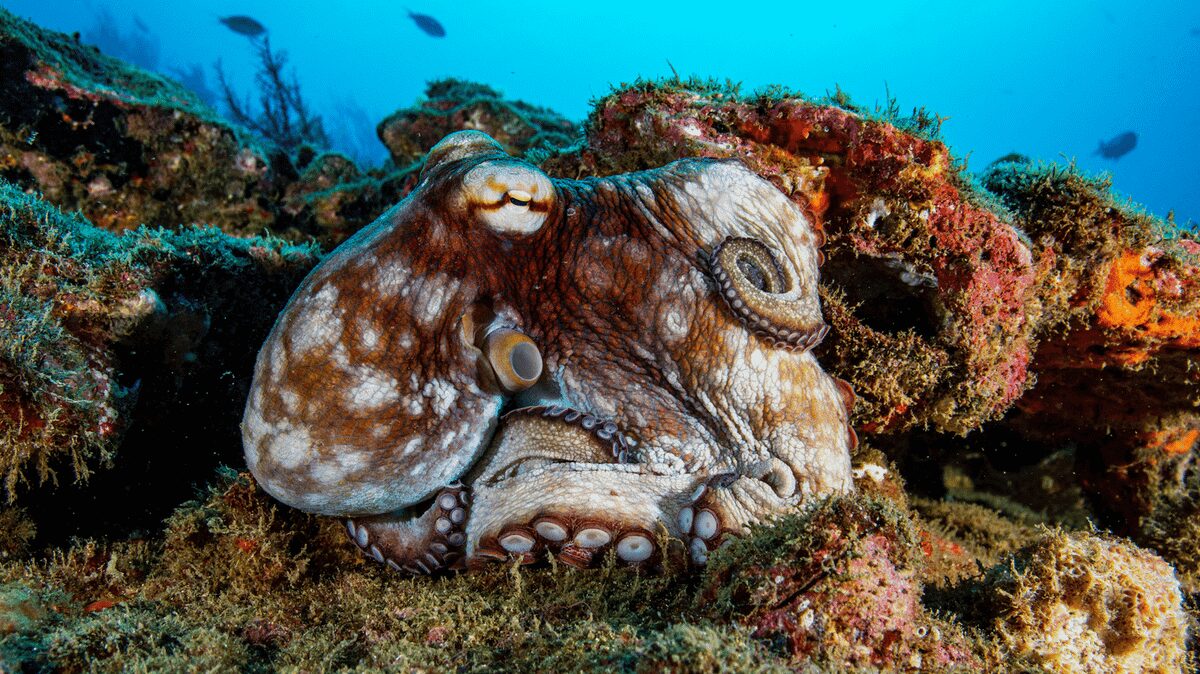
The deep depths have always been a scary place, and remain largely unexplored to this day.
Far below the surface, the ocean becomes a world of darkness and silence, inhabited by strange lifeforms and subject to pressures no human body could withstand.
Much of that realm is still unknown. To date, only 28.7 percent of the world’s seafloor has been mapped, leaving most of the deep ocean effectively out of reach.
Even more startling, researchers have directly observed less than 0.001 percent of the deep-ocean seafloor—an area roughly comparable to Rhode Island. Put another way, our maps of the moon are more detailed than many of the charts we have of the deep sea.
And according to scientists this week, there was a time when those depths may have held something even more frightening than anything living there today.
A new study from Hokkaido University in Japan, published in Science, suggests that around 100 million years ago a gigantic, kraken-like octopus dominated parts of the ocean—and it wasn’t a creature to take lightly.
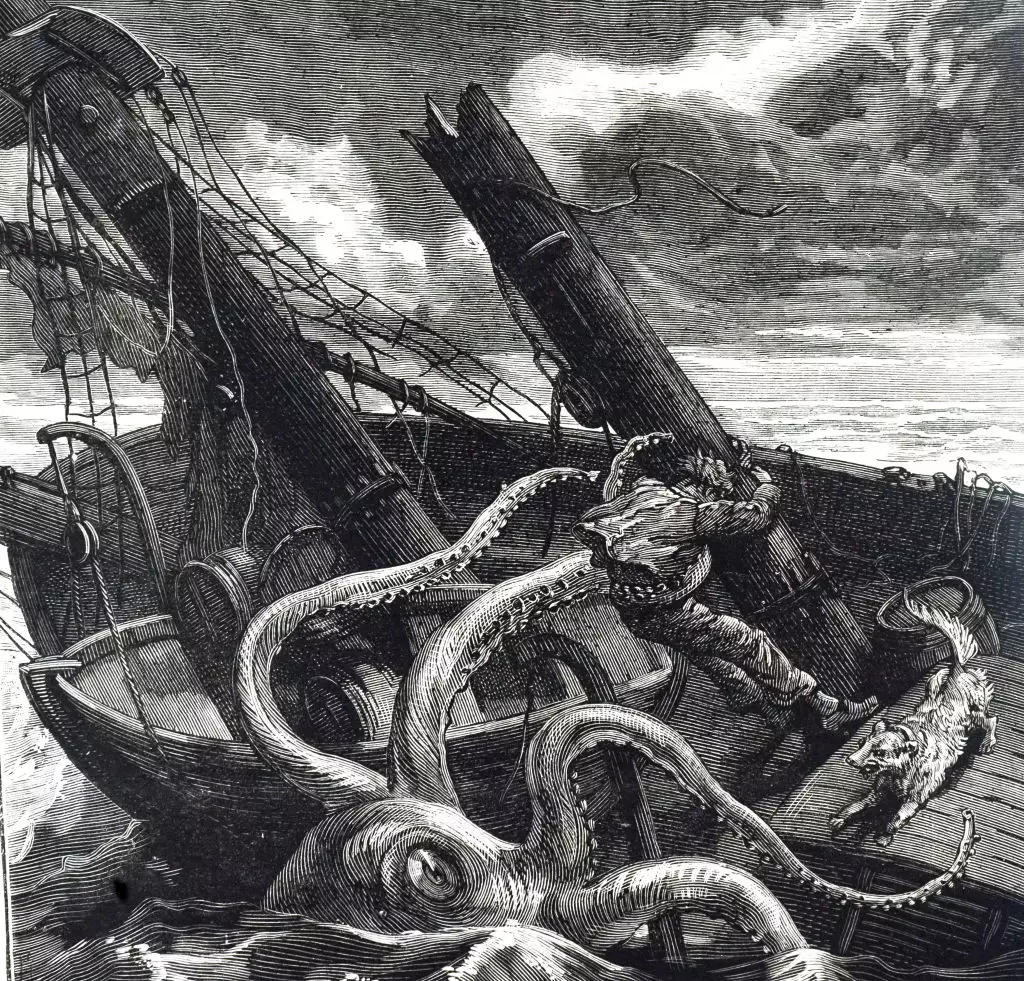
Researchers estimate the animal could reach more than 60 feet long—longer than a bowling lane.
In seas already filled with dangerous predators like mosasaurs and plesiosaurs during the Cretaceous period, this octopus wasn’t merely surviving alongside them. The evidence suggests it may have preyed on them.
The team examined dozens of fossilized jaws dated to between 72 and 100 million years ago. The beaks showed unusually intense wear—damage consistent with an animal capable of crushing not just shells, but bone as well.
“The most surprising finding perhaps was the extent of wear on the jaws,” said lead author Dr.Yasuhiro Iba, describing evidence of chipping, scratching, cracking and polishing that points to what he called ‘an unexpectedly aggressive feeding strategy’.
In practical terms, the wear suggests frequent feeding and powerful bites—an animal that repeatedly clamped down on hard, resistant prey.
The fossils were recovered in Japan and on Vancouver Island, and are linked to Cirrata, an extinct group of finned octopuses.
Size may not have been its only advantage. The researchers also point to hints that these animals displayed behavior associated with higher intelligence.
Uneven wear on opposite sides of the jaw indicates lateralization—an asymmetry in behavior connected to brain specialization, similar to patterns seen in modern intelligent animals.
Taken together, the findings paint a picture of a massive, highly capable predator: a 60-foot, bone-crushing octopus sitting at the very top of the food chain while dinosaurs still walked the Earth.
“Our study shows that these were not simply large versions of modern octopuses,’ Dr Iba said.
“They were giant predators at the very top of the Cretaceous marine food web.
“This changes the view that Cretaceous seas were dominated by large vertebrate predators.”
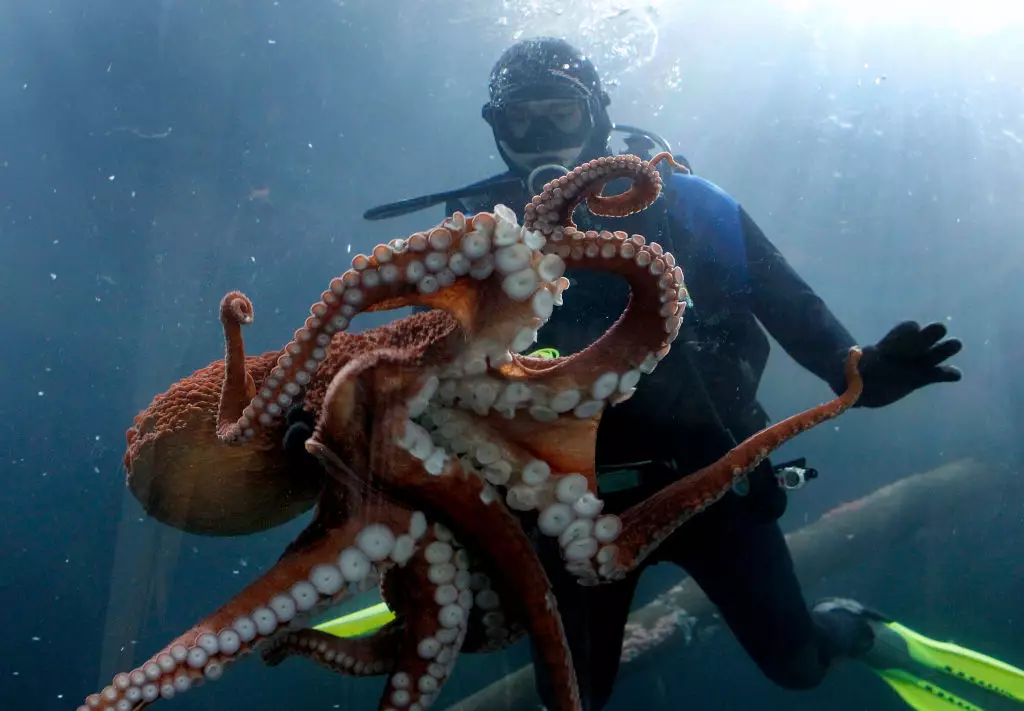
For comparison, the largest octopus species alive today—the Giant Pacific Octopus—reaches about 16 feet and tends to feed on shrimp, clams, and other smaller prey. By contrast, this ancient species appears to have operated on a completely different scale.
To study the fossils in detail, the team combined AI tools with a 3D imaging method known as grinding tomography. They say this approach could help paleontologists extract far more information from ancient remains, potentially exposing entire ecosystems still hidden inside rock.
It also leaves an unsettling but compelling thought: if we’ve explored so little of the deep ocean—past and present—what else might still be waiting to be found?