

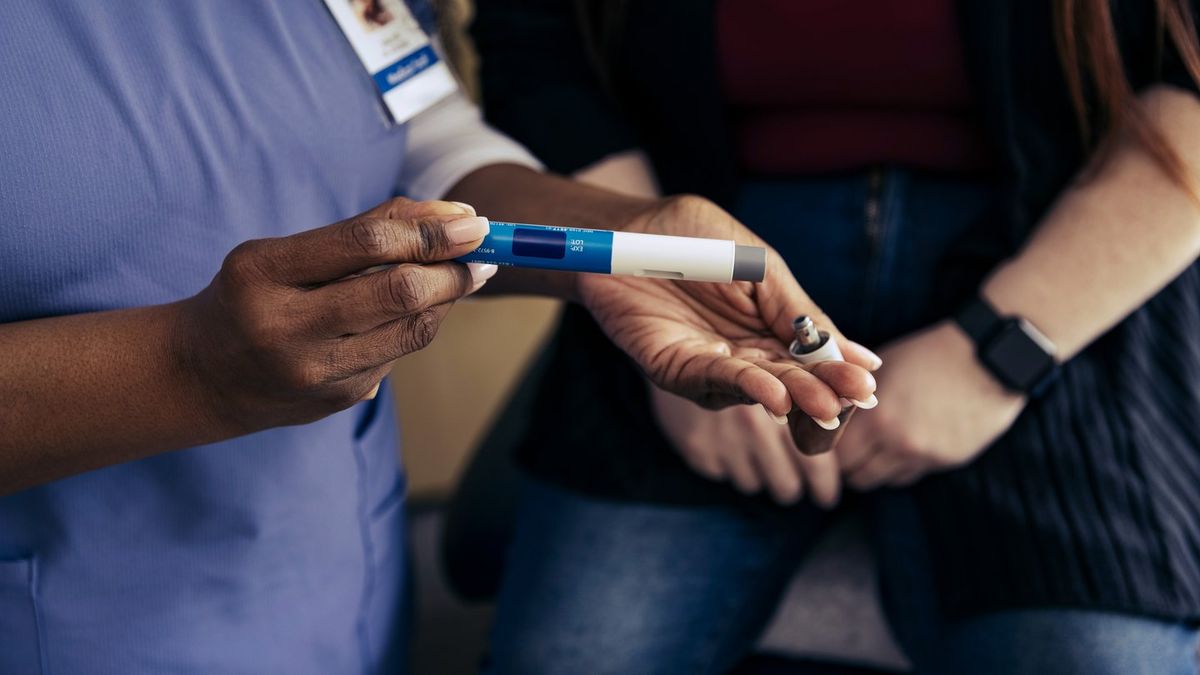
If you’re thinking about what might happen to your relationship if one of you starts using weight-loss injections, new research suggests there could be an unexpected downside.
Plenty of people try to shift a few pounds as summer gets closer — but the knock-on effects may not be limited to the cost of treatment.
With one in 10 Americans reporting they’re unhappy with their weight, according to a Gallup poll, rapid weight loss could even have consequences that spill into other areas of life — including the stability of some marriages.
A Swedish study looking at dramatic weight changes found that people who lost weight quickly were more likely to end up separating from their partner.
That doesn’t automatically mean a partner will leave simply because someone becomes slimmer, though — and the details matter.

The research focused on gastric bands and reported that people who experienced rapid weight loss were around twice as likely to divorce.
So what might be behind that link?
Professor Per-Arne Svensson, of the University of Gothenburg, said ‘very similar mechanisms could occur with Ozempic [and other GLP-1 receptor agonists] as with surgery, with regards to changes in relationships.’
Speaking to The Telegraph, the researcher explained there may be ‘many mechanisms’ at play, because ‘people who embark on the weight-loss journey usually have a lot of other life changes as well.’
He said: “That means that they are probably becoming more social, trying to live a healthier life. If the partner is not really on the train there, if they don’t follow this person along in this change, that might be something that causes tension.”

At the same time, divorce trends overall don’t point to a surge nationwide: the CDC reports divorces in the US fell by about 27 percent up to 2022.
That raises another possibility — that some couples in the study may have already been at risk of splitting up before the weight loss, and the major lifestyle shift simply brought long-running issues to the surface sooner.
Svensson also suggested confidence could be a factor in how quickly someone decides to end a relationship, saying: “It could also be that you have a person who is stuck in a bad relationship, but doesn’t have the self-confidence to break it off because they feel ‘who would like to date them, if not their current spouse’.
The prof said: “We have shown (higher divorce rates) for bariatric surgery, but that could also be true for Ozempic-based weight loss.”
More broadly, Pew Research reports that around 16 percent of divorces in 2023 happened within the first five years of marriage, while 24 percent occurred within years five to nine.
That context matters, because without details such as participants’ ages and how long they’d been married before the survey, pinning down a clear cause is difficult.
Still, the findings highlight a potential ripple effect of rapid weight loss — and why major health and lifestyle changes can sometimes reshape relationship dynamics.
Novo Nordisk was contacted for comment.