

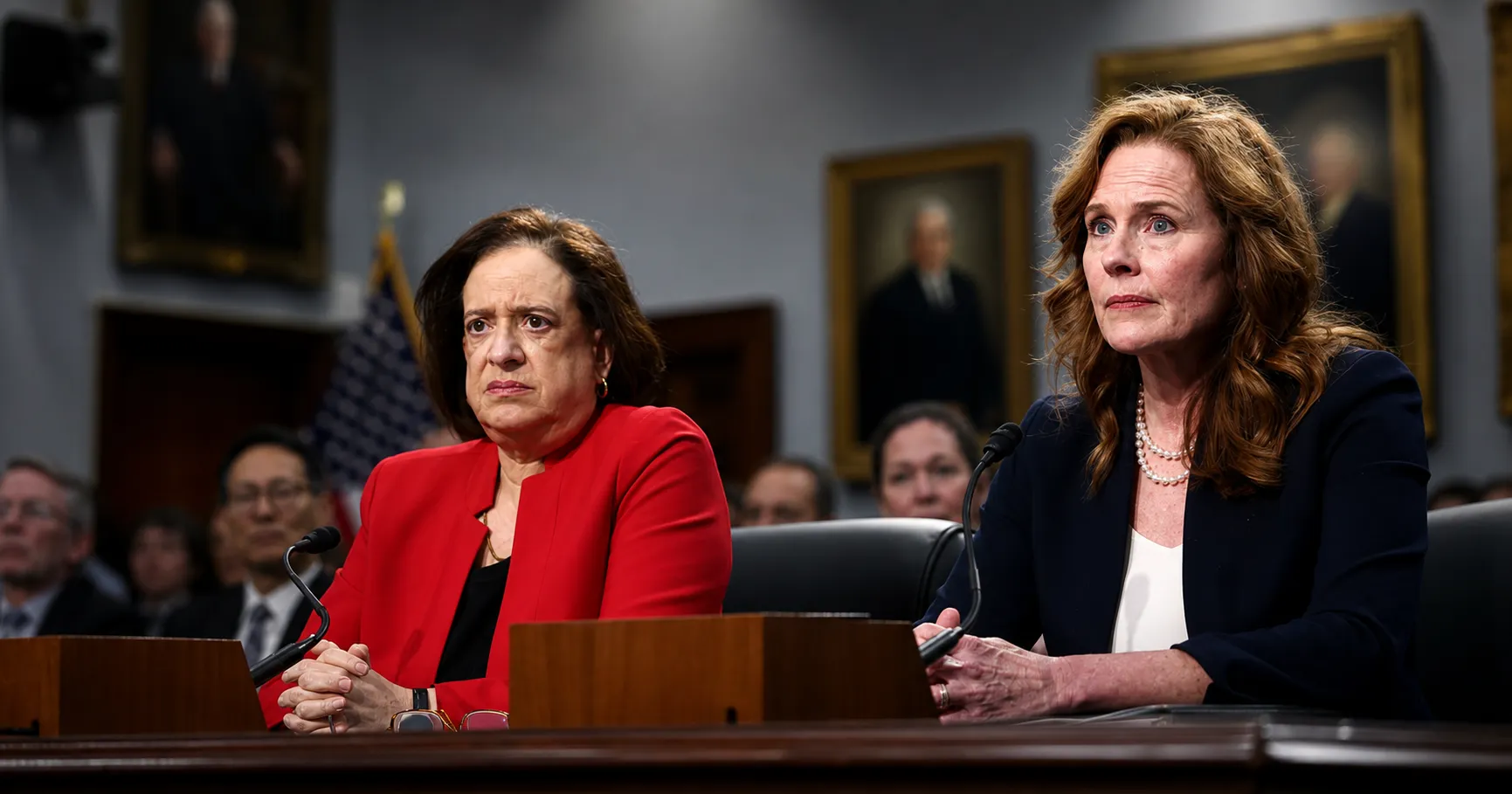
Supreme Court Justices Elena Kagan and Amy Coney Barrett made a rare appearance before Congress on Tuesday, delivering an urgent appeal for increased security funding as threats against the nation’s judges continue to escalate at an alarming rate. The justices testified that protecting themselves and their families has become an intrusive and deeply personal challenge that demands congressional action.
Justice Barrett opened her testimony with a poignant personal account of how the security threats have upended her family life. She recalled having to wear a bulletproof vest home years ago when threats against her intensified, a development that forced an uncomfortable conversation with her then-12-year-old son. “I didn’t expect that performing this service would put me in the position of explaining to my children what a bulletproof vest was and why I had to wear one,” she said.
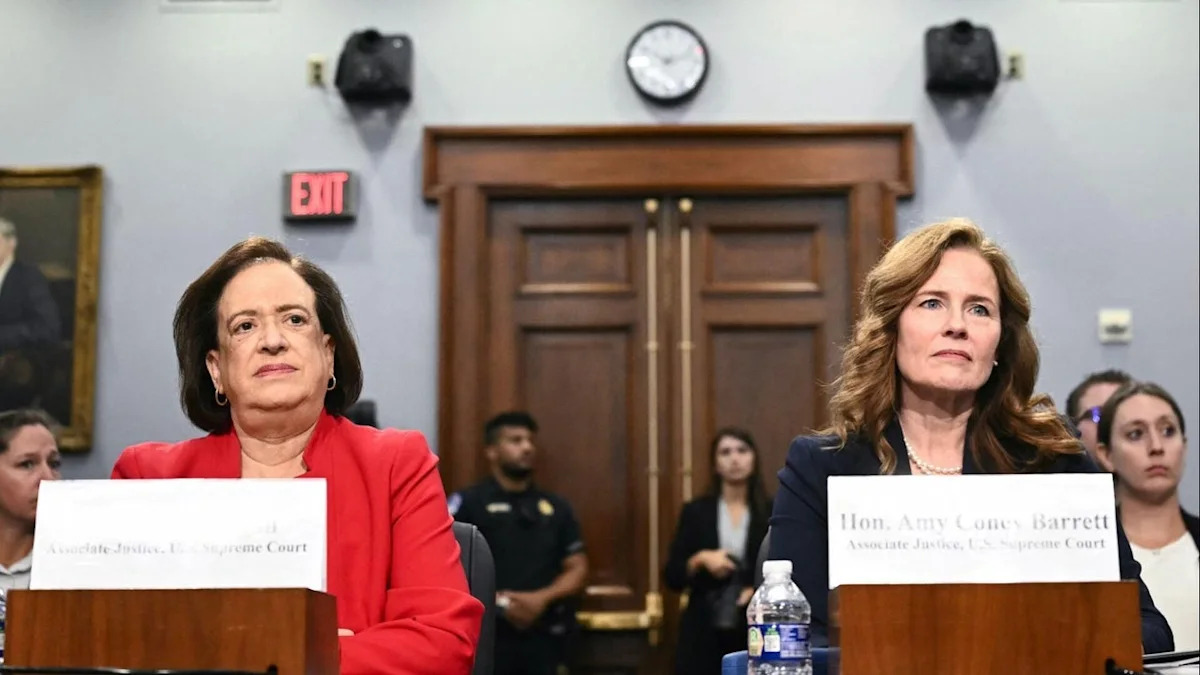
Barrett’s home was itself targeted by a fake 911 call designed to provoke a police response—a harassment tactic known as “swatting”—in May of this year. Additionally, her sister became a victim of a bomb threat in Charleston, South Carolina last year, though authorities found no explosive device.
Justice Kagan framed the security crisis in broader terms, warning that the danger is immediate and shared across the court. “For some of us, those threats have come very close, and all of us live with the knowledge that they may again materialize,” she said. Kagan noted that the Supreme Court Police Department is anticipating a substantial 38 percent increase in threats for 2026, which follows a 25 percent increase the previous year.
The justices’ appearance marked the first time members of the court have testified before Congress since 2019, and only the second Senate testimony on the court’s budget since 2011. They appeared before both House and Senate appropriations subcommittees on Tuesday to advocate for the Supreme Court’s budget request for fiscal year 2027.
The Supreme Court is seeking approximately $228 million for the coming fiscal year, representing a roughly 10 percent increase over the current year. The bulk of this request is driven by security needs. Of the total increase, $14.6 million would go toward expanding personal protection for the justices, providing each with six additional security agents. An additional $2 million would fund an off-site residential security post intended to enable faster emergency responses and expand the Supreme Court Police force.
The court also requests $6.5 million for a new visitor screening facility on the Supreme Court grounds and $2.3 million for cybersecurity measures. Across all security initiatives, the court projects spending $40 million on protecting justices from physical threats and $18 million on cyber threats.
The statistics underlying these requests reflect a judiciary under siege. The U.S. Marshals Service reported 564 threats against federal judges during the fiscal year that ended in September, an increase from the previous year. As of July 1 of this fiscal year, there have been 370 threats against federal judges, with the Marshals Service conducting 512 investigations. Federal judges broadly have experienced a 57 percent rise in what the Marshals Service classifies as “security incidents of significant concern” in fiscal year 2025.
One particularly disturbing pattern has emerged in what federal prosecutors call “pizza doxxing.” Judges across the country have received unsolicited pizza deliveries to their homes, often with the recipient listed as Daniel Anderl, the son of U.S. District Judge Esther Salas who was killed by a disgruntled attacker in 2020. Barrett told lawmakers that such deliveries are “designed to intimidate and harass us,” sending a chilling message that perpetrators know the judges’ addresses.
The current threat environment represents a dramatic escalation from years past. When Justice Kagan joined the court in 2010, the security posture was fundamentally different. “I did not have a security team of my own, and was accompanied by security personnel only when I participated in work-related, public events,” she recalled.
The most high-profile incident illustrating the severity came in 2022, when a California man armed with a gun, knife, and other weapons was arrested outside Justice Brett Kavanaugh’s home shortly after a draft opinion overturning Roe v. Wade was leaked. Threats to the Supreme Court intensified after that leak and have continued to grow since, Kagan explained.
Chief Justice John Roberts has repeatedly condemned the escalating hostility, declaring during a March speech that while criticism of judicial decisions is legitimate, personally directed attacks on judges are “dangerous, and it’s got to stop.”
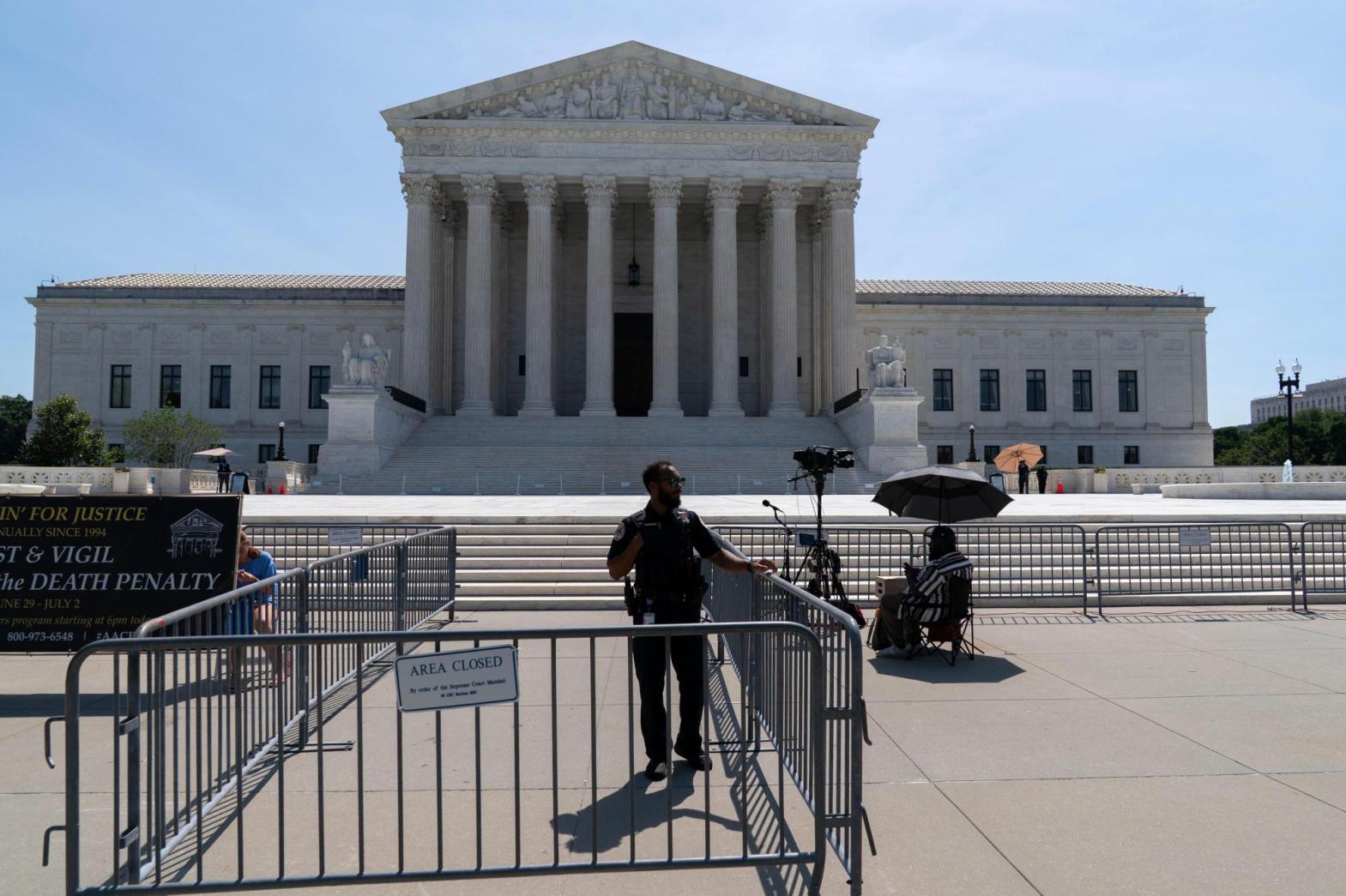
The justices found apparent bipartisan support during the hearings. Rep. Dave Joyce, the Ohio Republican who chairs the House subcommittee, acknowledged the gravity of the situation. “Whatever one’s view of the specific Supreme Court ruling, judicial officers, up to and including the justices of the Supreme Court, must be able to do their jobs without fear for their safety or their family’s safety,” he said. Rep. Steny Hoyer, the senior Democrat on the subcommittee, echoed that sentiment, stating, “Congress must provide sufficient funding to ensure the safety of all judicial personnel.”
The surge in threats extends throughout the federal judiciary, not just the Supreme Court. Nearly 400 judges faced threats last year, with 276 targeted as of July 1 of this year. The broader judiciary has requested $921 million for security overall, a $29 million increase from the previous year, to support frontline security forces at federal courthouses nationwide.
While security funding was the primary focus of Tuesday’s testimony, lawmakers also pressed the justices on other pressing issues. Questions arose about the Supreme Court’s ethics code, which the court adopted in 2023 but which lacks an enforcement mechanism. Democrats have been critical of this arrangement, pointing to ethics controversies involving some conservative justices and arguing that ethics shortcomings have contributed to declining public confidence in the institution.
Kagan indicated openness to judicial oversight mechanisms, saying the court “should work hard” to develop an enforcement system for its ethics code. She also addressed questions about the court’s expanding use of its emergency docket, where decisions are made without full briefing or arguments, noting the court should consider the downsides of this expedited process.
The justices’ testimony underscored how polarization over Supreme Court decisions has created an unprecedented security crisis for the nation’s judiciary. As Barrett summarized: “Those statistics sound abstract, but being on the receiving end of them is not.”