

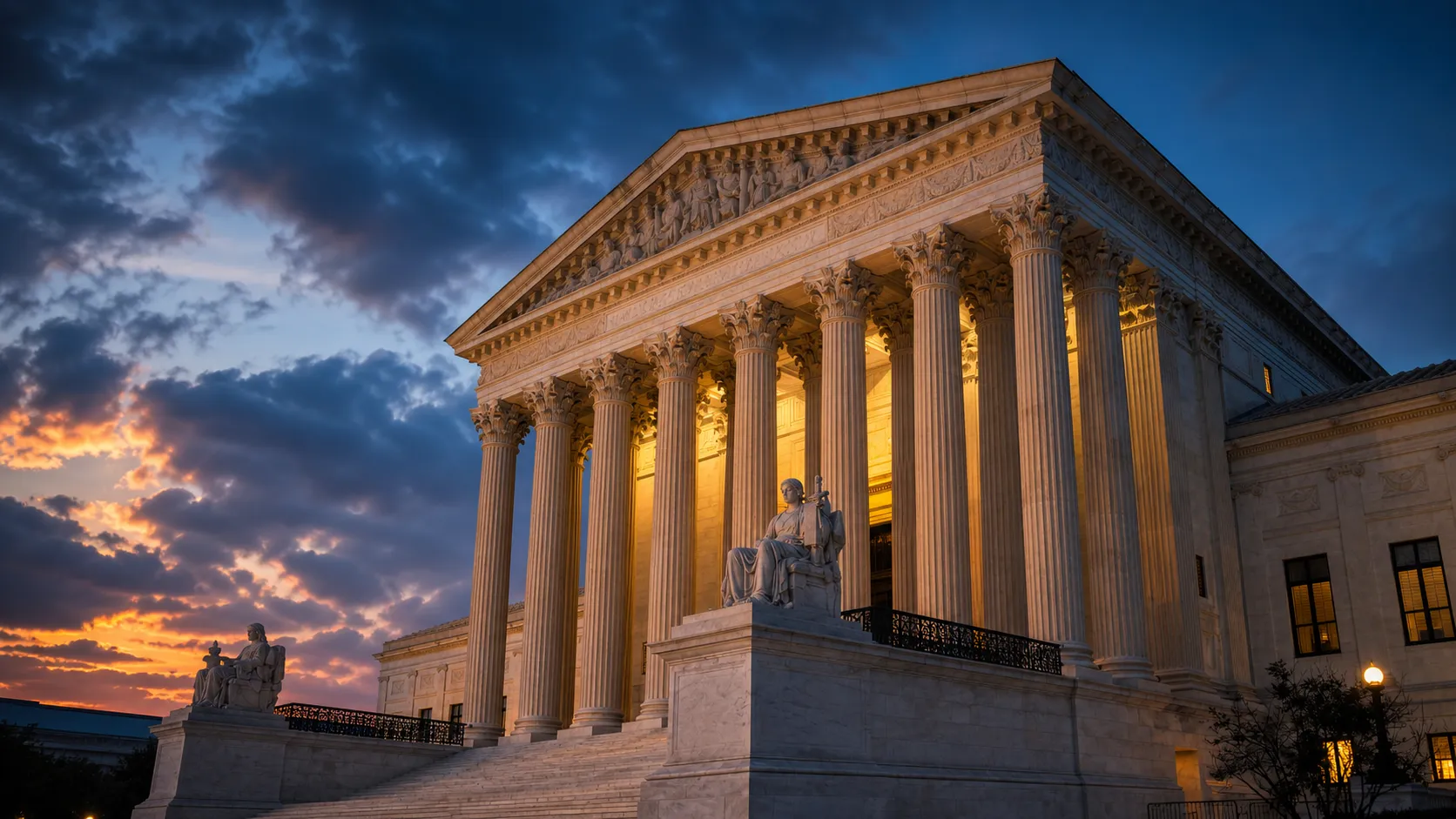
In a sharp rebuke to President Trump, the Supreme Court on Tuesday upheld the constitutional guarantee of birthright citizenship, rejecting an executive order signed by Trump on his first day back in office that sought to strip the citizenship from children born in the United States to undocumented immigrants and those here on temporary visas.
The 6-3 decision, written by Chief Justice John Roberts, reaffirmed more than a century of legal precedent and settled constitutional understanding that virtually all children born on American soil automatically become citizens. The ruling struck down what would have been a dramatic shift in how the nation determines citizenship, potentially affecting hundreds of thousands of infants born annually in the United States.
Trump signed the executive order on January 20, 2025, titled “Protecting the Meaning and Value of American Citizenship,” declaring that children born to parents either unlawfully present or temporarily in the country would no longer be granted automatic citizenship. However, every lower court judge who reviewed the order before it could take effect blocked it, with one judge describing it as “blatantly unconstitutional.”
In his majority opinion, Chief Justice Roberts wrote that “Citizenship, then and now, was the right to have rights — to freely participate in our political community. The Framers of the Fourteenth Amendment extended that promise to every free-born person in this land. We keep that promise today.”
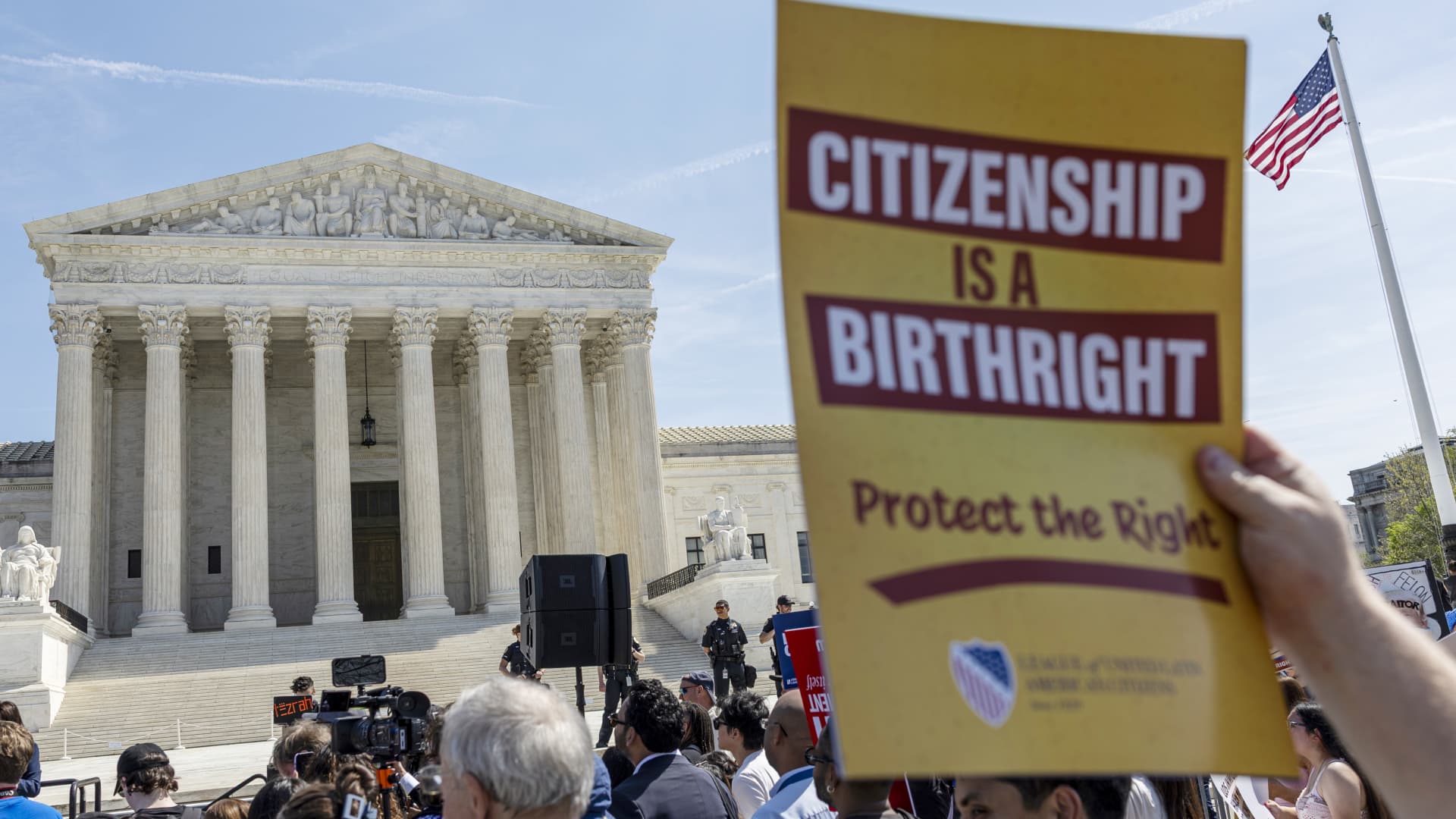
The case, known as Trump v. Barbara, took its name from the lead plaintiff, a Honduran woman seeking asylum whose identity was protected for security reasons. She was among three named plaintiffs representing different immigration statuses targeted by Trump’s order. The American Civil Liberties Union, along with partners including the NAACP Legal Defense Fund and the Asian Law Caucus, brought the challenge on behalf of families who would have lost citizenship rights under the executive order.
The majority opinion, signed by Roberts along with four other justices, relied heavily on the Fourteenth Amendment’s Citizenship Clause, ratified in 1868 after the Civil War. That clause states that all “persons born or naturalized in the United States, and subject to the jurisdiction thereof” are citizens. The court also cited a landmark 1898 Supreme Court ruling in United States v. Wong Kim Ark, which established that children born in the United States to immigrant parents were entitled to citizenship.
The Trump administration had argued that children born to parents not legally present or temporarily in the country were not “subject to the jurisdiction” of the United States because they retained allegiance to foreign nations. The administration contended that the Fourteenth Amendment was primarily intended to protect the rights of newly freed slaves and their descendants, not the children of immigrants.
Roberts directly addressed and rejected this argument, noting that the men who wrote the Fourteenth Amendment deliberately chose broad language to grant citizenship based on birth in the nation rather than parental status. The opinion pointed out that the historical record showed the framers of the amendment rejected efforts to limit its scope. “But this view commanded only a dissent in 1898, and neither time nor circumstance has changed the fact it is not the law,” Roberts wrote.
Three conservative justices dissented from the decision. Justice Clarence Thomas authored a lengthy 91-page dissent joined by Justice Neil Gorsuch, arguing that the Fourteenth Amendment was meant only to cover formerly enslaved people and their descendants. In a separate dissent, Justice Samuel Alito called the ruling “a serious mistake” and warned that it could have “grotesque results,” including encouraging “birth tourism” — a term referring to foreign pregnant women traveling to the United States specifically to give birth and obtain citizenship for their children.
Justice Brett Kavanaugh, a Trump appointee, took a middle ground. He agreed the executive order violated federal law enacted in 1940 that codified birthright citizenship, but disagreed with the majority that the Constitution itself prohibits such restrictions. Kavanaugh suggested that Congress could potentially pass new legislation creating exceptions to birthright citizenship, though he acknowledged Congress has not yet done so.

The case drew unprecedented attention when Trump attended the oral arguments in April, becoming the first sitting president ever to appear at Supreme Court arguments. The justices had signaled during those arguments that they were skeptical of the administration’s position, with both conservative and liberal justices questioning the order’s legality.
If the executive order had been upheld, research from the Migration Policy Institute and Pennsylvania State University estimated that more than 250,000 babies born annually in the United States would have been denied automatic citizenship. The order would have applied not only to children of undocumented immigrants but also to children of international students, temporary workers, tourists, and asylum seekers — anyone whose parents lacked citizenship or permanent legal resident status.
Trump responded to the ruling through his Truth Social platform, saying the decision was “too bad for our Country” but suggesting Congress could pass legislation to accomplish through the legislative process what the courts rejected. “No long and unwieldy Constitutional Amendment is necessary! Congress should start TODAY to work on ending expensive and unfair to our Country, Birthright Citizenship. They will have my Complete and Total Support!” he wrote. However, with Republicans holding 53 seats in the Senate, any such legislation would face significant hurdles in becoming law.
The decision represented a significant defeat for Trump’s immigration agenda. Earlier this year, the Supreme Court also struck down Trump’s attempt to impose sweeping global tariffs. The birthright citizenship case was the first of Trump’s immigration policies to reach the Supreme Court for a final ruling on its merits.
The lower courts had uniformly blocked the executive order before it took effect anywhere in the nation. All of the judicial proceedings that examined Trump’s order concluded it violated the Constitution and longstanding precedent. One federal judge’s characterization of the order as “blatantly unconstitutional” reflected the broad legal consensus against it.
Justice Ketanji Brown Jackson, who like Thomas is African American, responded directly to themes in the Thomas dissent, writing that despite his stated commitment to a colorblind society, Thomas was now arguing the Citizenship Clause was a race-conscious measure applying only to freed slaves. She rejected this interpretation, emphasizing the broad protections the amendment was intended to provide.
The ruling reaffirmed that birthright citizenship remains a fundamental principle of American law, one that has been largely untouchable even during periods of significant hostility toward immigrants. The Supreme Court’s decision makes clear that changing this principle would require either a constitutional amendment or, if Congress were to act, would have to be consistent with the Fourteenth Amendment itself — a potentially insurmountable legal hurdle for any effort to narrow birthright citizenship.