


Ben Sasse has compiled a list of accomplishments that few people ever reach, rising from modest roots to become an Ivy League academic and later one of Nebraska’s U.S. Senators.
But the 54-year-old has since been dealt what he has described as a ‘definite death sentence’. In December, the father of three shared that he had been diagnosed with Stage 4 pancreatic cancer and was told he had only months left to live.
Pancreatic cancer affects the large organ located behind the stomach that plays a key role in digestion and blood-sugar regulation. It is widely regarded as one of the most lethal cancers, in part because it is often difficult to detect early and can be hard to treat, leaving many patients with poor long-term survival odds.
Speaking candidly with the New York Times, Sasse—who represented Nebraska in the Senate from 2014 to 2023—explained that he began an experimental course of treatment that has created severe side effects, including bleeding from areas of his body that typically would not bleed.

He said doctors carried out a full-body scan in December and discovered his torso was ‘chock full of tumors’, before estimating he had three to four months to live.
After starting the experimental program—one that reportedly left his skin ‘bubbling’—Sasse offered an update on his condition, saying: “I’m at Day 99 or something since then, and I’m doing a heck of a lot better than I was doing at Christmas.”
The medication he’s taking is a targeted therapy known as daraxonrasib, intended to slow pancreatic cancer growth by interfering with mutant proteins linked to progression of the disease.
Still, Sasse said the toll on his body has been dramatic. “I take it orally, but it’s a nasty drug,” he said in the interview, describing the visible changes it has caused. “It causes crazy stuff like my body can’t grow skin and so I bleed all out of a whole bunch of parts of me that shouldn’t be bleeding.”
He also described his face as feeling ‘nuclear’, with broken blood vessels and severely dry skin appearing as the drug works to slow the Stage 4 cancer. He added that even his pharmacist reacted with disbelief, asking whether he had been electrocuted.
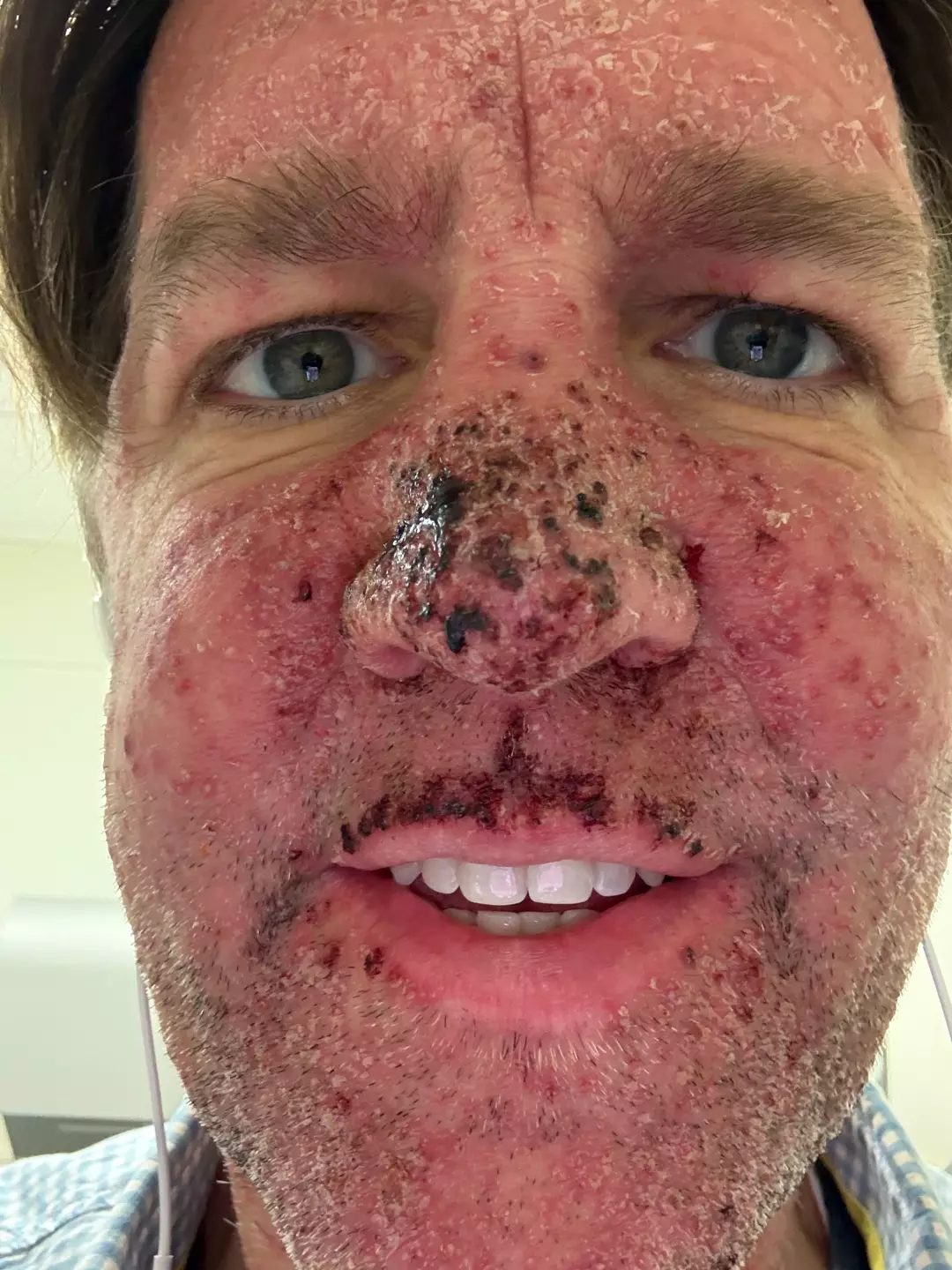
“I don’t even know what that is, but either acid or electric shocks produce a face that looks this hideous,” he told the Times. Despite the drawbacks, he said the treatment has reduced tumors that were pressing against his spine and causing intense pain.
According to Sasse, the growths in his torso have now decreased by 76 percent. Even with that improvement, he noted that because pancreatic cancer can be so difficult to catch early, it was already too advanced for doctors to eliminate every tumor before the disease spread further.
He also pointed to the importance of awareness, as there are symptoms that can be associated with pancreatic cancer.
Pancreatic cancer is among the most challenging cancers to identify in its early stages, which is when it is typically most treatable. However, some warning signs may appear before the cancer spreads to other parts of the body.
If you are experiencing any of the following symptoms identified by the Mayo Clinic, you should speak to your physician about your concerns and ask for follow-up tests.