


Christa Pike, 50, could face a second execution attempt in Tennessee despite surviving a botched lethal injection.
The death row inmate remained alive Wednesday after two rounds of pentobarbital failed to kill her, prompting hospitalization for life-saving care. Her lawyers blamed damaged veins and degraded pentobarbital for the failure, with one attorney noting her arm was “turning purple” during the procedure. The Tennessee Supreme Court had set the execution date that has now passed, meaning the state cannot simply return her to the chamber.
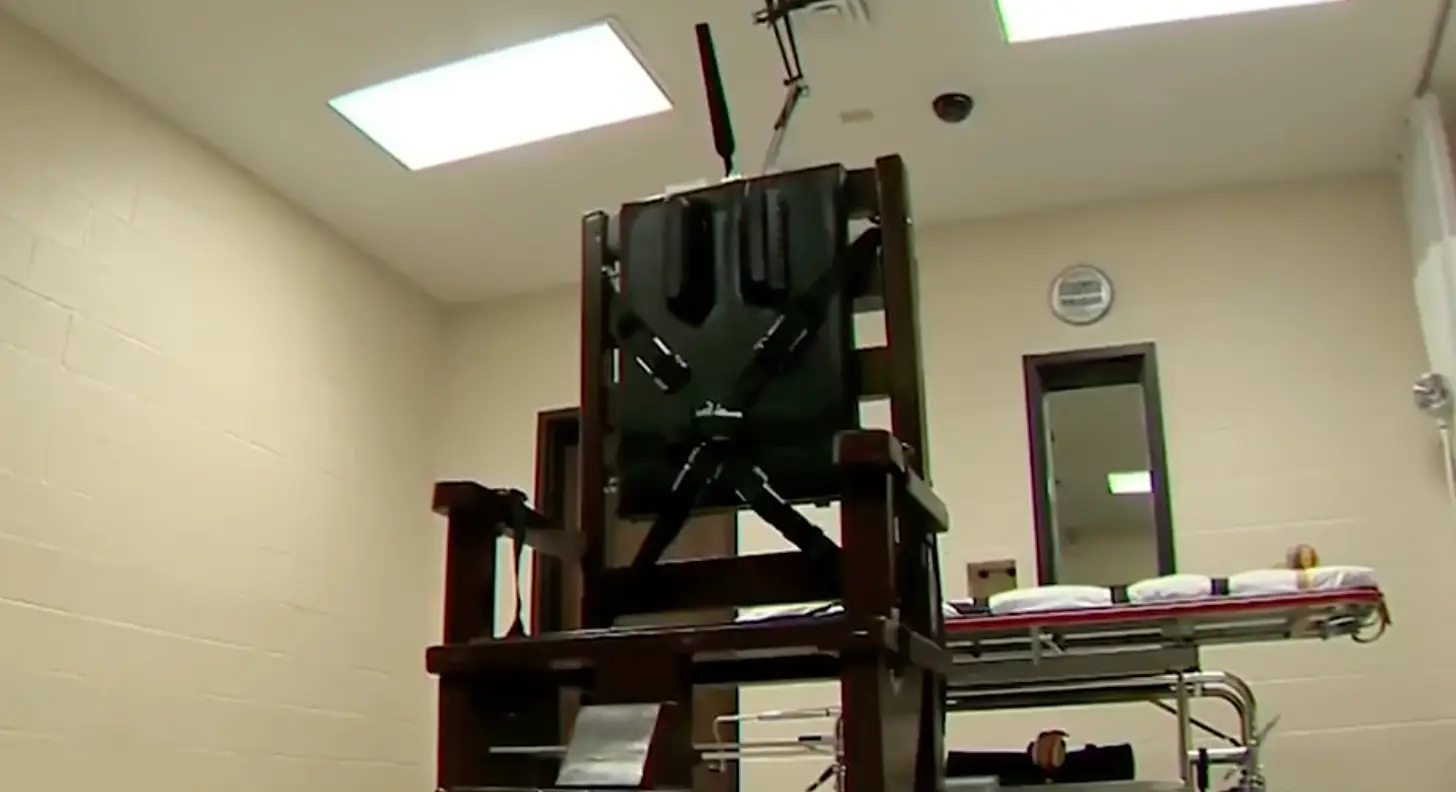
Charley Dugdale, Associate Head of Law at St Mary’s University Twickenham, explained the procedural hurdle ahead. “If she survives and becomes medically stable, she would remain under her existing death sentence unless it was overturned or commuted,” she said. “At the time of writing, her precise medical condition has not been publicly confirmed.”
Dugdale outlined the legal path forward. “The execution date set by the Tennessee Supreme Court has now passed. Tennessee could not simply return Pike to the execution chamber whenever it chose,” she said. “A new execution date would need to be lawfully set by the Tennessee Supreme Court before the state could make another attempt, and it would be difficult to seek another date before the comprehensive third-party review was completed.”
The professor noted that American precedent does offer Tennessee a potential argument. Dugdale pointed to Louisiana ex rel Francis v Resweber from 1947, when the Supreme Court allowed a second electrocution attempt after a mechanical failure. “This does not necessarily answer Pike’s case, but if Tennessee seeks another execution date, her lawyers could challenge it on several grounds,” she said.

Those grounds would likely center on the Eighth Amendment’s prohibition against cruel and unusual punishment. “A court considering Pike’s case could be asked to examine what caused the failure, what physical harm she experienced, whether the risk was foreseeable and whether a second attempt would expose her to further suffering,” Dugdale said. “The central constitutional question is whether another attempt would simply complete the original sentence or subject Pike to a cumulative ordeal amounting to cruel and unusual punishment.”
Dugdale believes the specific circumstances of Pike’s failed injection distinguish it from historical cases. “The unprecedented circumstances give Pike’s lawyers substantial grounds to argue that her case must be treated differently,” she said. “What caused the first failure, and what Tennessee proposes to do differently, are likely to be central to any future litigation.”
The legal scholar emphasized the stakes of the pending investigation. “When the punishment is irreversible, they may be the only protection an individual has against an error or an abuse of state power,” Dugdale said. “In Pike’s case, that scrutiny must now include not only the original conviction and sentence, but also everything that happened inside the execution chamber.”
Pike was 18 when she committed the 1995 murder of Colleen Slemmer, 19, in Knoxville. Pike and two accomplices lured Slemmer into the woods, where they beat, tortured, and killed her. Tennessee Supreme Court documents state Pike told a friend she intended to kill Slemmer because she “had just felt mean that day.” The documents describe Pike dancing in a circle, smiling, and singing “la, la, la” while recounting that a pentagram had been carved on the victim’s forehead and chest, and that she carried a piece of Slemmer’s skull in her pocket the following morning. Pike received her death sentence at age 20.
Pike’s legal team has argued her sentence was disproportionate given severe childhood trauma.
Tennessee officials have not announced whether they will seek a new execution date from the state Supreme Court.