

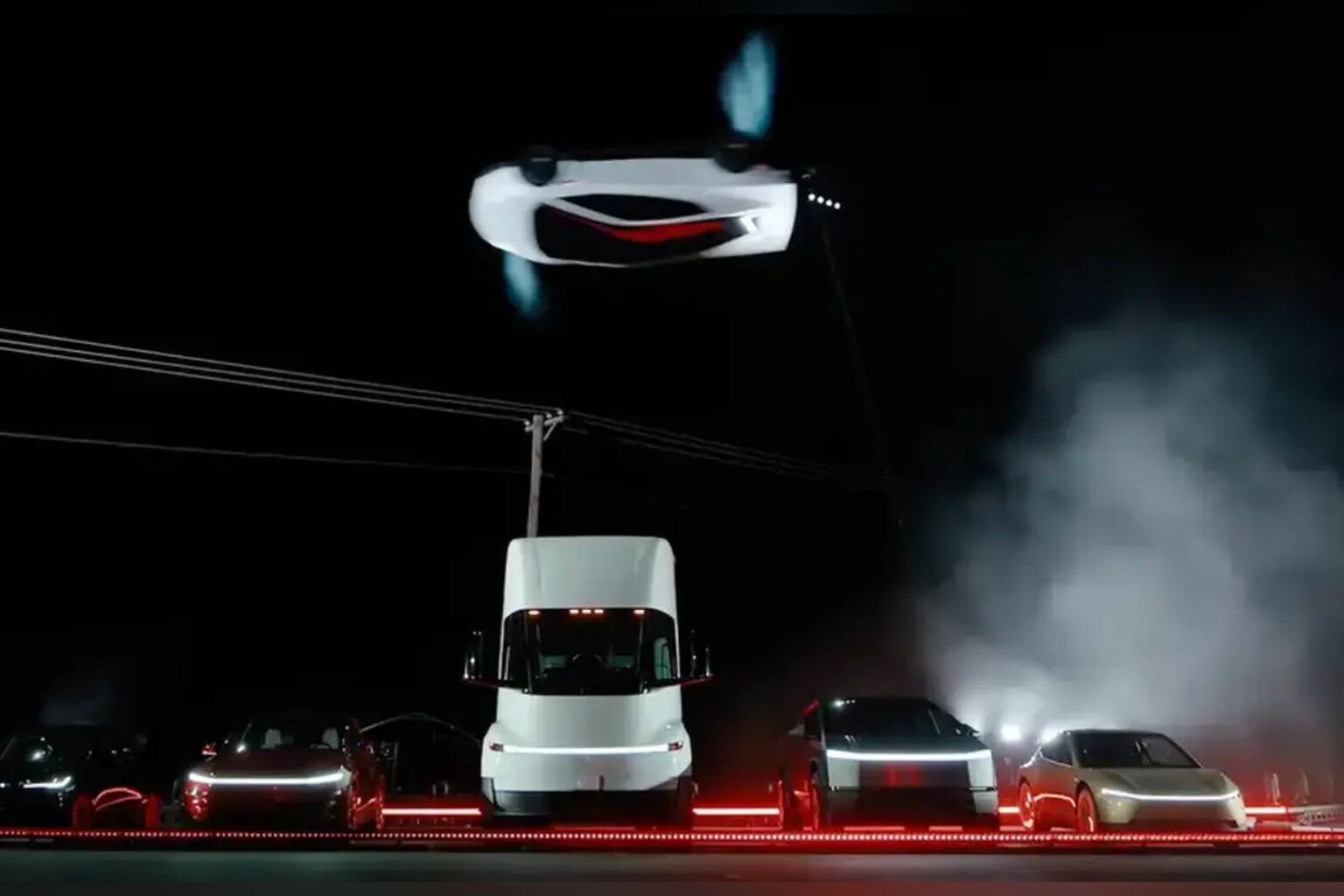
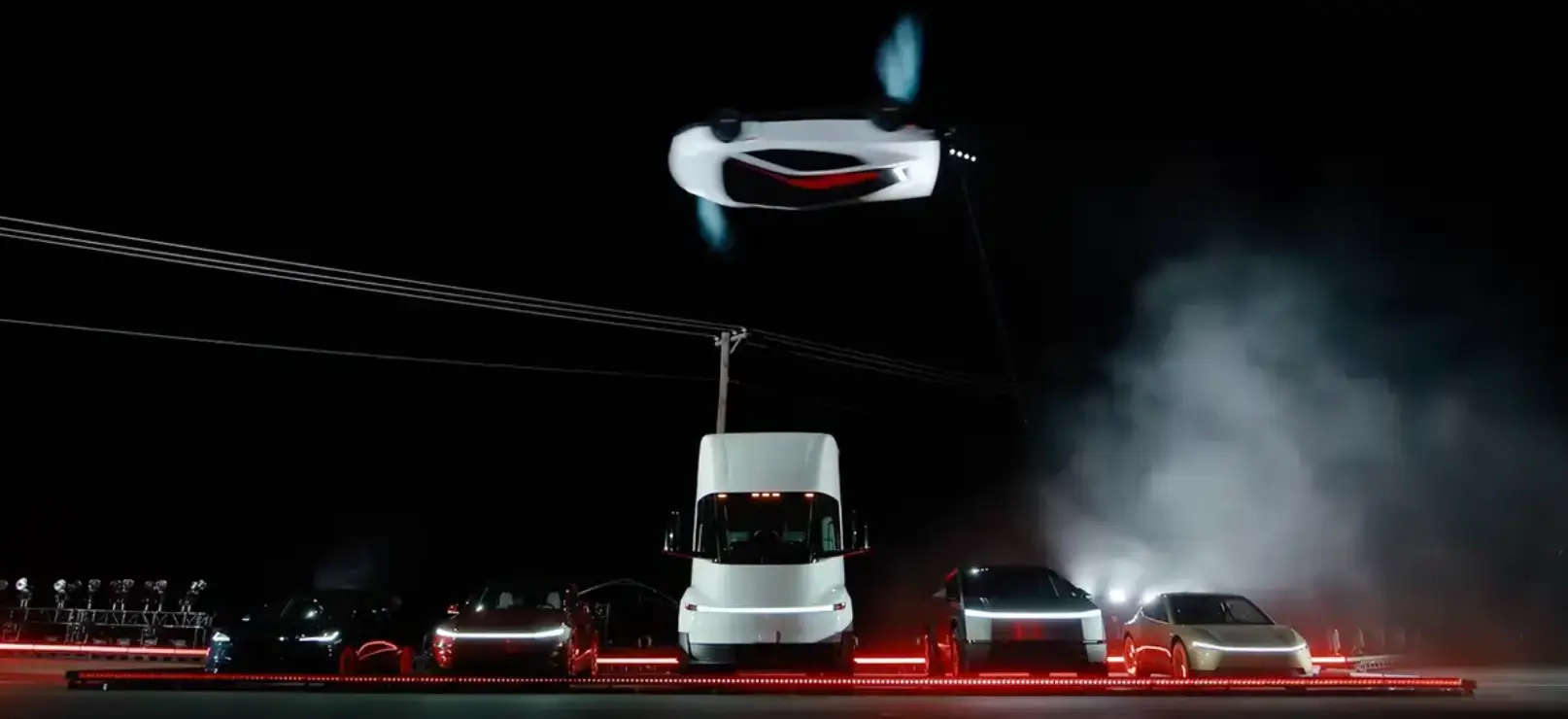
Elon Musk declared the new Tesla Roadster “can basically fly like a rocket” after the vehicle performed barrel rolls and upside-down driving at a long-awaited unveiling event.
The Tesla and SpaceX CEO, 53, made the comments last week during a livestreamed demonstration in Waco, Texas, where the electric automaker finally revealed the second-generation sports car after nearly eight years of delays. The original Roadster sequel was teased back in 2017 with a promised 2020 production start, but that timeline collapsed due to multiple factors including the global pandemic, leaving the project in extended silence until now.
The centerpiece stunt featured the Roadster Rocket configuration accelerating to 60 mph in 0.81 seconds while driving inverted, a feat enabled by rear-mounted thrusters developed through Tesla’s closer working partnership with Musk’s aerospace company SpaceX. “And it could do rolls. It could do, like, crazy gymnastics. Whatever you want, really,” Musk continued during the presentation. “Now, I should say that this is not necessarily a safety-optimized car. But it takes the fun meter to 11 out of 10.”
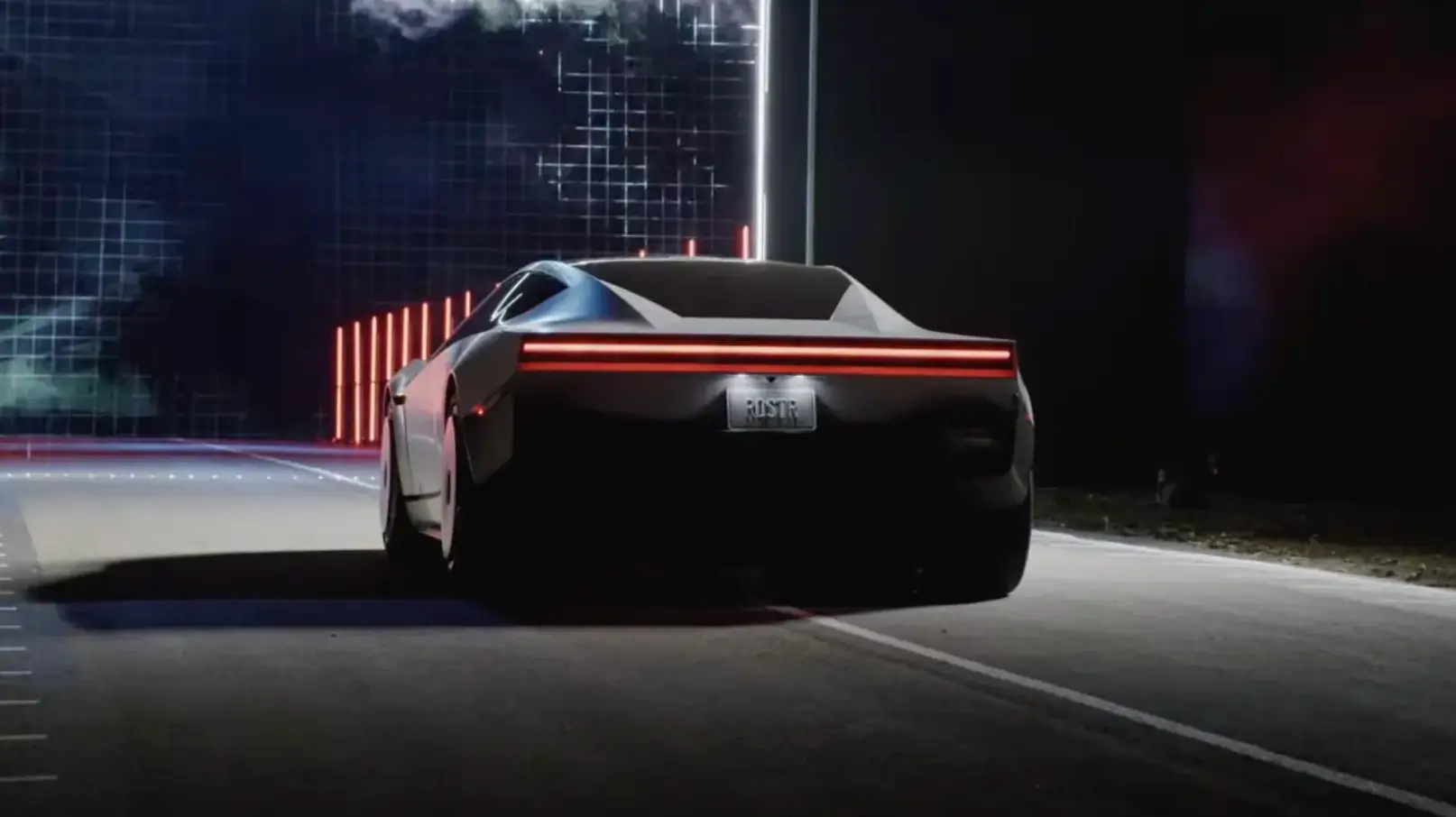
The demonstration vehicle that performed these aerial maneuvers will not be road legal, a significant caveat for prospective buyers. Tesla is offering three distinct Roadster variants with different capabilities and regulatory statuses. The Roadster Performance, which is street legal, seats two passengers and incorporates active aerodynamics along with what the company describes as a “multi-mode suction system for next-level performance on and off the track.” The Roadster Rocket, demonstrated in Waco, adds the full SpaceX thruster package responsible for the sub-second acceleration and flight capabilities. A third variant, the Roadster Thrust, is positioned as “race ready” and also employs rear-mounted thrusters to achieve the extreme 0-to-60 mph times.
All versions feature a rechargeable tank system to support the thruster operations, a novel addition to electric vehicle architecture that bridges automotive and rocket propulsion technologies.
Musk and Tesla have not yet disclosed pricing for any Roadster configuration, though the advanced engineering involved suggests substantial cost barriers for interested customers. The company has targeted 2028 for production commencement, marking more than a decade since the concept’s initial reveal.
The 2017 original announcement generated significant enthusiasm with promises of record-breaking acceleration and extended range, but subsequent years brought little concrete progress as Tesla prioritized its mass-market Model 3 and Model Y production lines. The renewed SpaceX collaboration appears to have revived the project with dramatically expanded capabilities beyond what was initially projected, transforming what began as a high-performance electric coupe into something closer to a terrestrial spacecraft with wheels.
The Waco event represented a notably theatrical return to form for Tesla’s product launches, which had grown more subdued in recent years as the company matured from startup to established automaker. Musk’s personal involvement in the presentation and his characteristic hyperbolic framing of the vehicle’s abilities reinforced the spectacle-driven approach that defined earlier Tesla reveals.
Tesla has not announced additional demonstration dates or pre-order timelines for the Roadster lineup.