

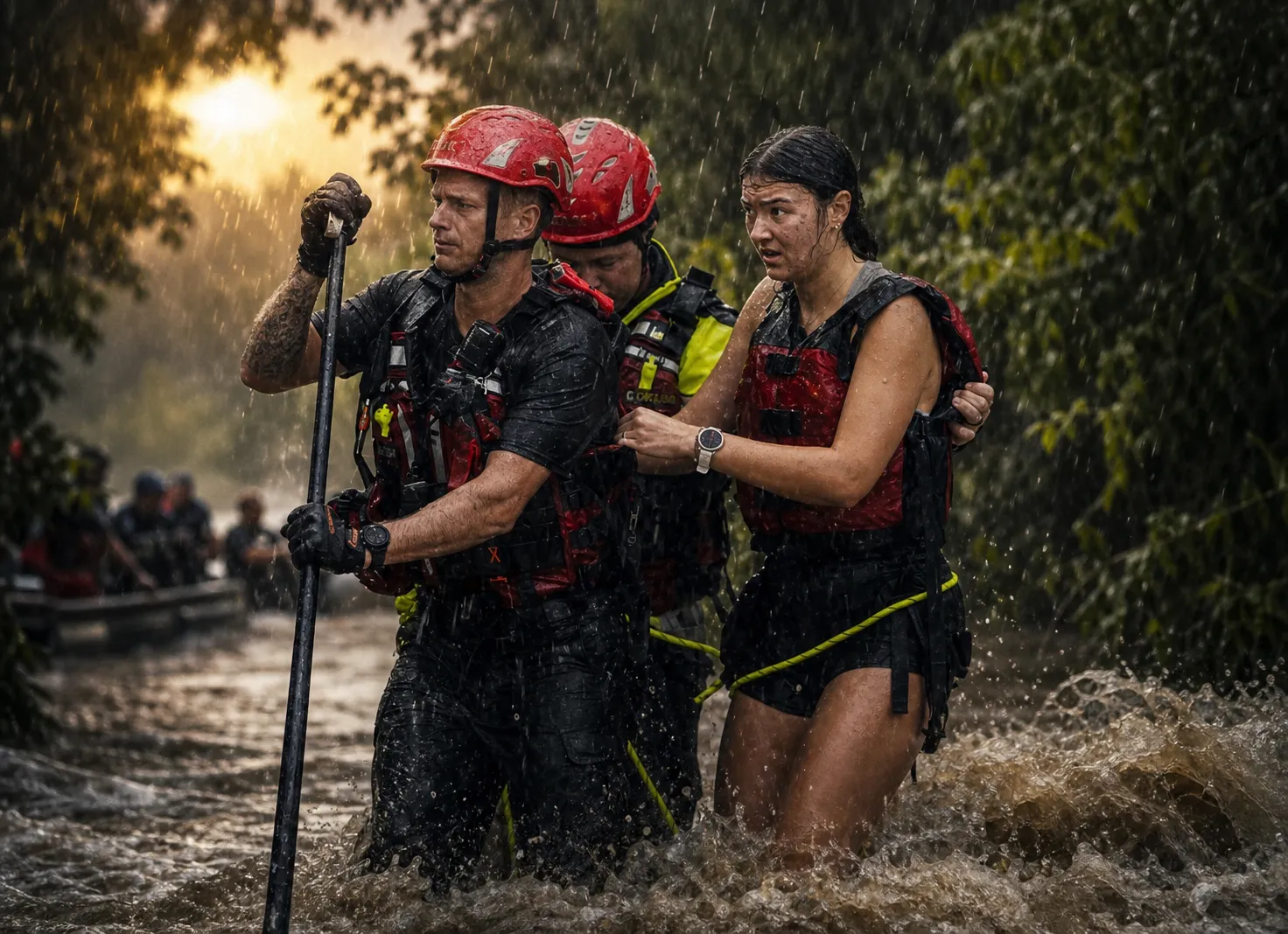
Dangerous flooding intensified across Texas on Wednesday after days of relentless pounding rain, with emergency crews scrambling through rising waters to rescue people before sunrise Thursday. Forecasters issued urgent warnings for residents to move to higher ground immediately, as the National Weather Service warned of a “large and deadly flood wave” barreling down the same river devastated by catastrophic floods just a year ago when more than 130 people died, including campers and counselors at Camp Mystic.
The situation unfolded across a broad swath of southern Texas, with the most severe impacts hitting the Texas Hill Country and areas west of San Antonio. Over 75 people had been rescued from rising floodwaters across the state, according to Governor Greg Abbott. At the peak on Wednesday afternoon, 114 roads in Texas were flooded, according to the Texas Department of Transportation. Rescue teams, including Game Wardens and local fire departments, responded to more than 100 emergency calls for service in individual communities, pulling people from stranded vehicles and homes as water levels rose at alarming rates.
The rainfall was extraordinary in scope and intensity. Some areas received up to 16 inches of rain, with parts of the region experiencing more rainfall in the past two days than the county receives in an entire year. One gauge less than 10 miles from Kerrville showed the Sabinal River had risen 32 feet in just four hours. The National Weather Service reported that 10 to 20 inches of rain had fallen in the past two days in some areas, with 8 inches falling in just two hours early Thursday. Some forecasters warned that rainfall rates could reach 2 to 4 inches per hour, conditions that would cause flooding in virtually any Texas community.
Uvalde County emerged as one of the hardest-hit areas. Officials there conducted dozens of rescues with more people needing help as river levels continued to rise. The county normally receives about 23 inches of rain annually, yet had already received approximately half a year’s worth. The Leona River near Uvalde rose to nearly 20 feet—a record-breaking surge that was expected to rise another 15 feet, according to police warnings. Mandatory evacuation orders were issued for some Uvalde neighborhoods, while residents along the river were ordered to move to higher ground.
Around 30 miles northwest of San Antonio, the city of Boerne faced a flash flood emergency, the highest level of flood warning issued. The Cibolo Creek overflowed, flooding one of the main roads through town. Authorities there responded to over 109 calls for service and conducted 36 water rescues by Wednesday afternoon. Another 53 people, including those evacuated from apartment complexes, were moved to shelters. Chris Shadrock, the city’s director of communications and civic engagement, emphasized the severity of the situation: “This is a life-threatening weather event. I don’t want to mince words about how serious this situation is.”
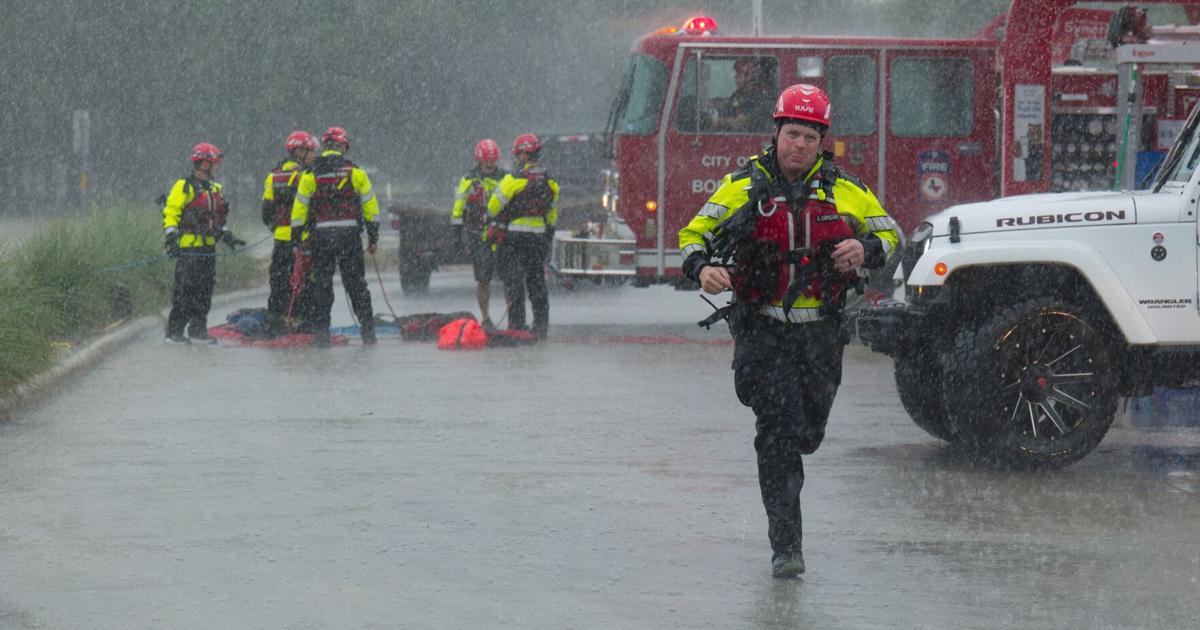
The flooding extended to multiple other communities. In D’Hanis, located around 50 miles west of San Antonio, another flash flood emergency was declared. Forecasters warned of potentially catastrophic flooding on Seco Creek, with homes at risk of being flooded with up to 5 or 6 feet of water. Multiple rivers were expected to reach dangerous flood stages, including the Pecos, Rio Grande, Nueces, Frio, Medina and San Antonio rivers.
Governor Abbott issued disaster declarations for 59 counties and warned that the state was facing a flood that could break historical records. He noted that portions of the state could see as much as 30 inches of rain over the course of the storm, surpassing last year’s rainfall. However, Abbott also said the state had significantly increased its preparedness, noting that sirens have been installed at campgrounds in the Guadalupe River area. “We are better prepared than we have ever been to deal with weather events in general, but rainfall events and flooding events in particular,” Abbott stated.
The storms also spawned a tornado near Interstate 10 in the northwest San Antonio area around 8 a.m. Wednesday. The tornado caused significant damage to an apartment complex, displacing 10 to 12 students, though no injuries were reported.
The situation unfolding Wednesday was familiar to many Texans. A little more than a year ago, similar devastating floods struck the region on July 4, 2025, killing more than 130 people. The July 2025 floods in Kerr County became one of the deadliest flood events in state history, with 27 campers and counselors perishing at Camp Mystic, an all-girls Christian summer camp. That event claimed about 119 lives in Kerr County alone, and residents remained deeply scarred by those memories.
As of Wednesday evening, just over six million Texas residents in 57 counties were under a National Weather Service flood watch that was scheduled to continue through early Thursday night. Watches for 34 of those counties were scheduled to expire Friday evening. Multiple agencies warned that despite some breaks in rainfall, dangerous conditions were likely to continue or worsen, with more heavy rain expected to return in the early hours of Thursday morning.
The Texas Parks and Wildlife Department emphasized that most of the water rescues conducted so far had involved stranded motorists who drove into high water. Texas Emergency Management Chief Nim Kidd urged residents to avoid unnecessary travel on flooded roads. “It doesn’t matter where you live in Texas; three inches of rain an hour will cause flooding,” Kidd said, adding that shelters were ready to be opened if needed.
As of Wednesday, there had been no reported fatalities from the current flooding, though authorities warned the full toll of damage and any injuries would not be known until waters receded.