

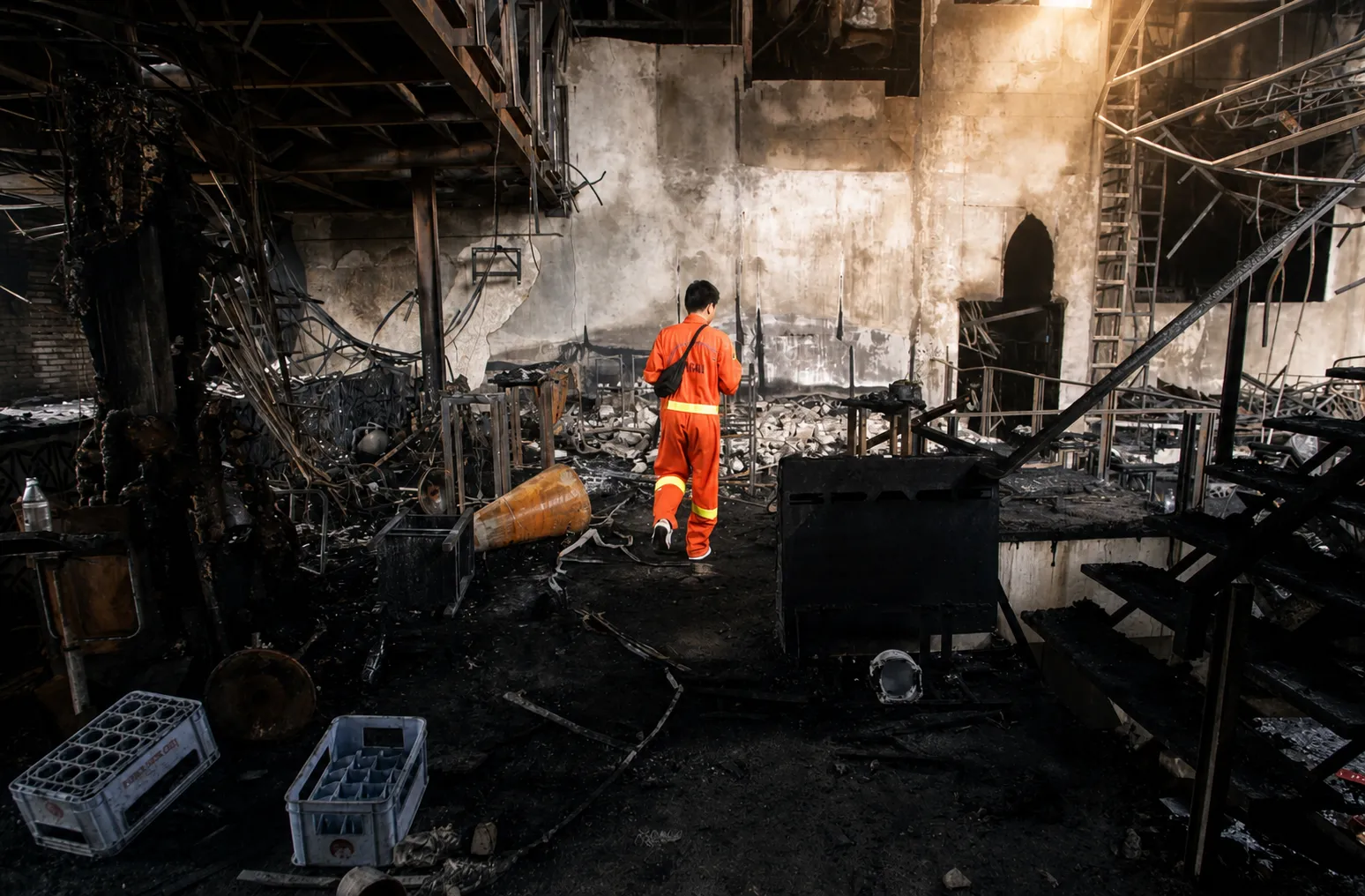
Devastating nightclub and bar fires have claimed thousands of lives across the globe over the past century, exposing the recurring dangers posed by overcrowding, flammable materials, inadequate exits, and insufficient safety measures. These tragedies have repeatedly prompted new fire codes and safety regulations, yet disasters continue to occur as preventive lessons are forgotten or inadequately enforced.
The most recent devastating fire occurred early on New Year’s Day at a bar in the Swiss ski resort of Crans-Montana, killing approximately 40 people and injuring over 100 in one of Europe’s deadliest nightclub fires in recent years. The incident echoes patterns seen in numerous other major catastrophes spanning more than a century.
Among the deadliest fires in history stands the Cocoanut Grove nightclub fire in Boston on November 28, 1942, which killed 492 people and remains the deadliest nightclub fire in U.S. History. The club was packed far beyond capacity with over 1,000 patrons on Thanksgiving weekend. Multiple safety violations contributed to the death toll, including locked exits that had been nailed shut to prevent customers from leaving without paying, a single revolving door serving as the only public entrance, and highly flammable decorative palm trees. The fire also benefited from a flammable refrigerant gas in use at the time due to wartime shortages, which accelerated the blaze’s spread. The disaster led to major changes in fire codes, including requirements for sprinkler systems and accessible exits.
Another historic tragedy occurred on April 28, 1940, at the Rhythm Night Club in Natchez, Mississippi, where a fire that ignited decorative Spanish moss draping the ceiling killed 209 people. The windows had been boarded up to prevent people from sneaking in without paying.
In more recent decades, pyrotechnic displays at entertainment venues have become a common cause of deadly fires. On January 27, 2013, a fire at the Kiss nightclub in Santa Maria, Brazil, claimed 242 lives, making it one of the deadliest nightclub fires of the 21st century. The club was overcrowded with 1,200 to 1,300 people despite a capacity of under 700. A band member’s pyrotechnic display ignited acoustic foam on the ceiling, which released cyanide gas as it burned. About 90 percent of victims died from smoke inhalation. Many people died after mistaking bathrooms for exits, with at least 180 bodies removed from bathroom areas. The incident prompted “Law Kiss,” passed in Brazil in 2014, establishing new fire safety standards.
Another major American tragedy was the Station nightclub fire on February 20, 2003, in West Warwick, Rhode Island. During a performance by the band Great White, pyrotechnics ignited flammable foam used for soundproofing, killing 100 people and injuring 230. The fire spread through the building in just six minutes. A bottleneck at the main entrance prevented rapid evacuation, with most of the approximately 460 attendees attempting to escape through a single door. Experts noted that a sprinkler system would likely have prevented the disaster. The tragedy led to the Massachusetts Fire Safety Act of 2004, requiring sprinkler systems in nightclubs and bars.
In December 2009, 152 people died at the Lame Horse nightclub in Perm, Russia, when an indoor fireworks display ignited a plastic ceiling decorated with branches. In October 2015, a pyrotechnics display during a rock band’s performance at the Colectiv nightclub in Bucharest, Romania, killed 64 people and injured about 190. The fire spread rapidly through the building during a concert.
More recent disasters include a March 2025 fire at the Pulse club in Kocani, North Macedonia, which killed 63 people when a pyrotechnic flame engulfed the roof. A stampede followed the fire, adding to the death toll. In December 2025, a fire ripped through a nightclub in Arpora village in India’s Goa state, killing 25 people including kitchen workers and tourists.
Fire safety experts point to a dangerous combination of factors that repeatedly leads to tragedies. Overcrowding, limited evacuation routes, pyrotechnics, and highly combustible building materials create what has been described as a “lethal mixture.” Many venues use flammable foam for soundproofing and decoration without adequate fire retardants. Emergency exits are sometimes locked to prevent theft or unauthorized entry, blocked by furniture and obstacles, or simply not marked clearly. Smoke inhalation from synthetic materials releases toxic gases like cyanide, which accounts for the majority of deaths in modern fires.
Despite regulations that have been enacted following major disasters, compliance and enforcement remain inconsistent worldwide. Many countries in the developing world still lack adequate fire codes, and even in developed nations, grandfathered exemptions for older buildings and weak enforcement have allowed dangerous conditions to persist. Fire safety experts warn that unless fire codes are strengthened, enforced consistently, and venues prioritize human safety over cost-cutting measures, similar tragedies will continue to occur.