

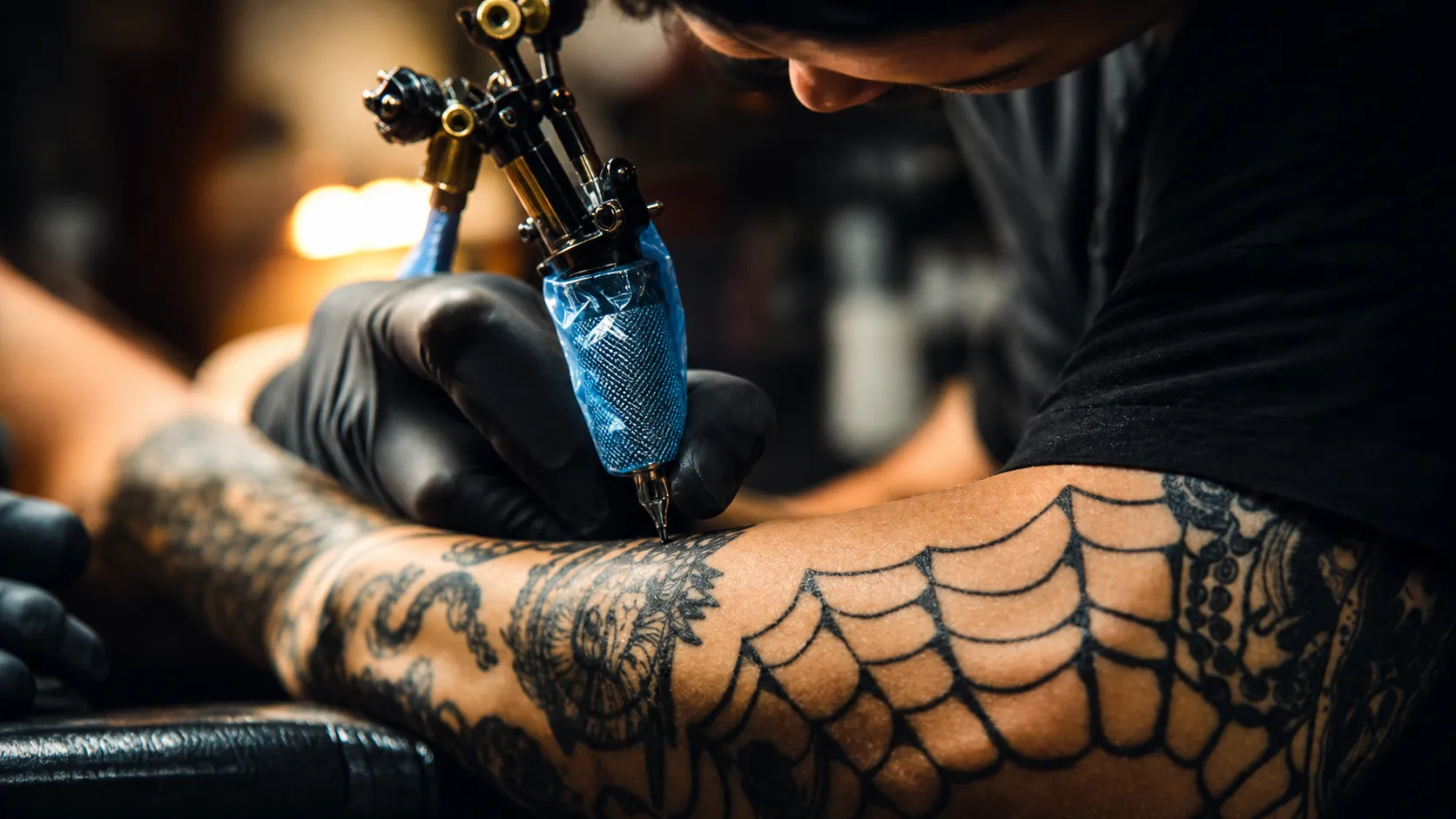
Spider web tattoos are easy to spot, but one of the meanings attached to them is much less widely known.
The pattern shows up on elbows, shoulders, forearms and backs, and many people choose it for its bold symmetry and unmistakable look. It is also highly versatile, working alongside motifs such as spiders, roses, skulls and geometric shapes.
Even so, the design comes with a layered past, and its meaning often depends on both its placement and the imagery paired with it. In modern tattoo culture, the same web can read very differently from one person or community to another, so it is usually safest to treat the symbolism as context-specific rather than fixed.
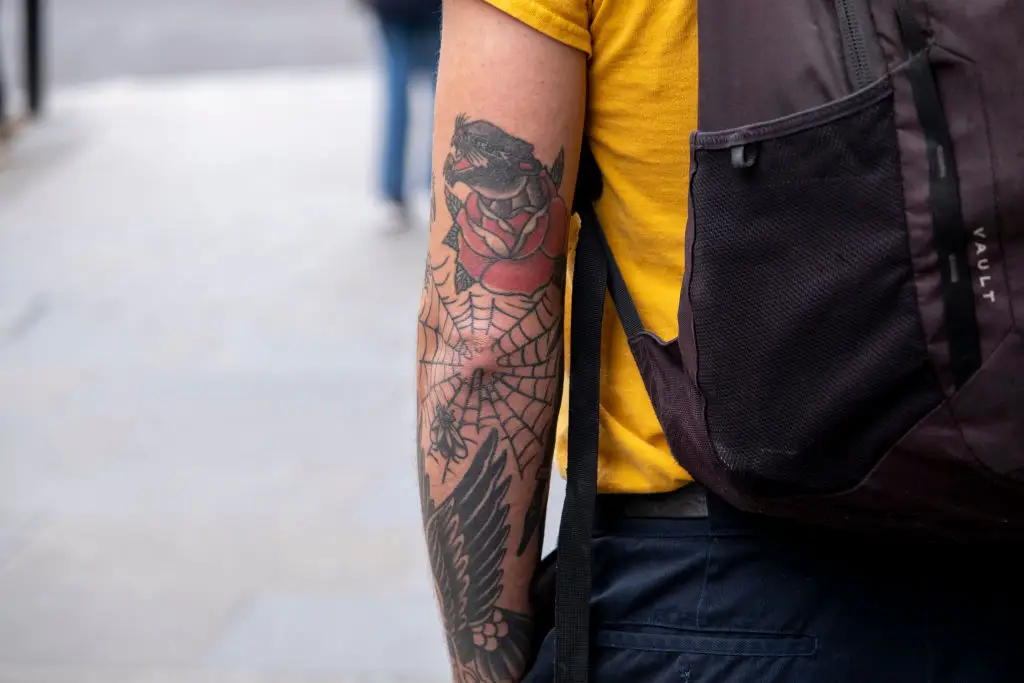
In the US, the spider web tattoo developed a strong connection to prison culture, especially when inked on the elbow. In some cases, it was believed to reflect time spent incarcerated, while in others it pointed to endurance, loneliness or a toughened sense of self.
It has also been associated with gangs and extremist symbolism, which is one reason the tattoo can still be viewed with caution. At the same time, many wearers today choose the design simply for its look or because they identify with the idea of surviving hardship and rebuilding their lives.
Liverpool Tattoos points to another meaning that is often missed: the tattoo’s link to the broader web of life, where people, decisions and events are all connected.
From that perspective, the web is not just about being trapped. It can instead suggest interconnection, fate, and the way different moments and experiences come together to form a person’s identity.
The spider itself is frequently seen as a maker, carefully constructing something complex thread by thread. In tattoo form, that can make the image a sign of resilience, self-development and the power to start again after disruption.
A similar reading can be found in the ancient Greek myth of Arachne, a talented weaver who dared to challenge Athena. After their contest, Arachne was turned into a spider, linking her forever to the craft that shaped her life.
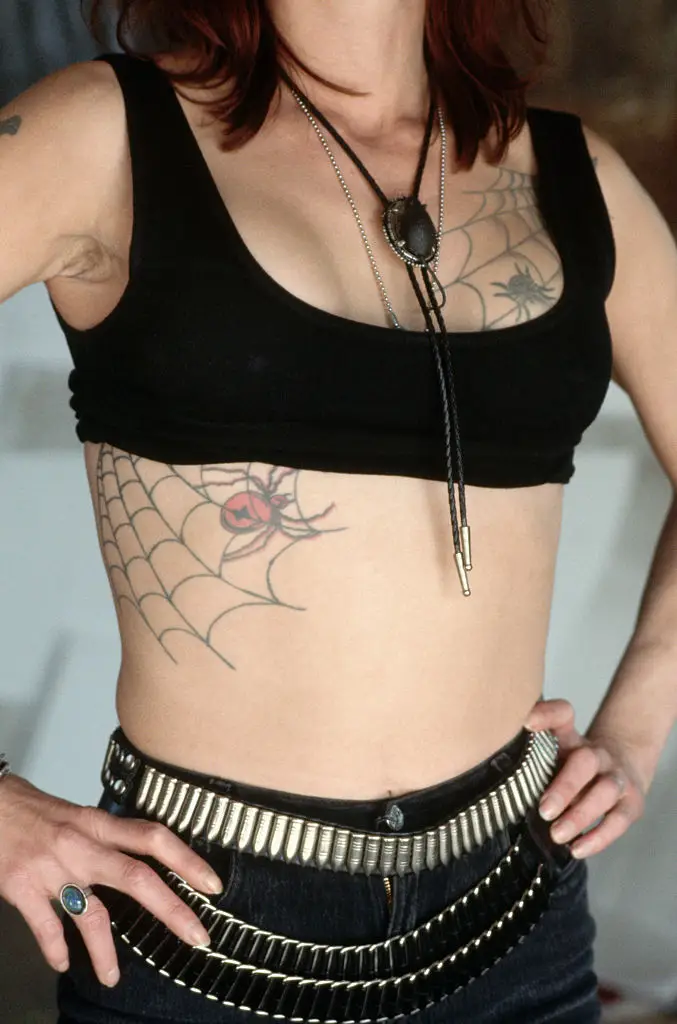
For some wearers, that idea extends even further, with the tattoo acting as a reminder that they are still shaping their own path, even when life feels messy or uncertain.
The design also carries spiritual meaning in some Native American traditions, where Spider Woman is regarded as a creative and protective presence.
Within those interpretations, the web can stand for protection, balance and harmony, alongside the belief that all parts of existence are connected.
Placement can shift the meaning as well. The elbow, as noted, is still the spot most commonly linked with incarceration, whereas a web on the forearm may instead signal strength, perseverance or transformation.
When spread across the back or shoulders, larger web designs can be understood as protective symbols, stretching across the body like a shield.
Additional elements can also reshape the message. Roses may add ideas of delicacy and beauty, while skulls often introduce themes of mortality, transformation and time passing.