

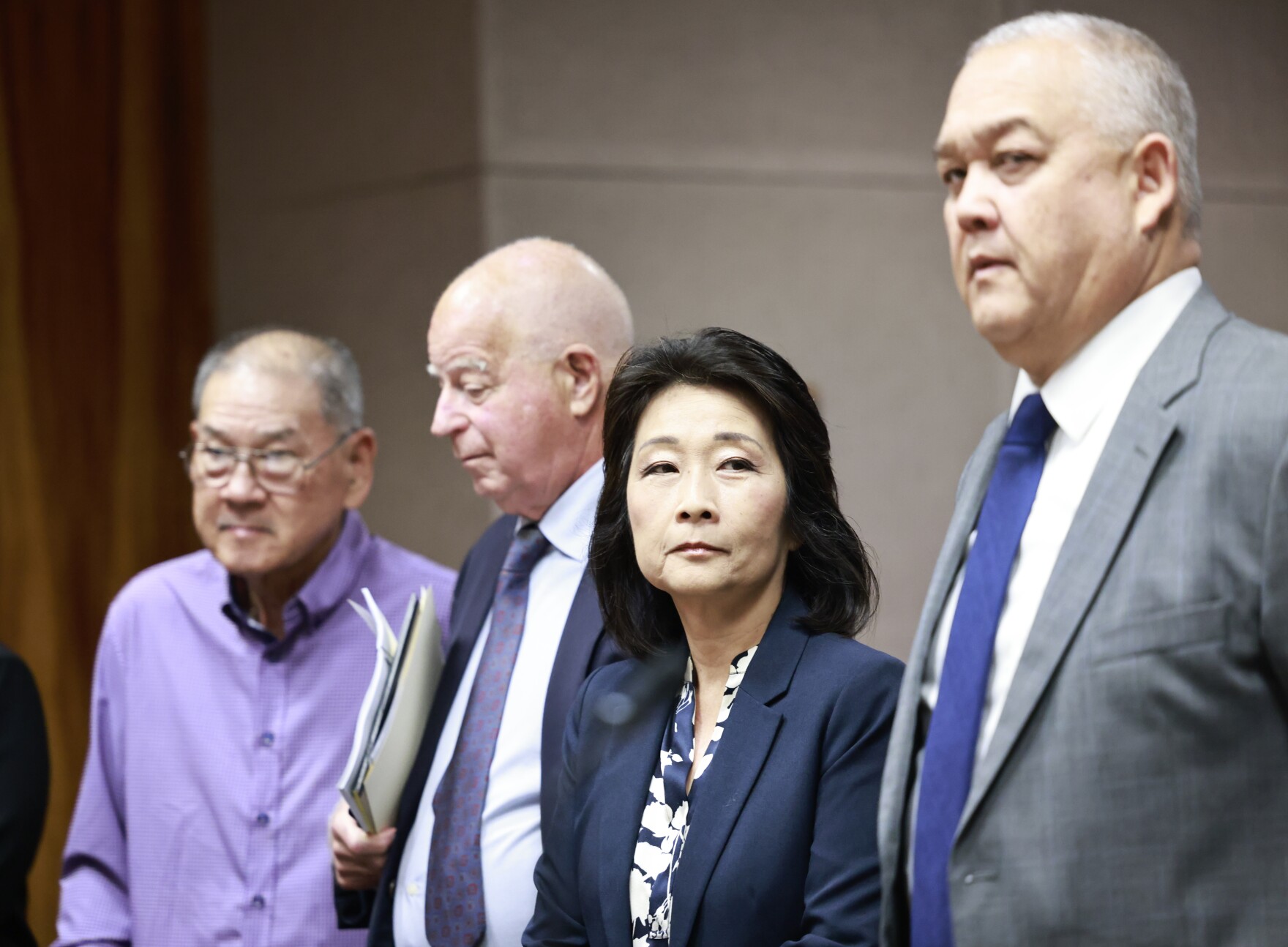
Hawaii’s Lieutenant Governor Sylvia Luke, along with three other current and former state officials, pleaded not guilty Thursday to bribery and corruption charges stemming from a high-profile investigation into alleged schemes to funnel state COVID-19 testing contracts to favored businesses.
Luke, who has been on unpaid leave since April, walked into First Circuit Court surrounded by security and entered her not guilty plea on charges of criminal conspiracy to commit bribery, bribery and falsifying candidate committee reports. Three co-defendants appeared alongside her: former state Representative Ryan Yamane, who previously served as director of the Department of Human Services; Ford Fuchigami, airports administrator for the state Department of Transportation; and Leo Asuncion Jr., a former Luke campaign volunteer and former Public Utilities Commission chair. All four defendants pleaded not guilty and requested jury trials before Judge Ronald G. Johnson.
The cases stem from allegations that the officials accepted bribes from businessman and lobbyist Tobi Solidum between 2020 and 2022, when the state was operating under emergency COVID-19 proclamations. Prosecutors allege that Solidum provided campaign contributions, checks and cash to cultivate support for securing and expanding state funding for COVID-19 testing contracts managed through the National Kidney Foundation of Hawaii, a client of his consulting business.
Luke, who chaired the state House Finance Committee at the time of the alleged crimes, is accused of accepting at least $35,000 in bribes from Solidum in exchange for using her influence to advance funding for the testing operations. According to prosecutors, Luke accepted two $5,000 checks and agreed to accept a total of $70,000 in campaign contributions to secure additional contract money. Yamane, who oversaw the Department of Human Services, is charged with conspiracy to commit bribery and bribery after allegedly accepting at least $7,000 to push Solidum’s agenda with the health department.
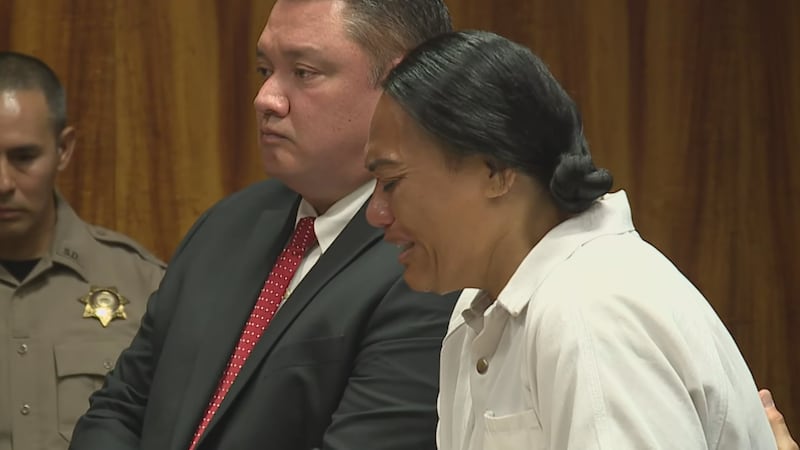
Fuchigami faces charges of criminal conspiracy to commit bribery, bribery, use of false statements and obstruction of justice. Asuncion is charged with falsifying candidate committee reports, use of false statements and obstruction of justice. The five defendants were indicted on a 12-count indictment returned by an Oahu grand jury last Friday following a months-long investigation by the state attorney general’s Special Investigation and Prosecution Division.
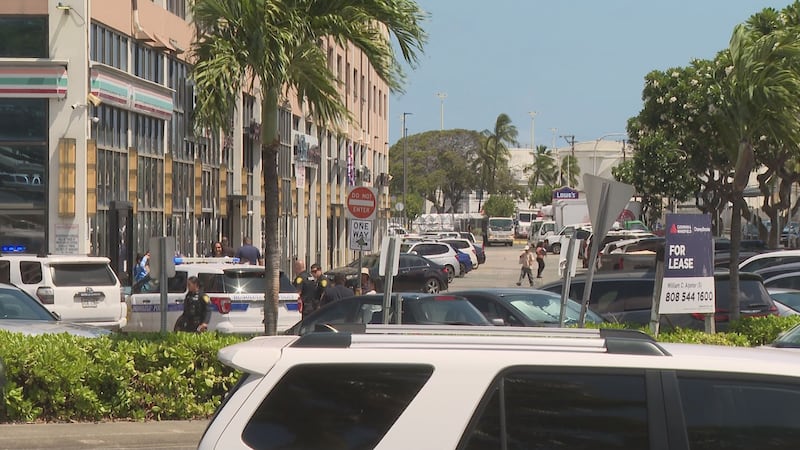
The fifth defendant in the case, Solidum, did not appear in court. Authorities are searching for him after he allegedly liquidated his assets and fled to the Philippines. He has been charged with four counts of conspiracy to commit bribery and three counts of bribery. A no-bail warrant was issued for his arrest.
Solidum’s alleged scheme centered on COVID-19 testing operations that became increasingly lucrative as Hawaii grappled with pandemic response efforts. The National Kidney Foundation of Hawaii brought in more than $130 million in testing revenue between 2020 and 2023, according to prosecutors. Much of that money flowed to Capture Diagnostics, an Ohio-based startup that operated the testing labs, and to companies affiliated with Solidum that provided consulting services and took financial cuts from the contracts.
Court filings indicate that Solidum’s companies earned millions from the testing program. The indictment also notes that Solidum claimed to have invested about $11 million in the testing effort and that operating the testing sites cost roughly $54 million annually, excluding the cost of tests and labor. Prosecutors allege that Solidum and his associates charged taxpayers inflated prices for COVID-19 tests, including $120 per rapid test at the airport and $54 per antigen test.
The case has drawn significant political scrutiny. Governor Josh Green called on Lieutenant Governor Luke to resign, saying she “needs to consider formally resigning to address this matter and so that the state of Hawaii can move forward.”
Defense attorneys, however, are raising significant doubts about the prosecution’s case. Eric Seitz, representing Fuchigami, questioned the viability of the charges, stating that conspiracy cases are “almost impossible to prove.” He suggested the case may be politically motivated and expressed skepticism that it would proceed to trial as currently scheduled for late September.
Luke has maintained her innocence, previously posting on social media that she “never granted special favors to a contributor” and that she has “prized integrity and honesty above all throughout her career.” She acknowledged accepting the two $5,000 checks but denied taking more than that and disputed that any money influenced her legislative decisions.
The investigation has already resulted in consequences for other state officials. Yamane stepped down from his position as director of the Department of Human Services in May after being subpoenaed to testify in the case. Luke took an unpaid leave of absence in April after receiving notification from investigators.
The National Kidney Foundation of Hawaii stated that its current leadership was not in place during the period under investigation and that it has hired an independent forensic accounting and investigative firm to conduct a review of its operations during the pandemic.