

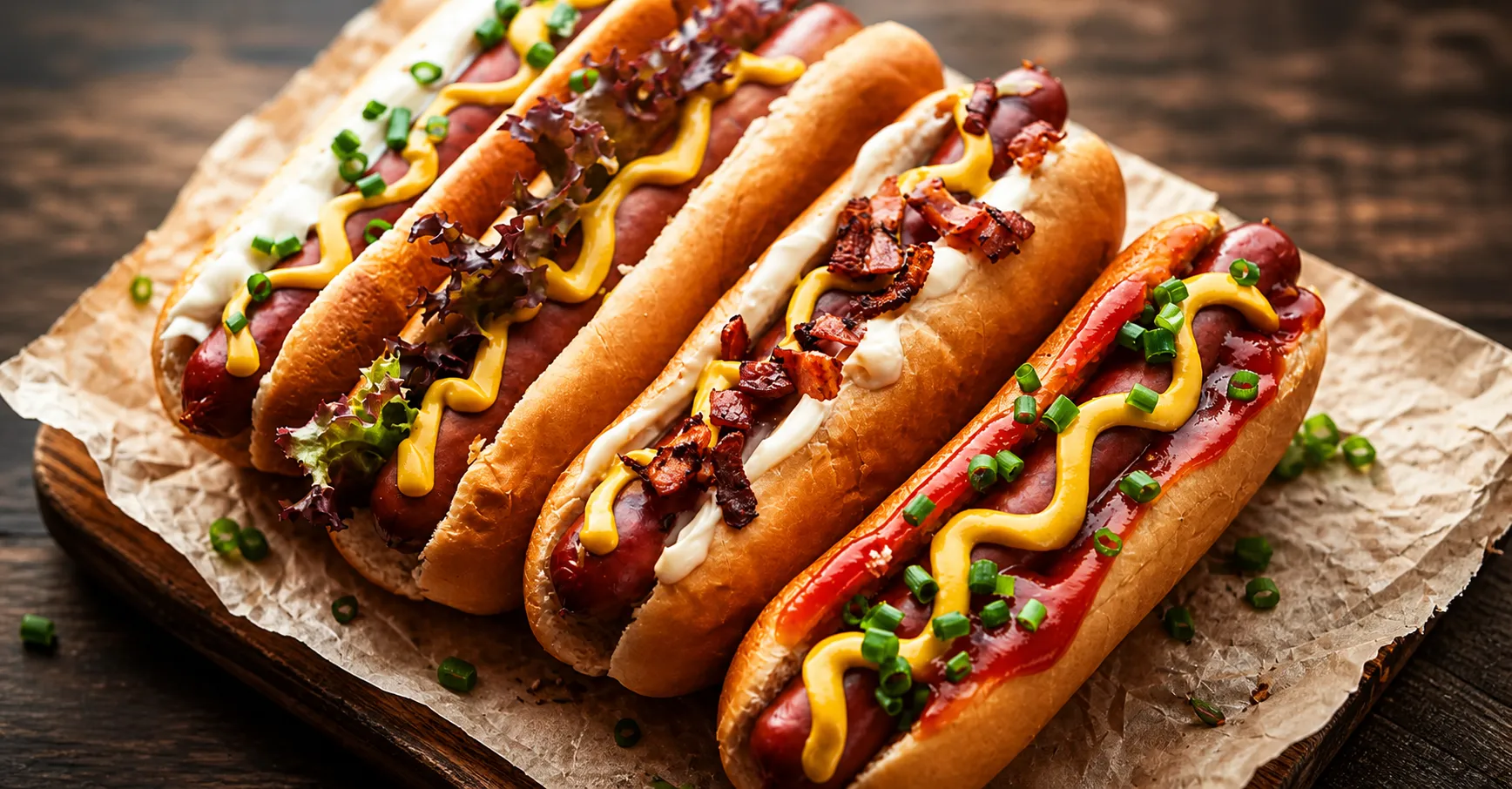
For many Americans, the answer to what constitutes the perfect hot dog is deeply personal—and almost certainly determined by where they grew up. From the minimalist elegance of a New York dog to the elaborate composition of a Chicago creation, the nation’s love affair with hot dogs has spawned dozens of distinct regional variations, each with fiercely loyal devotees who believe their hometown version reigns supreme.
The regional divide is so pronounced that asking someone from one city about another city’s hot dog style can spark genuine debate. Show the same kind of loyalty to their regional hot dog as they do to their hometown baseball teams. The passion runs so deep that experts warn against mixing styles—New York vendors famously view Chicago dogs as overly busy, while Chicago’s approach embraces complexity where New York celebrates simplicity.
Take the New York hot dog as an example. Among the most consumed hot dogs in the country, the New York version features a simple philosophy: an all-beef frank topped with spicy brown mustard and sauerkraut. Many versions also include an onion relish made with caramelized onions cooked in tomato paste. The philosophy is to let the frankfurter be the star of the show. The cooking method matters too—traditionally boiled in seasoned water right there in the cart and served immediately in a soft white bun.
Chicago’s approach could not be more different. The city’s signature dog has earned such prominence that it’s been called “Hot Dog Town, U.S.A.” An all-beef frank on a poppy seed bun gets “dragged through the garden” with seven classic toppings: yellow mustard, chopped white onion, neon green sweet pickle relish, a pickle spear, fresh tomato, sport peppers, and celery salt. Conspicuously absent is ketchup—a condiment considered taboo on a Chicago dog, at least by purists. Legend has it that the style originated during the Great Depression, when a greengrocer converted his vegetable cart into a hot dog stand and started offering this heavily loaded creation as an affordable, filling meal.
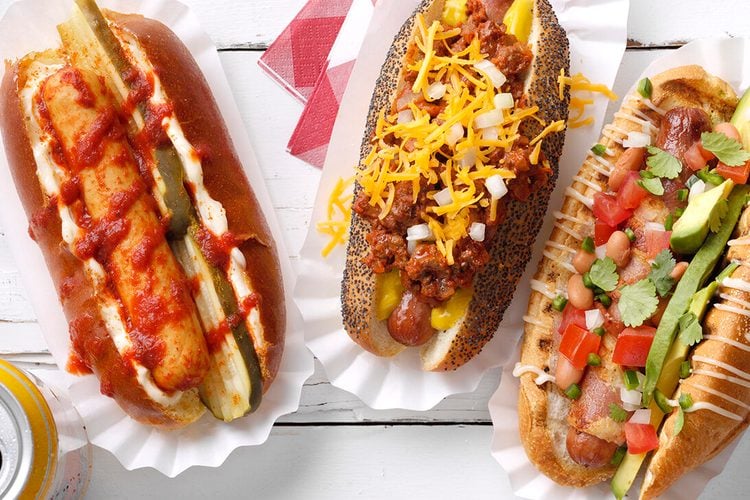
The Detroit Coney dog represents yet another distinct tradition. Despite its name suggesting a connection to New York’s Coney Island, the Coney dog is most popular in Michigan and the surrounding Midwest. The style emerged in the early 20th century when Greek and Macedonian immigrants arrived in Detroit. A Coney dog features a beef frank on a steamed bun topped with a unique beanless chili sauce (distinguished by its lack of beans, unlike traditional chili), diced white onions, and yellow mustard. The chili sauce itself contains Greek-inspired spices, reflecting the immigrant heritage that shaped the dish. Two famous rival restaurants—American Coney Island and Lafayette Coney Island, located directly next door to each other in downtown Detroit—have sparked a friendly but intense competition about whose version is superior, with one known for a slightly spicier homemade chili and the other for a meatier family recipe.
Beyond these three major styles, American hot dog culture features dozens of regional variations. New Jersey’s Italian dog transforms the hot dog entirely, featuring deep-fried all-beef franks topped with fried peppers, onions, and potatoes served on pizza bread. Maine’s bright red snappers, distinguished by food coloring and a snappy lamb casing, come on a split-top bun with mustard. The Sonoran dog, popular in Arizona, wraps bacon around the frank, grills it, and nestles it in a bolillo roll before topping it generously with pinto beans, grilled onions and peppers, tomatoes, cheese, mayonnaise, and jalapeño salsa.
Cincinnati puts its own spin on the hot dog by applying the same logic it uses for its famous spaghetti—topping the frank with a distinctive chili sauce seasoned with Greek-inspired spices like cinnamon, clove, and allspice, plus onions and shredded cheddar. Washington D.C. Offers the half-smoke, a hybrid that blurs the line between hot dog and sausage. This pork-and-beef mixture in a natural casing gets grilled and served with chili, mustard, and onions. Cleveland’s Polish Boy pairs a kielbasa with barbecue sauce, sauerkraut, and a generous heap of french fries piled directly on top.
These regional variations didn’t emerge by accident. Each reflects the cultural heritage and local ingredients of its home region. German immigrants who introduced hot dogs to America in the 1860s influenced East Coast styles heavy on mustard and sauerkraut. Italian immigrant communities shaped New Jersey’s distinctive preparation. Greek and Macedonian immigrants created the Coney dog tradition in Michigan. Polish influence shows up in Cleveland’s offerings.
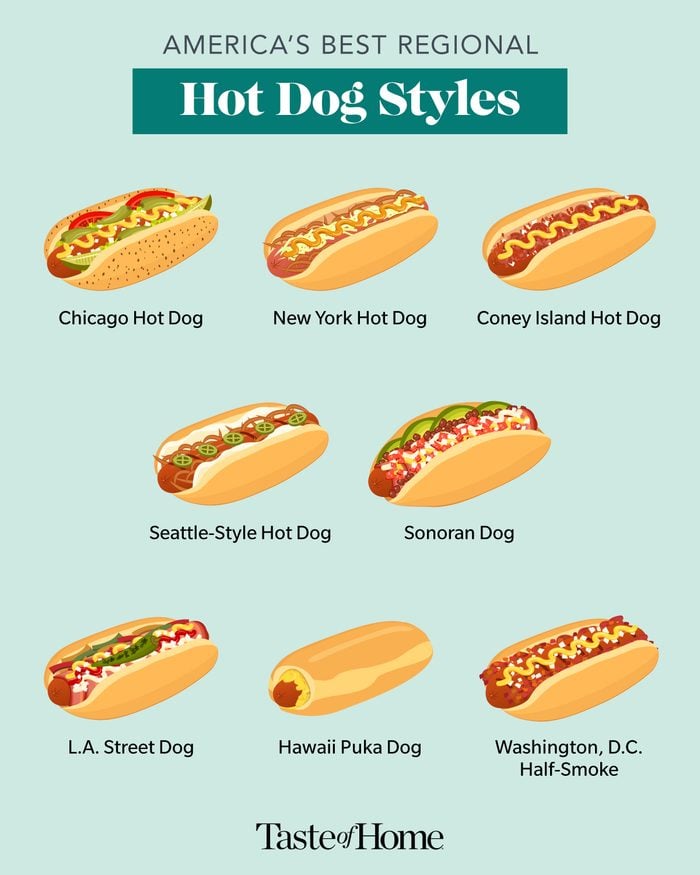
Even consumption patterns vary by region. New Yorkers lead the nation in hot dog consumption, while different regions show distinct topping preferences. Midwesterners favor pork and beef hot dogs, while Westerners consume more poultry versions. The Midwest gravitates toward mustard and chili, while the South often prefers coleslaw or slaw-based toppings. Ketchup, considered almost sinful on a Chicago or New York dog, remains popular in some Southern and Western regions.
The National Hot Dog and Sausage Council, which tracks these American preferences, estimates that Americans consume roughly 7 billion hot dogs annually—about 818 every single second during summer months. Yet despite this staggering volume, there’s no single “perfect” hot dog. The perfect hot dog is the one that tastes right for where you’re from. Whether it’s the spicy brown mustard and sauerkraut of New York, the colorful garden of toppings on a Chicago dog, or the meaty chili sauce of a Detroit Coney, regional hot dog styles represent distinctly American food traditions shaped by immigrants, local ingredients, and generations of refinement.