

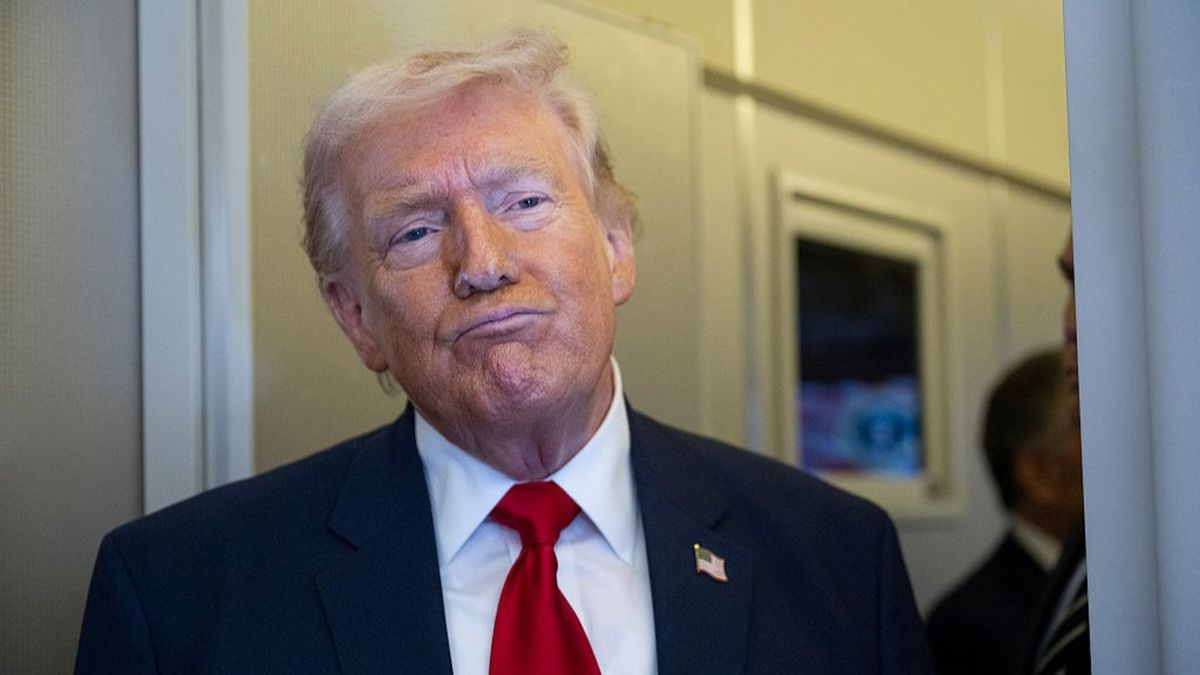
With Conan O’Brien set to take the stage at the 98th Academy Awards, plenty of viewers are expecting him to push the envelope — and some might assume Donald Trump will be an obvious punchline.
But the host appears to be steering clear of direct digs at the president, aiming to keep the tone light rather than confrontational.
“Hosting this show is a very thin line,”
O’Brien said during a virtual press conference on Wednesday (March 11), as per News.com.au.
“We’re celebrating movies and the amazing people behind them, but it has to be funny without tipping into anger or politics.”
He also suggested in a recent chat on The New Yorker Radio Hour that Trump doesn’t exactly help comedians do their best work.
Trump is ‘bad for comedy’.
“When comedians get angry instead of clever, it doesn’t land,”
Whether or not politics makes its way into the monologue, the Oscars have never been short on moments that veer into controversy, discomfort, and outright chaos.
It’s been 11 years since #OscarsSoWhite first erupted — not exactly ancient history — and the conversation about representation remains as relevant as ever.
Long before that hashtag existed, Hattie McDaniel made history as the first Black woman to win an Oscar for her supporting role in Gone with the Wind. Yet despite the milestone, she was forced to sit at the back of the venue, separated from her co-stars.
Still, McDaniel delivered a moving address that night.
‘my heart is too full to tell you just how I feel’.
Another lesser-known flashpoint came in 1993, when the Academy reportedly cracked down on political statements by threatening bans for anyone who used the podium that way. Three stars tested that boundary anyway: Tim Robbins, Richard Gere and Susan Sarandon.
‘f*** that’
The consequences followed — Sarandon and Robbins were sidelined for a period, while Gere’s absence lasted far longer, apart from a brief return in 2013 before disappearing from the ceremony again.
That raises the question: if the same rule existed now, who would be the first name barred from the Oscars stage?
One of the most famous politically charged Oscar moments remains Marlon Brando’s refusal to accept Best Actor for The Godfather in 1973. Instead, he sent Sacheen Littlefeather to explain that he was declining the award in protest of Hollywood’s treatment of Native Americans and the situation at Wounded Knee in South Dakota.
Littlefeather faced hostility in the room and was even booed while speaking.
Then there are the stunts that are less about protest and more about shock value. Sacha Baron Cohen’s brand of dark, committed performance art drew a particularly strong reaction when he arrived to promote The Dictator as his character, Admiral Aladeen.
Instead of bringing Isla Fischer or another guest, he carried what he claimed were the “ashes” of Kim Jong Il — and spilled them onto host Ryan Seacrest on the red carpet.
In more recent years, #OscarsSoWhite became a defining scandal of the modern ceremony. In 2015, Black performers and creators were widely shut out of the nominations, sparking a major backlash and leading high-profile figures to boycott the 2016 event.
Even after that public reckoning, the issue resurfaced the following year. Host Chris Rock addressed it head-on, noting how the system benefited some while excluding others.
‘if they nominated [the] host, I wouldn’t even get this job’.
The 2017 Oscars brought a different kind of mess: a string of awkward moments throughout the night, capped by the now-infamous Best Picture mix-up.
When Warren Beatty and Faye Dunaway read out La La Land as the winner, celebrations began — until it became clear the wrong envelope had been handed over.
“There’s a mistake,” producer Jordan Horowitz said. “Moonlight, you guys won Best Picture. This is not a joke.”
It was a painfully public error, and Moonlight director Barry Jenkins later described being stunned as the confusion unfolded.
“I noticed the commotion but I was speechless when the result was altered. I’ve never seen that happen before.”
And then came a moment that may be the most jaw-dropping in Oscars history: Will Smith walking on stage and striking presenter Chris Rock after a joke about Jada Pinkett-Smith.
“Jada, can’t wait for G.I. Jane 2,”
Rock’s line referenced her shaved head. Because Pinkett-Smith has spoken publicly about living with alopecia, many viewers felt the gag crossed a line.
Smith then shouted from his seat as the room fell silent.
“Keep my wife’s name out of your f**king mouth.”
The tension didn’t end there — Smith later returned to the stage to accept Best Actor, forcing everyone in the room (and at home) to sit with the aftermath in real time.