

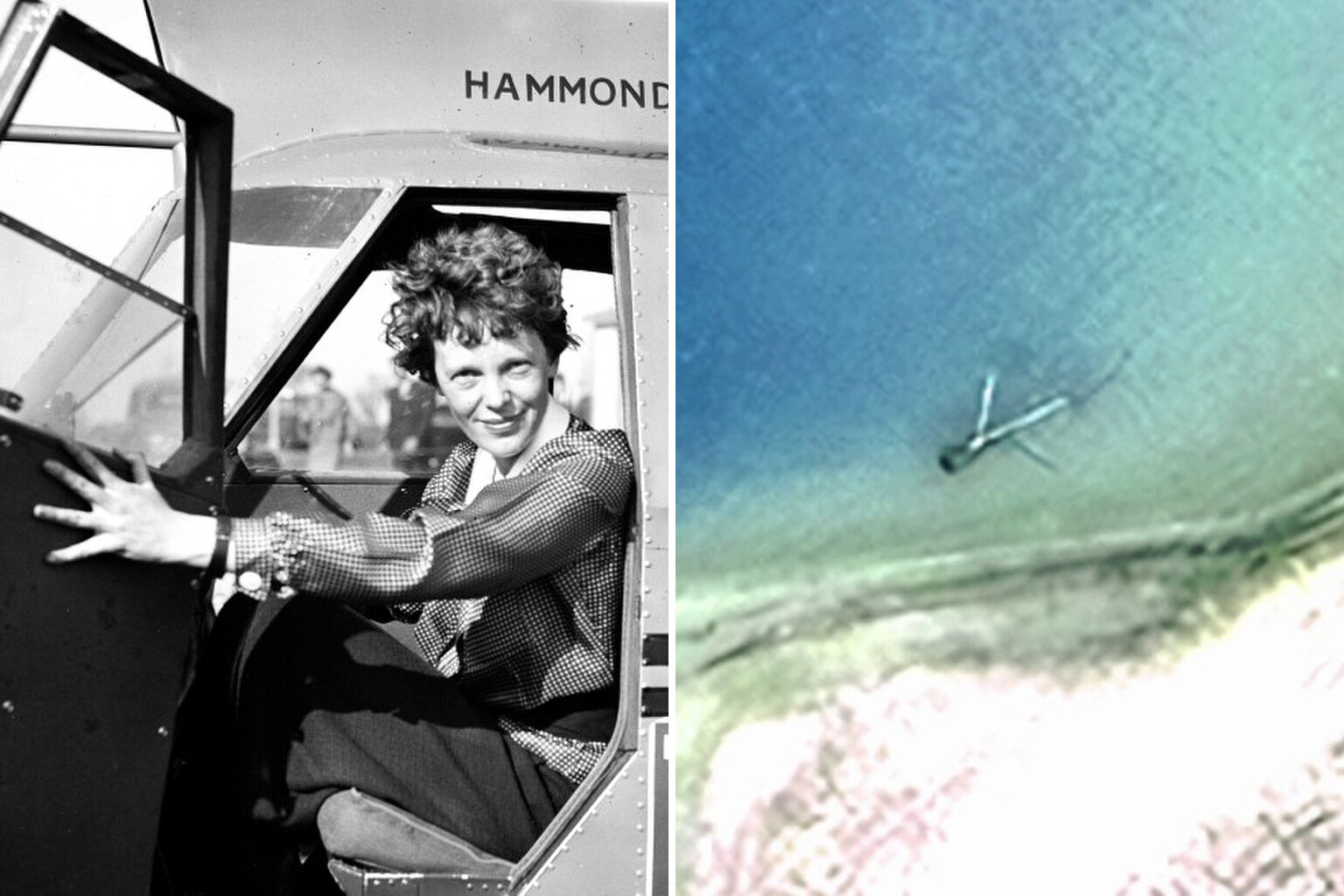
A 17-member expedition is dredging a remote lagoon in search of Amelia Earhart’s lost Lockheed Electra, battling both time and an island teeming with giant coconut crabs.
The Purdue University and Archaeological Legacy Institute team touched down on Nikumaroro’s western edge on Oct. 12, launching what researchers hope will be the 20th search to finally end nearly nine decades of speculation. Their target is the “Taraia Object,” a submerged shape first spotted in satellite imagery in 2020 that could be the tail and fuselage of the legendary aviator’s plane.
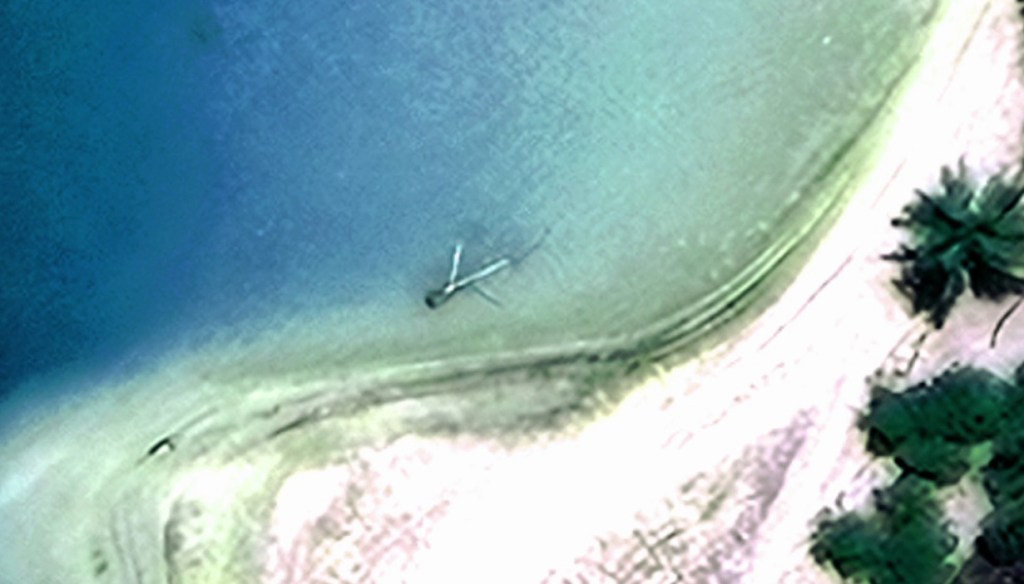
Historical photographs suggest the object has sat in the lagoon since 1938, just one year after Earhart and navigator Fred Noonan vanished on July 2, 1937. The working theory holds that the pair miscalculated their course and landed on this South Pacific atoll instead of Howland Island, 350 miles to the north, where they had attempted to land. They may have briefly survived as castaways before the aircraft was swept into deeper water.
The team is using a floating hydraulic dredge to clear underwater sediment and expose the object, aiming to confirm aluminum skin and rivet patterns that would positively identify the Electra 10E. Previous searches were repeatedly thrown off by natural underwater rock formations, but researchers believe post-landing radio distress signals and artifacts found on the island point directly to this location.
The coconut crab poses a uniquely local threat to the operation. The creature is the largest crustacean that spends all its adult life on land, growing to three feet and mounting nighttime attacks on prey that pass too close to their burrows. Their powerful claws and bone-scavenging habits have fueled grim speculation that any remains of Earhart and Noonan were dispersed shortly after death. To ensure safety, the Purdue and ALI researchers sleep aboard their vessel each night rather than on the crab-infested island.
Prior discoveries on Nikumaroro lend weight to the castaway theory. Human bones found in 1940 were later analyzed in 2018 as consistent with a woman of Earhart’s build. Additional 1930s-era remnants included a woman’s shoe and a freckle cream jar. Earhart herself had deep ties to Purdue, having served as a career counselor for women and advisor to its Department of Aeronautics in 1935 before her historic attempt to circumnavigate the globe. She was already a record-setter: the first person to fly a solo, nonstop flight across the United States in 1932, and the first woman and second person overall to fly nonstop alone across the Atlantic.
The five-day operational window leaves little room for delay. If the team locates the Electra, they will map the site and return next year for full recovery. Purdue University is currently negotiating with Kiribati, the nation comprising 33 islands including the Phoenix Islands, to bring any recovered wreckage back to the United States.