

Based on my comprehensive research, I now have enough detailed information to write the article. The trial began the week of July 27-31, 2026, and entered its second week in early August. I have extensive details about testimony, the case facts, the legal arguments, and witness accounts.
—
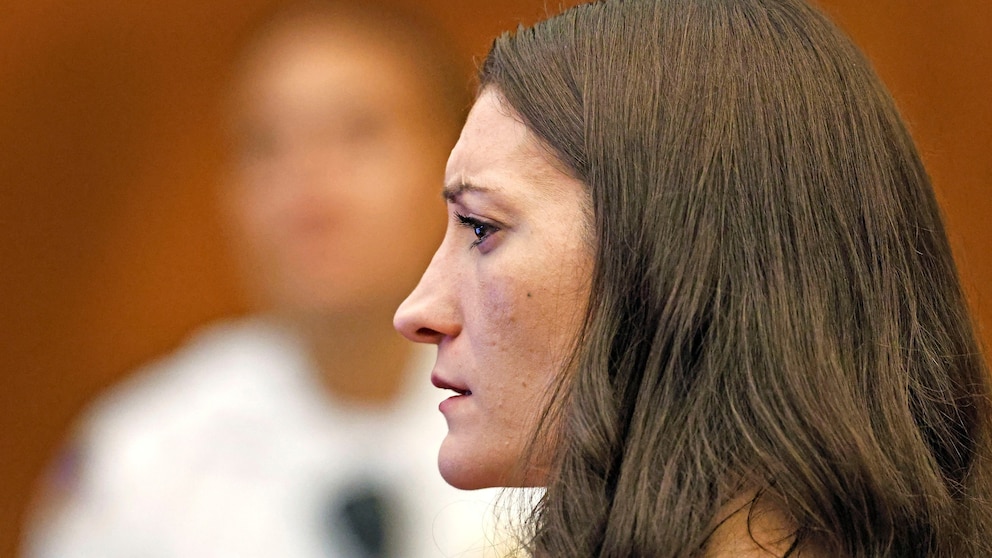
The trial of Lindsay Clancy, the Massachusetts mother accused of killing her three young children, has entered its second week of testimony as prosecutors and the defense present dueling cases about her mental state at the time of the killings.
The high-profile case centers on events from January 24, 2023, when authorities responded to the family’s home in Duxbury, a coastal town south of Boston, following a 911 call. First responders discovered Clancy, 35, severely injured outside the home after jumping from a second-story window. Inside the basement, they found her three children—5-year-old Cora, 3-year-old Dawson, and 8-month-old Callan—who had been strangled with exercise bands. Cora and Dawson were pronounced dead at the hospital that night, while Callan died several days later from his injuries.
The jump from the window left Clancy paralyzed from the waist down. She now attends trial in a wheelchair and is being held at Tewksbury Hospital. She has pleaded not guilty to three counts of first-degree murder, and if convicted, faces life in prison without the possibility of parole.
The first week of testimony focused heavily on Patrick Clancy, the children’s father and Clancy’s ex-husband, who spent two days on the stand describing his family’s life before the tragedy. Patrick testified that he left home on the morning of January 24 to run errands while his wife remained with the children. Hours before the killings, he said, Clancy had built a snowman with the children and they were playing together. He described her as having “one of her best days.” He was out of the house for about 25 minutes picking up takeout food and medicine from a pharmacy when the killings occurred.
When he returned home, Patrick described finding his bedroom covered in blood. He went outside and found his wife lying face-up in the backyard, bleeding from deep cuts on her wrists and a red line across her neck. The jury heard an anguished 911 call he made that morning, during which he can be heard discovering the children in the basement and screaming for help. The recording, which lasted roughly six to seven minutes, left many people in the courtroom visibly shaken.
Patrick testified about his wife’s deteriorating mental health in the months preceding the killings. He described how she struggled after the birth of their third child in 2022, experiencing severe insomnia, depression, and suicidal thoughts. She was prescribed multiple psychiatric medications, including Seroquel, and attended a specialized perinatal behavioral health program. She was even admitted to an inpatient psychiatric facility in early January 2023, just weeks before the killings. Patrick testified that her mental health worsened in December 2022 after a doctor increased her Seroquel dosage.
Patrick also testified that his wife told him in the months before the killings that she had thoughts of harming the children, though she said at the time she had no plan to do so. He said that about a week after the killings, when she called him from a hospital, she told him she had heard a man’s voice on the day of the murders telling her that if she didn’t act immediately, she would lose her chance.

The prosecution’s case centers on the argument that Clancy deliberately and methodically planned the killings. Plymouth County Assistant District Attorney Shanan Buckingham told jurors in opening statements that Clancy “deliberately and meticulously” killed her children, and that “this is a woman who acted intentionally, rationally, and swiftly to accomplish a very specific goal—to kill.” Prosecutors acknowledge Clancy struggled with her mental health but argue she was not in psychosis when she strangled the children.
The defense presents a fundamentally different narrative. Clancy’s attorney, Kevin Reddington, argues that his client should not be held criminally responsible for the killings because she was suffering from postpartum psychosis and extreme mental illness. He said in opening statements that “she had no motive. She loved her children.” The defense contends that Clancy was overmedicated by the mental health system, which failed to properly treat her postpartum condition. According to her attorney, on the day of the killings, Clancy experienced what he calls a “command hallucination”—hearing a male voice commanding her to strangle her children and kill herself.
The trial is now focusing on expert testimony regarding postpartum mental illness, a central issue in the case. Postpartum psychosis is a rare but severe psychiatric condition that affects roughly one to two mothers per 1,000 childbirths. Unlike the more common postpartum depression, which affects up to one in eight women, postpartum psychosis can include delusions, hallucinations, and paranoia that may prompt suicidal or homicidal action. It is considered a psychiatric emergency requiring immediate hospitalization.
During the first week, jurors visited the Clancy family’s former home and heard testimony from approximately a dozen witnesses, including medical personnel, law enforcement officers, firefighters, and paramedics who responded to the scene. First responder Stephen Hall of the Duxbury Police Department testified about finding Clancy semi-conscious in the backyard and later viewing photographs of the basement where the children were found, including images showing an exercise band near one child’s body and blood stains on the carpet.
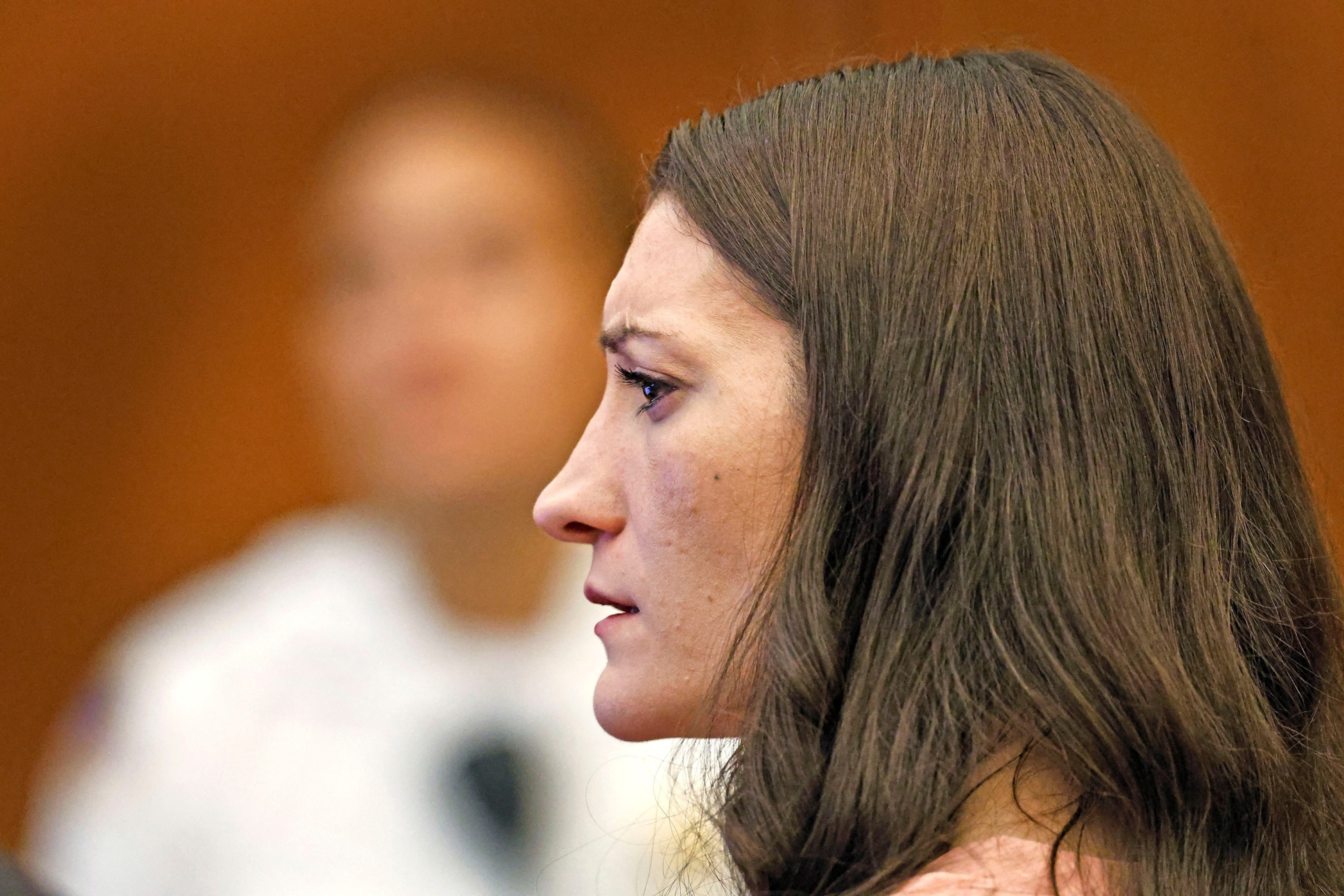
Judge William Sullivan has indicated the trial is expected to last six to eight weeks and will feature extensive testimony from dueling psychiatric and medical experts about postpartum mental illness and Clancy’s mental state at the time of the killings. The witness list includes nearly 200 names.
Patrick Clancy has publicly stated his forgiveness for his ex-wife, saying in previous interviews that he was not married to a monster but to someone who became seriously ill. He has since remarried. The trial marks the first time he has seen Clancy since the day of the killings.
If a jury finds Clancy not criminally responsible for the killings, she would be committed to a state psychiatric hospital rather than facing prison. If convicted of murder, she would face life without parole.